
Commercial & household products
Overview of Shopping Cart Manufacturing Costs: How to Calculate an Efficient Cost for Ideal Shopping Cart Deals
Shopping carts are essential components of a complete shopping experience. Its design influences traffic flow and directly reflects how customers navigate aisles, the volume they carry, and how efficiently a store operates during peak hours. Yet, the shopping cart manufacturing cost is often underestimated in retail planning, especially in the broad picture of operating cost decisions.
Understanding structural factors and the underlying manufacturing decisions allows retailers to make more informed purchasing choices and avoid unnecessary long-term expenses. In this article, THACO INDUSTRIES guides you through the current consumer demographics and useful insights to control shopping cart deals.
What Are The Costs Involved In Producing A Shopping Cart?
Shopping cart manufacturing cost is mainly driven by material selection, fabrication complexity, and logistics strategy. Each of these factors contributes differently to the final unit price.
Material Cost
Steel or inox (stainless steel) is commonly used for strength and load-bearing capacity, especially in high-traffic stores. Plastic carts are preferred for their corrosion resistance, particularly in coastal environments. In such areas, steel carts may require additional protective coatings, which increases cost.
Welding and Processing Cost
Processing costs depend heavily on design specifications. Thicker wire or larger basket volume increases material usage and requires more intensive welding. A higher number of weld points and complex structures directly increases labor time and production cost.
Additionally, surface finishing such as galvanizing or powder coating, adds another layer of cost depending on corrosion resistance requirements.
Specified Customization Cost
Additional features, such as wheels (casters), child seats, coin locks, or bumpers, increase the cost incrementally. Higher customization levels also require specialized tooling or jigs, especially when production capacity is limited.
Logistics Options
Packaging and shipping decisions, such as FCL (Full Container Load) or LCL (Less than Container Load), along with optimized container stacking, directly affect cost per unit, particularly for large-volume orders.
Types Of Shopping Cart And Their Manufacturing Costs?
Shopping cart design varies based on the store format, customer behavior, and average basket size. A neighborhood convenience store, for example, does not operate the same way as a high-volume supermarket. That difference shows up in the type of cart used and ultimately in the shopping cart manufacturing cost.
This type of metal shopping cart is commonly used in medium and large supermarkets where heavy loads and durability are essential. These carts offer a stable and predictable cost structure for retailers, driven by standardized design, optimized manufacturing processes, and high efficiency in mass production.
Standard Market Cart
This type of metal shopping cart is commonly used in medium and large supermarkets where heavy loads and durability are essential. These carts offer a stable and predictable cost structure for retailers, driven by standardized design, optimized manufacturing processes, and high efficiency in mass production.
Metal Cart
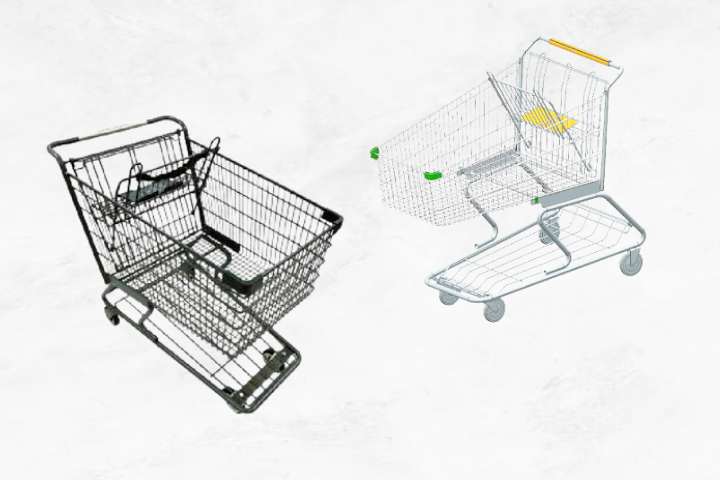
The standard metal shopping cart is the most widely used option in supermarkets, typically built from stainless steel or structural steel to handle heavy loads of up to 440 pounds (~199 kg).
Although a metal shopping cart comes with higher upfront material costs, its durability and resistance to wear reduce replacement frequency, supporting bulk shopping at medium and large-sized retail chains.
Roller Plastic Carts
Roller plastic carts prioritize corrosion resistance and flexibility, which is why they are common in small and medium markets and specific weather conditions, especially in coastal or humid environments.
Sizes vary, but the design supports lighter shopping trips. A second handle allows the cart to be carried or rolled. This design allows for faster movement through narrow aisles and is suitable for stores with high customer turnover and limited space.
Two-Tier Carts
Two-tier designs function as a large basket shopping cart or oversized basket cart. They offer increased capacity while maintaining a compact footprint that supports smoother movement flow within supermarkets’ narrow aisles.
The dual-tier layout expands total carrying space, making it suitable for shoppers who need more room without switching to a full-size cart. These carts are compatible with shopping baskets for large orders, which is why they are more commonly adopted by large supermarket chains.
Specialized Carts
Customized shopping carts are designed to meet unique operational needs. They are often harder to standardize, which results in increased manufacturing costs. Common customization features that increase cost include:
- Unique shapes and sizes for targeted markets
- Reinforced plastics and high-strength steel for increased durability
- Anti-corrosion coatings for steel carts
- Brand identity elements
- Plastic-covered handles
- Customized wheel sizes
In most cases, the added specifications make it hard to control shopping cart manufacturing costs, especially without large-scale production to distribute tooling and setup expenses.
Kid-Friendly Carts
These family-friendly options are larger and built around safety-focused designs, mainly popular in large supermarket chains.
They include durable, built-in seats and harness systems for children, which require non-toxic materials and more detailed R&D processes without taking too much storage space of the carts.
Heavy-Duty Trolley
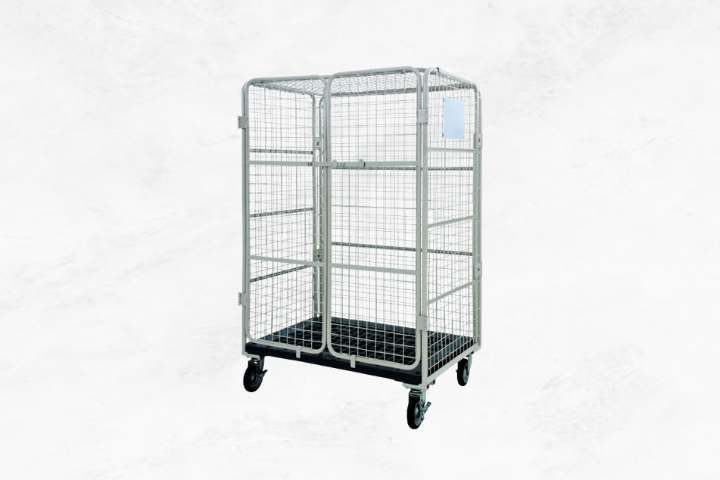
This high weight capacity trolley, also known as a flatbed shopping cart or an industrial flatbed trolley, is designed for load oversized or irregular structures that often exceed 200 kg.
Its durable platform cart design features a wide, open surface without side walls, supported by large industrial wheels for stable movement. For material-specific markets, trolley carts are preferred.
| Cart Type | Load Capacity | Best Use Case | Cost Implication |
| Metal Shopping Cart | Up to ~199 kg | Large supermarkets, bulk shopping | Higher upfront, lower replacement cost |
| Roller Plastic Cart | Light to Moderate | Small stores, coastal areas | Lower upfront, may wear faster |
| Two-Tier Cart | Moderate | Family shopping, space-limited stores | Higher design cost, but better space use |
| Kid-friendly Cart | Moderate | Family-oriented supermarkets | Added safety cost, higher unit price |
| Heavy-duty Trolley | 200 kg+ | Warehouses, transporting bulky items | Built for strength, higher material cost |
Comparing cart types by load capacity, use case, and cost impact
Shopping Cart Manufacturing Process
Shopping cart manufacturing cost is shaped at every production stage, so each step must be evaluated for its direct cost impact.
BOM (Bill of Materials)
Manufacturing costs are driven by the Bill of Materials (BOM), including steel wire, steel tubes, sheet metal, plastic parts, wheels, and fasteners (bolts, rivets)… Choices between standard steel and stainless steel based on operating environments, along with fluctuations in raw material prices and wire or tube thickness, directly affect cost.
Machining
Thicker materials increase cutting time and tool wear, while complex geometries require more machine adjustments, which raises processing costs.
Welding
The number of weld points and weld quality requirements directly affect labor input and production time. Additional processes, such as grinding and edge deburring, further increase labor cost and processing time.
Surface Finishing
Processes like galvanizing, powder coating, or anti-rust treatment depend on corrosion resistance requirements. This adds variable costs to the manufacturing process.
Assembly & Quality Control (QA/QC)
Assembly integrates all components, followed by a strict quality control process (essential for utilizing production cost) covering dimensions, weld strength, coating adhesion, and rolling tests. Wheel selection, based on load capacity, noise reduction, locking, or anti-static features, also affects the final cost.
Packaging & Ancillary Services
Costs arise from anti-scratch wrapping, palletizing, container stacking, and labeling, especially when optimizing shipping efficiency. Logistics options aligned with customer demand, such as shipment type, delivery terms, and packaging configuration, also influence cost..
Indirect & Compliance Costs
Tooling and fixture depreciation significantly impact unit cost, especially in low-volume production, where these expenses cannot be effectively amortized across large batches. Similarly, production volume, batch size, and allowable defect rates play a key role in the overall production cost.
Consumer Behavior Insights Driving Shopping Cart Demand and Price Fluctuations
Beyond direct production costs, shifts in consumer demographics also influence overall manufacturing cost. According to McKinsey’s survey, changes in different aspects such as age groups, shopping frequency, and purchasing habits directly influence design phrases, as buyers have to recalculate the cost of these amenities.
By grounding these observations in industry research, retailers can better understand why certain cart designs are becoming more relevant and how those choices translate into cost differences across store formats.
Current Consumers’ Age Nuances
A 2023 North America survey shows Gen Z and Millennials will account for 60% of consumers by 2026. Gen Z shoppers typically make smaller, more frequent purchases, resulting in lower average basket sizes. This makes lightweight carts and baskets a more practical and cost-efficient option for retailers targeting this segment.
In contrast, Millennials are more likely to shop in higher basket volumes, especially for household needs, increasing demand for larger, durable steel shopping carts that can handle heavier loads and reduce the need for repeated trips.
Geographical Concerns
Environmental conditions such as humidity and saline exposure, as well as store accessibility, influence material selection and long-term maintenance costs. Coastal areas with salt air often require stainless steel or plastic carts to prevent corrosion.
In dense urban areas, smaller carts reduce congestion, while supermarkets farther from consumers may rely on heavy-duty metal carts to handle higher shopping volumes.
Understanding Additional Factors
Product type and store format further influence cart design specifications and structural requirements. Transporting fragile electronics or heavy raw materials may require reinforced cart structures for improved load stability and protection.
Meanwhile, customer preferences and store size influence cart dimensions and capacity. Transporting fragile electronics or heavy raw materials may require reinforced cart structures for improved load stability and protection. In contrast, customer preferences and store size influence cart dimensions and capacity.
After-Sales Maintenance and Its Impact on Lifecycle Cost
Maintenance should be treated as an ongoing operational cost, as worn wheels and structural damage can increase replacement frequency if not managed early. Carts may also need redesign or targeted repairs as consumer behavior changes. Flexible maintenance planning is therefore needed to keep long-term costs within budget.
Efficient Ways to Reduce Costs without Sacrificing Durability
Reducing manufacturing cost requires strategic optimization across design engineering, material selection, and production planning. The focus should be on design, production efficiency, and how the carts will actually be used.
Control the Manufacturing Process
Cost control begins with design optimization. This involves reducing part count, minimizing weld points, and selecting appropriate material thickness based on actual load requirements. In practice, many manufacturers standardize around 80% of components while customizing only 20% of visible parts, such as handles or branding. This balance helps control cost without affecting brand identity.
Process standardization and lean manufacturing further improve cost efficiency. Factors such as consistent batch sizes, reduced rework, and efficient machine utilization help stabilize production and ensure more predictable manufacturing costs.
Consider Environmental Conditions
Choose surface finishing based on real usage conditions. Outdoor or coastal areas may need stronger coatings than indoor carts. Wheel selection should also match floor types, such as concrete or rough surfaces.
Choose Large Orders Instead of Smaller Quantities
Estimating required production volume, whether 500 or 10,000 units, helps optimize cost allocation. Larger production volumes reduce per-unit cost by spreading labor, tooling, and setup expenses across more units.
Determine Suitable Packaging and Logistics Options
Selecting the right logistics option (EXW, FOB, CIF, or DDP) affects total cost. CIF (Cost, Insurance, and Freight) is commonly used when balancing cost and risk. Optimizing packaging and container stacking, especially with knock-down cart designs, improves pack density and reduces shipping cost per unit.
Reasons Why THACO INDUSTRIES Should Be Your Shopping Cart Manufacturer
As a pioneer in the manufacturing industry, THACO INDUSTRIES offers integrated solutions, becoming a reliable supplier with integrated production capabilities and global export standards in domestic appliances, under Commercial and Household Products Manufacturer. This way, we go beyond what traditional shopping cart suppliers typically offer, ensuring consistent qualification across different specifications from customers.
Significant Specialized Production Capacity
As a large-scale shopping cart manufacturer in Vietnam, THACO INDUSTRIES runs an industrial ecosystem where all components are produced in-house, from business, R&D, manufacturing to installation, and warranty & repair. To produce household products in general, numerous specialized plants are involved in in-house components production, using advanced production lines with machinery from the U.S., Germany, Italy, and Japan, including slitting lines, fiber laser cutting systems, CNC machining, robotic welding, and automated coating.
These technologies ensure tight production tolerances, high precision, and consistent output across high-volume orders. This approach utilizes cart designs and ensures smooth operation, which directly reduces maintenance cost for retailers in the long run.
International Quality Certifications
The company complies with international standards, including ISO 9001:2015 (quality management), ISO 14001:2015 (environmental management), BS EN 1929 (shopping cart safety), ISO 3834-2 (welding quality), and CE marking requirements. Welding processes are qualified to AWS D1.1, D1.2, D1.6, and EN ISO 9606-1 standards, performed by certified welders to ensure consistent weld quality.
Customization options such as RAL colors, handles, coin-lock options, wheels, and other brand-specific elements are also delivered without compromising technical performance.
Proven Production Capabilities in Consumer Equipment
With its Consumer Equipment Plant, THACO INDUSTRIES expands capacity to meet high-volume orders with consistent quality. Built on 25,000 m² with a total investment of 20 million USD, the plant aims to supply a wide range of household and commercial equipment, as well as decorative and utility products.
This production complex is designed to handle diverse outputs, including up to 140,000 supermarket shopping carts annually, alongside 150,000 fitness equipment products, 100,000 household appliances, and 50,000 sets of high-end furniture, as well as urban train seats and other mechanical components. This scale reflects production capacity and the ability to support high-volume orders across multiple product categories.
With different orders and customizations, THACO INDUSTRIES also provides flexible solutions, involving different advanced plants to ensure cohesive in-house components, such as Plastic Component Company, Molds Company, Composite Component, and Mechanical Complex. Not only does this help ensure an end-to-end manufacturing process, it also reduces lead time immensely due to the efficient logistics across companies.
Efficient Logistics Options
Flexible logistics options are a key advantage of THACO INDUSTRIES. A range of Incoterms, including FOB, CIF, and FCA, combined with optimized container loading, helps reduce per-unit shipping cost and improve delivery lead time, particularly for bulk international orders.
With extensive expertise in CNC machining services and heavy steel fabrication, THACO INDUSTRIES delivers reliable solutions for industrial and infrastructure projects.
All production processes comply with IATF 16949, ISO 14001, ISO 45001, and ISO 9001 certified standards, ensuring precision, safety, and long-term performance. The production scope includes equipment and systems developed under contract manufacturing services, ODM manufacturing, and EPC manufacturing, supported by CE certified steel fabrication. These capabilities are applied across mining equipment, conveyor systems, industrial silos, and household electric supply systems for industrial applications.
With extensive experience in precision manufacturing across multiple industries, THACO INDUSTRIES delivers reliable OEM solutions with a strong focus on quality and performance. Contact THACO INDUSTRIES to explore customized shopping cart manufacturing solutions that improve efficiency and optimize long-term operational cost with email partsales@thaco.com.vn & (+84) 389 067 557 (Ms. Linh) to discuss more.


