
Agricultural Equipment
Key Capabilities to Look for in a Cultivation Equipment Manufacturer
Modern agriculture relies on cultivation equipment that can operate consistently across different soil conditions, crop types and farming scales. Selecting the wrong cultivation equipment manufacturer can lead to delayed delivery, weak equipment performance, costly downtime and rising maintenance needs.
In OEM and large-scale production contexts, these risks multiply. Requirements for customization, scalability and technical support become more stringent as your operation grows. Therefore, supplier selection should never rest on price alone. A comprehensive evaluation must consider multiple capability factors to ensure the highest level of quality, performance and long-term reliability.
What Is Cultivation Equipment?
Cultivation equipment refers to machinery and tools used to prepare soil, establish crops and manage field conditions across the cultivation stages of agricultural production. These machines enable higher agricultural productivity and significantly reduce dependence on manual labor in modern farming operations.
Common types of cultivation equipment include:
- Soil preparation: Plows, harrows, disc cultivators, and rotavators break, turn and condition the soil before planting.
- Crop establishment: Seeders and precision planting machines place seeds at controlled depths and spacing for consistent crop growth.
- Field management: Inter-row cultivators, ridge formers and bed shapers manage soil structure throughout the growing cycle.
As cultivation equipment plays a central role in improving farm output and operational efficiency, the manufacturing capabilities behind these machines become equally important to evaluate.
The Role of Cultivation Equipment Manufacturers
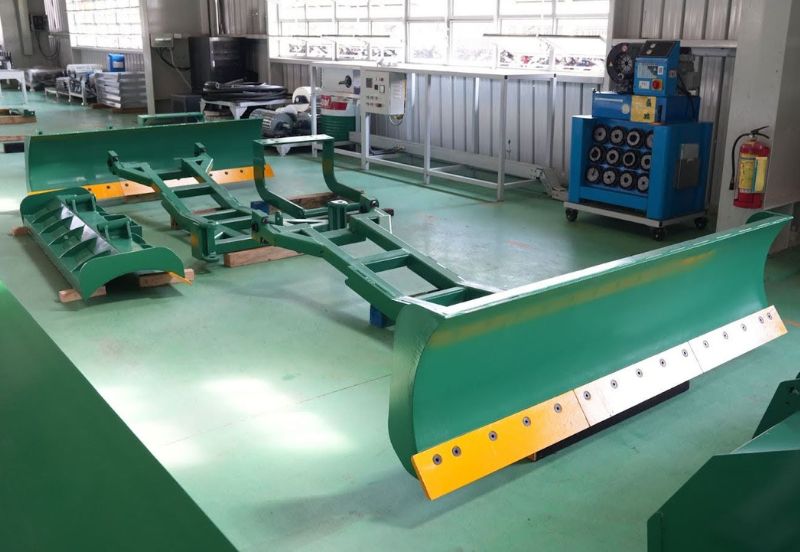
Cultivation equipment manufacturers do more than produce machines, they directly determine whether farms can operate productively, predictably and at scale. A well-engineered cultivator that breaks down under seasonal load or fails to perform in local soil conditions does not improve farm output.
Therefore, three operational dimensions define how manufacturers contribute to farming performance:
- Productivity: raised when equipment enables higher field output across more hectares per day, reducing the time and labor cost per unit of crop established.
- Farming efficiency: improves when machines perform precise operations that manual labor cannot replicate at comparable volume.
- Mechanization: replaces variable manual tasks with consistent, machine-based operations, ensuring reliability and scalability as farm enterprises grow.
Once the core roles of cultivation equipment manufacturers are established, the next question to address is: “How are these roles evolving to meet changing agricultural demands and technological advancements?” The answer lies in the trends currently reshaping how cultivation equipment is designed, manufactured and deployed.
Emerging Trends Shaping Cultivation Equipment Manufacturing
IoT and Precision Agriculture Integration
The shift toward data-driven farming is accelerating adoption of IoT sensors, GPS positioning and AI-based analytics across cultivation operations. Farmers increasingly require real-time insight into soil conditions, crop health and field performance. This drives demand for equipment that integrates with smart farming systems and supports precise input application.
This transition is transforming cultivation equipment from standalone machines into interoperable components within connected farm management ecosystems. Manufacturers now develop equipment with built-in connectivity, compatible control systems and software integration capability. The ability to export operational data and receive remote updates is becoming a procurement requirement, not a premium feature.
Automation and Autonomous Machinery
Automated manufacturing and AI-driven equipment adoption is accelerating across the agricultural sector. Around 50% of agricultural machinery is expected to integrate automation and robotics technologies by 2025–2026, reflecting a major shift toward smart and autonomous farming systems. This shift toward automation in equipment manufacturing reflects the broader transformation taking place across modern farming operations.
Labor shortages and rising input costs are accelerating demand for self-operating equipment. Manufacturers must invest in advanced manufacturing technologies and system integration to keep pace. As farms grow larger and more industrialized, mass production capability with consistent quality across batches becomes a competitive differentiator.
Demand for Customization Across Markets
Agriculture is no longer a uniform industry. Farms differ significantly in scale, crop types, soil conditions and climate exposure. Standardized equipment may not perform efficiently across all farming conditions.. Machines must be adapted to specific field conditions, crops and operational models to maximize productivity and input efficiency.
According to McKinsey & Company – a premier global management consulting firm that advises top corporations and governments, the agriculture sector is undergoing structural pressure to deliver higher yields and efficiency across cycles. This drives demand for equipment that offers greater durability, precision and long-term reliability. Customization demand continues to rise as farmers seek equipment tailored to their specific conditions. Cost optimization pressures mean manufacturers must prioritize high-quality materials, precision engineering and robust design.
Core Manufacturing Capabilities Driving Agricultural Efficiency
When evaluating a cultivation equipment manufacturer, buyers should focus on the following capability pillars:
Engineering & Customization Capability
A strong manufacturer brings flexible engineering approaches to adapt equipment for different crops, terrains and operational scales. This means they can modify design specifications based on your requirements rather than forcing you to accept standard products.
Modular product architecture supports customization without compromising production efficiency. Close collaboration between engineering and production teams ensures tailored solutions move from concept to reality quickly. Engineering flexibility and customization capability separate component assemblers from true manufacturing partners.
Manufacturing Capacity and Production Scalability
Large-scale production facilities capable of handling high-volume orders indicate a manufacturer ready for serious partnerships. Look for production capacity that matches your growth plans, not just current needs. Scalability matters when seasonal demand spikes or you expand into new markets.
Automated manufacturing through CNC machining, robotic welding and automated forming significantly improves dimensional consistency and reduces batch-to-batch variation. THACO INDUSTRIES, for example, operates robotic welding lines with hundreds of welding robots alongside CNC bending and laser cutting systems. These technologies support the processing of large structural components while maintaining both throughput and precision at scale. Standardized production workflows ensure that a batch delivered in Q4 performs identically to one delivered in Q1, which matters significantly for OEM buyers managing multi-location distribution.
Material Selection and Component Quality
Material sourcing reliability is a manufacturer capability that buyers frequently underweight during evaluation. Consistent access to certified, high-strength steel and qualified mechanical components determines whether quality holds across production runs or degrades when primary suppliers are unavailable. Manufacturers without established sourcing networks introduce silent quality risk into every order.
Use of high-strength and wear-resistant materials for key parts enhances durability under demanding agricultural conditions. Advanced surface treatment systems improve corrosion resistance and extend equipment lifespan. Robust supplier qualification and incoming material inspection processes maintain quality consistency. Strong component-level quality control ensures long-term performance and reduces maintenance support requirements over the equipment’s life.
Quality Control and Testing Standards
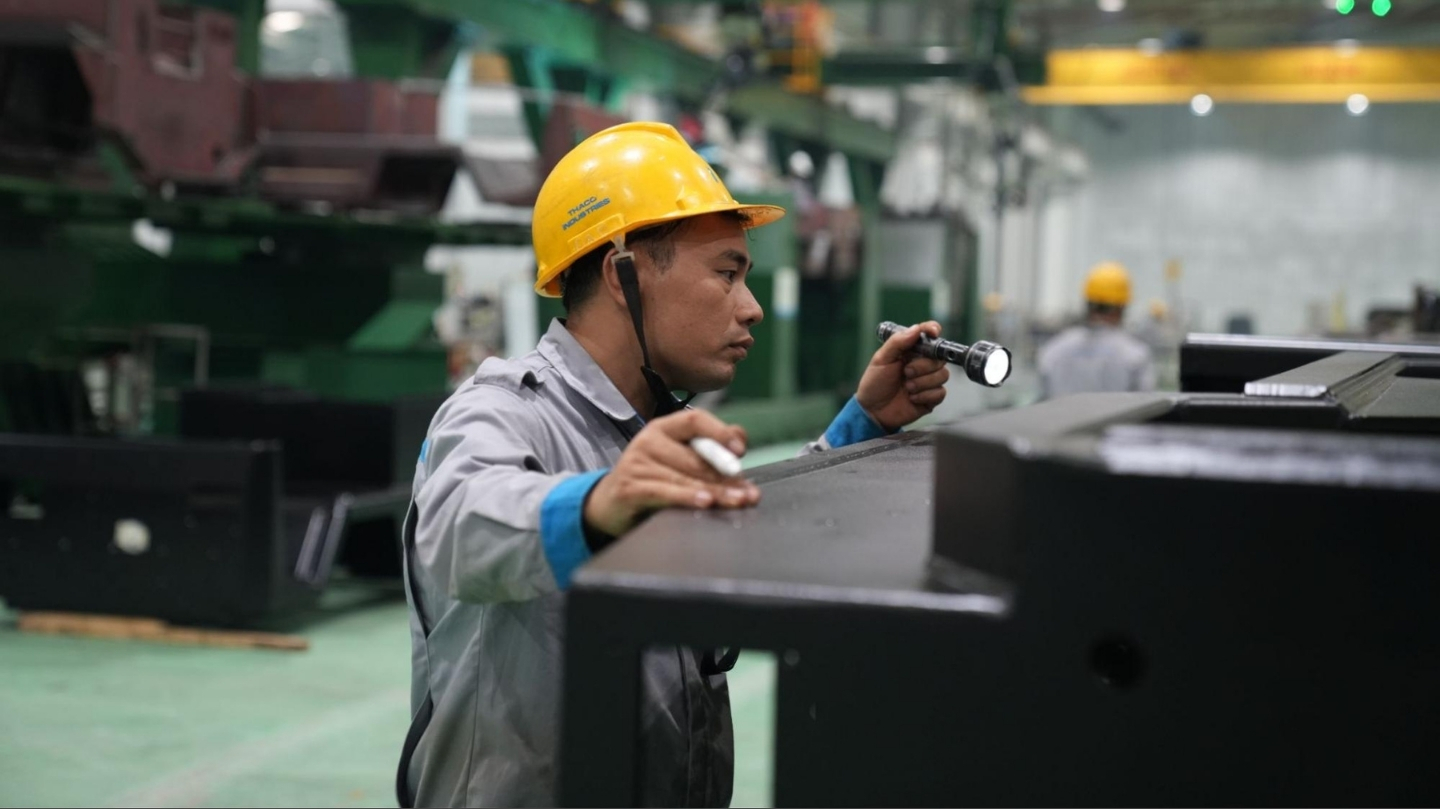
Multi-stage quality control is a structural requirement for credible cultivation equipment manufacturing. Incoming material inspection catches specification deviations before they enter the production process. In-process inspection uses CMM dimensional gauging and non-destructive testing (NDT) to detect fabrication errors early, when corrections can still be made cost-effectively. Final inspection validates functional performance under simulated or real operating conditions before dispatch.
Standardized quality management systems provide the framework within which these inspections operate consistently across production runs. Relevant certifications include:
- ISO 9001:2015: Quality Management System (QMS)
- ISO 3834 – 2: Welding Quality Requirements
- EN 1090: Structural Steel & CE Compliance (EU market)
- ISO 14001:2015: Environmental Management System
- ISO 45001:2018: Occupational Health & Safety
Cost Efficiency Optimization
Better engineering directly controls cost throughout the product lifecycle. A skilled manufacturer designs equipment that is simpler to produce and easier to assemble. This reduces the initial purchase price without cutting corners on quality.
Well-engineered equipment also enhances serviceability. Modular, easy-to-disassemble components allow for quicker inspection and maintenance. This helps buyers save time on servicing and reduces downtime in the long run. Lower operating cost over time comes from careful material selection and advanced surface treatments. Equipment that withstands dust, humidity and frequent daily use reduces the risk of future damage and maintenance needs. That makes it an economical choice across the full ownership period.
Experience in Agricultural Equipment Manufacturing
Depth of industry experience across equipment categories matters. Manufacturers with a proven track record in cultivation and broader agricultural machinery understand how equipment fails in the field, which design choices create maintenance problems at scale and how to engineer reliability into systems that will operate across varied seasonal conditions. THACO INDUSTRIES, for example, manufactures across the full agricultural value chain applying manufacturing capabilities accumulated across these categories to each new product development program.
Understanding real-world agricultural challenges shapes design decisions that test reports alone cannot capture. Buyers should evaluate whether a manufacturer’s engineering team has this applied knowledge, not just technical qualification.
Working with THACO INDUSTRIES in Cultivation Equipment Production
THACO INDUSTRIES is based in Vietnam – a country with deep agricultural foundations and practical, localized understanding of the cultivation conditions and equipment requirements that define Southeast Asian and tropical farming environments. The corporation manufactures across multiple agricultural segments, including cultivation, offering diverse application coverage rather than single-product specialization.
With established export relationships across ASEAN and international markets including the United States, Australia, the EU and South Korea, THACO INDUSTRIES brings cross-industry global manufacturing experience to every agricultural equipment program it executes. The corporation’s integrated manufacturing ecosystem, covering R&D, fabrication, surface treatment, assembly and logistics, means buyers work with a single OEM partner accountable for the full production chain, not a fragmented network of subcontractors.
Integrated Engineering and End-to-End Manufacturing
THACO INDUSTRIES provides in-house R&D and engineering design capability including 2D/3D modeling, structural simulation and product optimization that supports OEM and ODM programs based on full customer specifications. Engineering and production teams operate within the same integrated value chain. Design flows directly into manufacturing without handoff delays or specification degradation between teams.
This integrated model enables faster response to design changes, closer alignment between engineering intent and production output and end-to-end accountability. Buyers benefit from a partner that can evaluate a specification change, model its impact and implement it within the production workflow rather than cycling the change through multiple external vendors.
Large-Scale Production Capacity and Industrial Infrastructure
THACO INDUSTRIES operates a large-scale mechanical center combined with a dedicated R&D center. This infrastructure enables full support for agricultural equipment development and production under one roof.
Manufacturing systems support a wide range of equipment across the entire agricultural value chain, including cultivation, irrigation, planting, processing and livestock systems. Multi-product capability across 100+ product types demonstrates flexibility in handling diverse agricultural equipment requirements.
International Quality Standards and Certification Systems
THACO INDUSTRIES manufactures under a comprehensive quality and compliance framework aligned with international export requirements. Every production stage operates within documented procedures that support traceability, consistency and regulatory compliance across target markets. The certification framework includes:
- ISO 9001:2015 (Quality Management System)
- ISO 14001:2015 (Environmental Management)
- ISO 3834 (Welding quality requirements)
- EN 1090 (CE compliance for structural steel)
- ISO 14064-1 (Greenhouse Gas (GHG) Emissions Quantification and Reporting)
After-Sales Support
Beyond production, THACO INDUSTRIES supports clients across the entire project lifecycle from fabrication and delivery through installation, logistics coordination and operational handover. This end-to-end approach ensures a seamless transition from purchase to production use.
The corporation provides ongoing technical assistance, including technical support related to transportation handling, surface finishing and product appearance maintenance. This support helps maintain product quality and ensures issues can be resolved efficiently when needed.
Ready to discuss your cultivation equipment requirements? Contact THACO INDUSTRIES at partsales@thaco.com.vn or call (+84) 389 067 557 (Ms. Linh) to explore how our manufacturing capabilities can support your agricultural equipment needs.


