
Agricultural Equipment
Understanding Livestock Equipment Manufacturing: Design, Fabrication & OEM Partners
Livestock farming today is no longer just about raising animals at scale. It is about managing feeding, housing, hygiene, animal movement, and farm productivity with greater consistency and control. As farms expand and labor becomes harder to rely on for repetitive daily tasks, the quality of livestock equipment directly affects how efficiently a farm can operate. These systems play a critical role in reducing manual workload, improving process efficiency, and supporting more predictable production outcomes.
Behind this equipment is a manufacturing process that combines design, engineering, and large-scale fabrication. This article introduces how livestock equipment is developed and produced, and what businesses should consider when looking for the right OEM manufacturing partner.
What Is Livestock Equipment?
In practical terms, livestock equipment is the infrastructure that keeps daily farm operations running predictably. It covers the systems used to feed animals, supply water, manage housing conditions, and handle manure. The tasks that must happen consistently, every day, regardless of herd size.
From a manufacturing standpoint, this equipment is not simply fabricated steel. It is engineered around durability, hygiene, animal behavior, and long-term operating efficiency. Well-designed systems help standardize routines, reduce labor pressure, and create more stable conditions that support animal health and farm productivity.
Typical equipment categories include:
- Feeding systems (feeders, hay racks, automated dispensers)
- Watering systems (nipples, bowls, automatic drinkers)
- Housing and containment structures (barns, pens, stables, shelters)
- Waste management solutions (manure scrapers, slurry handling systems)
As livestock operations scale, these systems increasingly form the backbone of modern farm infrastructure rather than optional add-ons. This growing reliance has also driven the diversification of equipment designed for different species, farm layouts, and production models.
Next, we’ll explore the key types of livestock equipment used in modern agriculture and how each contributes to more efficient farm management.
Types Of Livestock Equipment In Modern Agriculture
Livestock farms rely on integrated equipment systems to automate feeding, housing, and environmental control. Each category addresses operational challenges such as labor reduction and consistency, enabling farms to transition from manual processes to efficient, data-driven and predictable production systems.
Feeding And Watering Systems
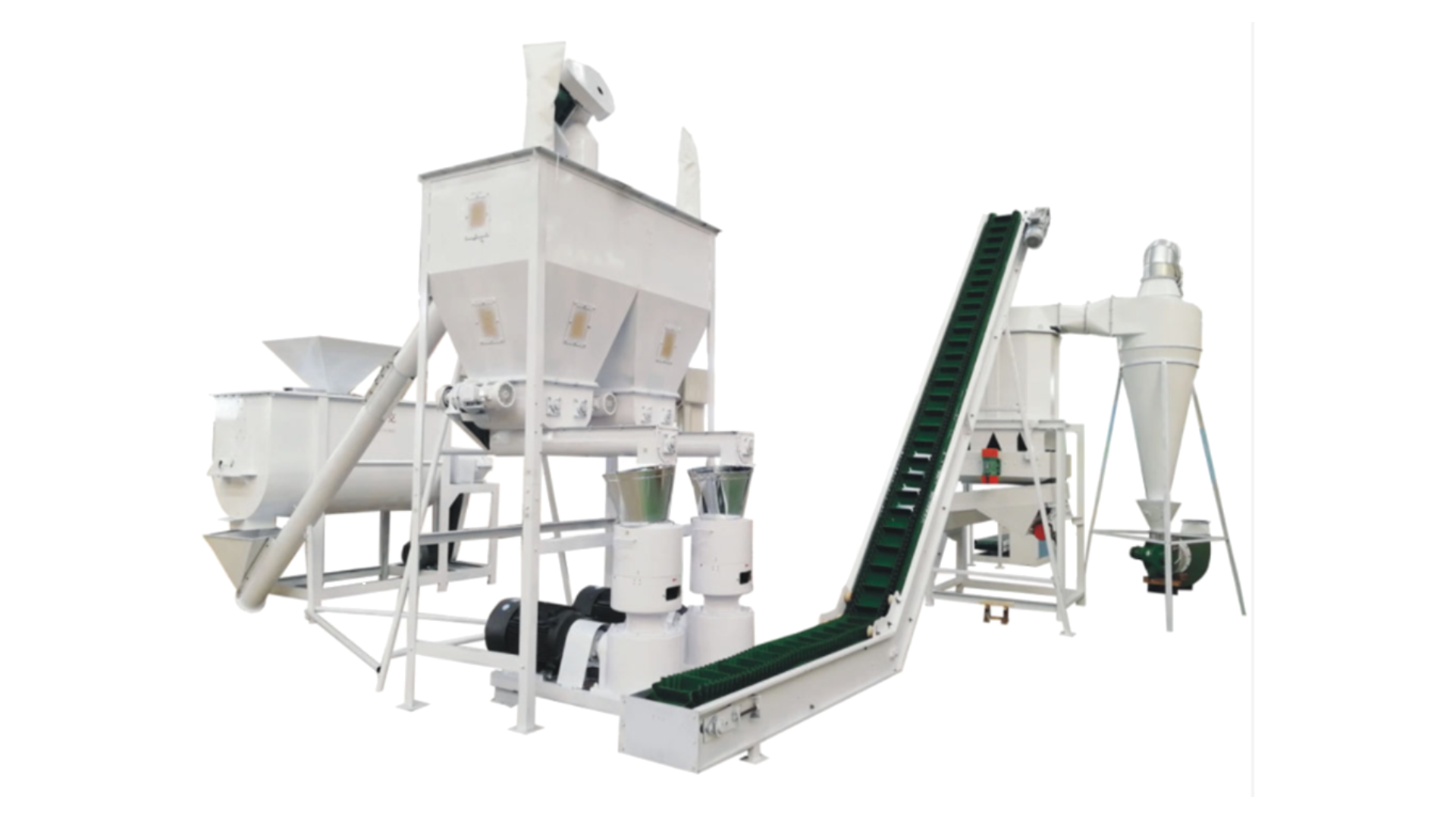
Feeding and watering systems are built to manage two of the most repetitive and resource-intensive tasks on a farm: feed distribution and water supply. Instead of relying on manual refilling, centralized feeding lines, silos, troughs, and automated drinkers deliver consistent volumes across barns and pens. This allows farmers to control consumption more precisely, reduce feed loss, and keep daily routines predictable.
Clean and continuous water supply is equally critical. Automatic drinkers and pipeline systems ensure fresh water availability, prevent stagnation, and improve hygiene, supporting animal health and productivity. From a manufacturing perspective, THACO INDUSTRIES fabricates core structural components such as silos, conveyors, pipeline supports, and corrosion-resistant steel frameworks for integrated system deployment.
Housing And Shelter Structures
Livestock housing directly affects animal health, productivity, and operating costs. Well-designed barns, pens, and shelters provide sufficient space, proper lighting, and controlled airflow so animals can grow in stable and comfortable conditions. Good housing reduces stress, supports higher yields, and helps farmers avoid unnecessary veterinary and maintenance expenses.
Modern livestock buildings also rely on integrated Mechanical & Electrical (M&E) systems to operate efficiently and safely. Mechanical systems include plumbing and drainage, HVAC, and fire protection, while electrical systems cover ELV, power distribution, and earthing and lightning protection, supporting reliable energy supply and system control.
From a manufacturing perspective, THACO INDUSTRIES can supply structural steel frameworks, ventilation housings, equipment supports, and fabricated components that meet safety, energy efficiency, and environmental standards across the full project lifecycle.
Waste Management Systems
Waste management systems handle one of the most constant outputs of livestock operations such as manure, wastewater, and farm by-products. Effective systems are designed to collect, transport, treat, and reuse waste where possible. This improves operational efficiency, reduces environmental impact, lowers handling costs, and helps farms meet increasingly strict regulatory requirements.
Types of waste management systems include:
- Organic waste: Manure and bedding materials that can be processed into fertilizer or biogas, turning waste into a usable resource.
- Solid waste: Packaging, damaged materials, and farm debris that must be sorted and disposed of safely.
- Liquid waste: Wastewater from cleaning, washing, and drainage systems that requires controlled collection and treatment.
- Recyclable waste: Metals, plastics, and reusable materials that can be recovered and reintroduced into the production cycle.
From a manufacturing perspective, THACO INDUSTRIES fabricates core structural and mechanical components for livestock waste management systems, including steel tanks, pipeline supports, conveyor structures, and corrosion-resistant frameworks. These capabilities support OEM partners in developing integrated manure handling and farm waste infrastructure within a scalable, end-to-end supply chain.
Climate Control Systems
Climate control systems help maintain stable temperature, humidity, and air quality inside livestock buildings. Consistent environmental conditions are essential for animal health, feed conversion, and growth performance. Proper ventilation and temperature regulation reduce heat stress, lower mortality rates, and support more predictable production outcomes throughout the year.
At the core of these systems is HVAC (Heating, Ventilation, and Air Conditioning), which manages airflow, removes excess moisture and harmful gases, and maintains thermal comfort. From a manufacturing perspective, THACO INDUSTRIES can supply fabricated components such as ventilation housings, ducting structures, fan frames, equipment supports, and M&E-related steel structures, ensuring an End-to-End supply chain for modern farm climate control infrastructure.
Fabrication Processes In Livestock Equipment Manufacturing
Livestock equipment must operate reliably in demanding farm environments where durability, hygiene, and long service life are essential. This requires a fabrication process combining engineering design, material selection, and precision manufacturing. With an end-to-end supply chain, THACO INDUSTRIES supports partners from product development to large-scale production.
Integrated fabrication and quality control ensure equipment meets performance, safety, and long-term operational requirements, delivering consistent and scalable solutions for livestock applications.
Step 1: Market Research Product Planning
Market research and product planning help manufacturers understand real farm challenges, identify gaps in existing equipment, and define the requirements for new solutions. This stage ensures the final product aligns with operational needs, target markets, and regulatory expectations.
Manufacturers must evaluate different customer segments, such as small farms requiring compact and flexible equipment, or large commercial operations that depend on high-capacity and highly durable systems. These insights guide decisions on product size, capacity, material selection, and long-term performance expectations.
THACO INDUSTRIES places strong emphasis on research and development during this early phase. The company works closely with partners to analyze application requirements across the agricultural value chain from product functions, performance targets, and compliance requirements are clearly defined.
Every assembly is designed with full traceability and aligned with international standards, ensuring reliable performance in demanding operating conditions.
Step 2: Engineering Design
After defining product requirements, engineering design transforms ideas into manufacturable solutions. This stage applies engineering science, mathematics, and practical experience to optimize durability, safety, and operational efficiency. Engineers typically brainstorm multiple technical approaches before selecting the most feasible design direction, ensuring the final solution balances performance, cost, and manufacturability.
R&D teams develop detailed 2D/3D models using CAD software to define geometry, load-bearing structures, and assembly interfaces. These technical drawings serve as the foundation for production, helping ensure accuracy and consistency throughout the fabrication process while reducing potential risks before manufacturing begins.
Step 3: Billet Processing
Billet processing is where raw materials such as steel coils, plates, and structural sections are transformed into livestock equipment components like gates, fences, frames, panels, and support structures. Precision at this stage directly impacts final product quality, production speed, and material efficiency.
CNC machining plays a central role by using pre-programmed computer control to cut, form, and shape workpieces with high accuracy. To improve productivity and minimize errors, THACO INDUSTRIES invests heavily in advanced processing technologies, including:
- 5-axis CNC milling machines capable of handling large workpieces weighing tens of tons
- CNC forming systems up to 12,000 mm and hydraulic presses from 60–1,000 tons with automated handling
- Fiber laser cutting systems (15kW) processing workpieces up to 12,300 × 2,000 mm
- Oxy-gas and plasma CNC cutting for materials up to 150 mm thick with cutting speeds up to 650 mm/min
These capabilities support high-precision steel fabrication for agricultural equipment and large-scale production.
Step 4: Welding
Welding is one of the most critical stages because it determines structural strength, durability, and long-term reliability. Modern welding lines must support multiple techniques to accommodate varying materials and thicknesses, including MIG/MAG (CO₂), TIG (Ar), and laser welding. This step involves joining metal components through controlled heat and pressure while maintaining strict dimensional accuracy.
At THACO INDUSTRIES, advanced welding lines include more than 500 units supported by robotic systems, gantry welding, automatic clamping, and beam straightening for large structures.
Their capabilities include:
- Combined with modern robotic welding technology, achieving 3G, 4G, and 6G welding certifications, the welds are performed precisely, ensuring superior strength and quality for oversized industrial structures.
- Handling workpieces up to 30 meters in length and sub-assemblies up to 20 tons and flexible based on customer requirements
- Multi-technology welding (Ar, CO₂, laser) for flexible production
- Compliance with AWS D1.1 and EN ISO 9606-1 standards
- EXC4 certification – the highest level for metal frame fabrication
These systems ensure consistent quality across complex agricultural and livestock equipment.
Step 5: Surface Treatment And Painting
Livestock equipment operates in humid, corrosive, and chemically active environments. Surface treatment and coating processes are essential to protect steel structures from rust, wear, and long-term degradation.
Typical protection processes include:
- Shot blasting to SA2.5 surface preparation standard: Abrasive blasting removes rust, scale, and contaminants to achieve a near-white metal finish, ensuring a clean, profiled surface for strong coating adhesion and long-term protection
- Anti-rust primer application: A primer layer is applied immediately after surface preparation to provide initial corrosion protection and improve adhesion between the steel substrate and subsequent coating layers.
- Epoxy coating for corrosion resistance: High-build epoxy coatings create a dense, chemically resistant barrier that protects steel components from moisture, chemicals, and harsh agricultural environments
- Industrial top paint: Enhances surface durability, UV resistance, and mechanical protection, ensuring long-term performance under operational conditions.
These treatments extend product lifespan and reduce maintenance costs in harsh farm environments.
Step 6: Assembly
After fabrication and coating, components move to the assembly stage where mechanical structures are integrated with drive systems, hydraulics, pneumatics, and electrical or control units. This stage transforms individual parts into fully functional equipment or complete production modules.
The result can range from standalone machines to fully configured agricultural production lines tailored to OEM and ODM requirements across livestock, cultivation, processing, and waste management applications.
Step 7: Quality Control
Quality control is applied throughout the manufacturing process to ensure equipment meets international standards and export requirements. Multi-stage inspection ensures dimensional accuracy, functional performance, and long-term reliability.
Quality systems operate under:
- ISO 9001:2015 – Quality Management System
- ISO 14001:2015 – Environmental Management System
- EN 1090 – Execution of Steel Structures
- ISO 3834-2 – Quality Requirements for Welding
- IEC 61439 and IEC 60529 (IP54) for electrical equipment
Testing includes dimensional checks, functional testing, and performance validation to ensure agricultural machinery meets global market requirements.
Step 8: Packaging, Logistics, and Delivery
Once completed, equipment and production lines are securely packaged, fully documented, and prepared for transportation. Logistics planning ensures safe delivery for both domestic and international markets, supporting large-scale agricultural projects worldwide.
Choosing THACO INDUSTRIES For Livestock Equipment Manufacturing
THACO INDUSTRIES provides agricultural equipment for tillage, cultivation, harvesting, storage, processing, feeding systems, meat, and food processing lines. With modern machinery and a large scale of operations, THACO INDUSTRIES aims to become a strategic partner, providing high-quality products with seed planting equipment, livestock feed production line, and feed silo, helping customers increase productivity, save production costs, and improve product quality.
Integrated All-in-One Manufacturing Capability
THACO INDUSTRIES operates across a fully integrated value chain that connects business development, R&D, manufacturing, installation, and warranty. Instead of outsourcing key stages, the company produces major components within its industrial ecosystem, helping maintain consistent quality and shorten production timelines.
From concept research to global delivery, experienced engineering teams support partners with technical consultation, cost optimization, and product planning. This integrated approach enables THACO INDUSTRIES to:
- Predict customer demand and plan production efficiently
- Manage inventory to reduce waste and delays
- Identify process bottlenecks and design effective solutions
- Share data across the supply chain to improve coordination
- Support concept development, prototyping, pilot runs, and mass production
By managing every stage under one system, the company delivers consistent quality, flexibility, and long-term value for global OEM partners. THACO INDUSTRIES not only streamlines operations and enhances efficiency but also delivers consistent quality, agility, and long-term value to global partners, reinforcing its position as a reliable manufacturing solutions provider.
The Agricultural Equipment By THACO INDUSTRIES
THACO INDUSTRIES provides equipment across the agricultural value chain, supporting tillage, cultivation, harvesting, storage, livestock feeding, and food processing. With modern production facilities and large-scale operations, the company aims to become a strategic manufacturing partner that helps customers improve productivity and reduce operating costs.
- Livestock farming equipment
THACO INDUSTRIES provides livestock farming equipment including feed silos, automated feeding systems, and feed transportation solutions that help reduce labor time and improve farm efficiency.
- Processing equipment
With processing equipment, this is supported by an all-in-one manufacturing chain integrating R&D, machining, welding, coating, and assembly. The company produces solutions for fruit, vegetable, root crop, animal feed, and meat processing lines.
- Planting equipment
Backed by manufacturing capabilities, planting equipment includes irrigation systems, tillage racks, spraying units, fruit transport vehicles, feed mixers, grass cultivation machinery, and chopping equipment. This forms a diverse portfolio for modern agriculture.
Strict Quality Control Systems
Quality and compliance are central to THACO INDUSTRIES’ manufacturing approach. Production is governed by internationally recognized standards to ensure safety, reliability, and export readiness.
These international certifications include:
- ISO 14001:2015 – Environmental Management Systems
- ISO 45001:2018 – Occupational Health & Safety Management System
- ISO 3834-2 & ISO 3834-3 – Welding Quality Management System
- EN 1090-1 – Certificate of Conformity of Factory Production Control
- EXC4 – Highest and Most Demanding Level of Quality Control
With strong OEM/ODM capabilities, THACO INDUSTRIES helps partners reduce production costs, accelerate product launches, and improve competitiveness in global markets while maintaining strict quality standards.
Advanced In Manufacturing Systems
THACO INDUSTRIES combines large-scale capacity with advanced fabrication technologies to support diverse agricultural equipment programs, such as:
- Large-scale and flexible production capacity: With a capacity to produce more than 100 types of products, THACO INDUSTRIES can meet increasing production demand and support multiple customer programs.
- Advanced fabrication technologies for durability and precision: Modern technologies like fiber laser cutting machines (up to 15kW), CNC plasma and oxy-fuel cutting systems, and CNC press brakes. These technologies can forming materials with thickness up to 150 mm to 15,000 mm
- Automated and robotic welding capability: The factory integrates over 100 robotic welding systems with advanced welding technologies (MIG, TIG, spot welding), achieving repeatability as precise as 0.03 mm.
- Integrated and closed-loop manufacturing system: Fully integrated production chain covering R&D, material processing, fabrication, surface treatment (ED coating, powder coating), assembly, and delivery. This closed-loop system ensures strict quality control, shorter lead times, and compliance with international standards such as ISO 9001 and ISO 14001, ISO 45001, ISO 14064, EN 1090-1, ISO 3834…
This integrated system helps shorten lead times, ensure precision, and maintain compliance with international standards across global supply chains.
For businesses seeking reliable OEM manufacturing solutions in livestock equipment, agricultural machinery, and integrated fabrication systems, please contact THACO INDUSTRIES through partsales@thaco.com.vn & (+84) 389 067 557 (Ms. Linh).


