
Uncategorized
How to Choose OEM Industrial Manufacturers: A Strategic Guide
OEM industrial manufacturers produce components or finished products based on a client’s design, specifications and brand requirements. This model shifts production responsibility to a specialized partner while the client retains design ownership and market positioning. In recent years, more companies have shifted to OEM partnerships to reduce capital investment, accelerate time to market and focus on core competencies such as R&D and sales.
As global supply chains evolve, knowing how to choose OEM industrial manufacturers has become a strategic priority. The right partner determines product quality, cost structure, delivery reliability and long-term competitive positioning. This guide covers what to evaluate, what to avoid and what a capable OEM partner looks like in practice.
Why Choosing the Right OEM Industrial Manufacturer Matters
Impact on Product Quality and Brand Reputation
An OEM manufacturer is responsible for transforming your design into a finished, market-ready product. Inconsistent production creates inconsistent product quality. In B2B markets where reliability is a primary purchase criterion, repeated quality problems erode the brand reputation you have built with distributors, institutional buyers and end customers.
The manufacturing standards an OEM applies are the standards your brand is ultimately judged against in the market. A supplier that passes first-article inspection but drifts in later production batches creates cumulative quality risk that is difficult to recover from without significant cost and delay.
Cost Efficiency vs. Long-Term Stability
The lowest unit price does not guarantee the lowest overall cost. OEM cost efficiency is a function of total landed cost including tooling, packaging, quality failure rates, re-inspection and logistics coordination. Short-term savings from an underqualified supplier frequently generate long-term costs through delivery failures, rework and customer claims.
Stable OEM partnerships provide predictable cost structures and consistent supply performance across production cycles. Long-term cooperation with a qualified manufacturer typically delivers better operational outcomes than frequent supplier switching, which resets tooling investment, quality learning curves and production workflow familiarity with every transition. Supplier stability is a strategic asset, not a secondary procurement consideration.
Enhancing Time-to-Market
Selecting a capable OEM manufacturer plays a critical role in improving overall manufacturing efficiency. With well-established production lines and professional engineering teams, these manufacturers increase productivity while maintaining stable quality across large-scale output. This directly shortens production cycles and reduces the time required to bring products to market.
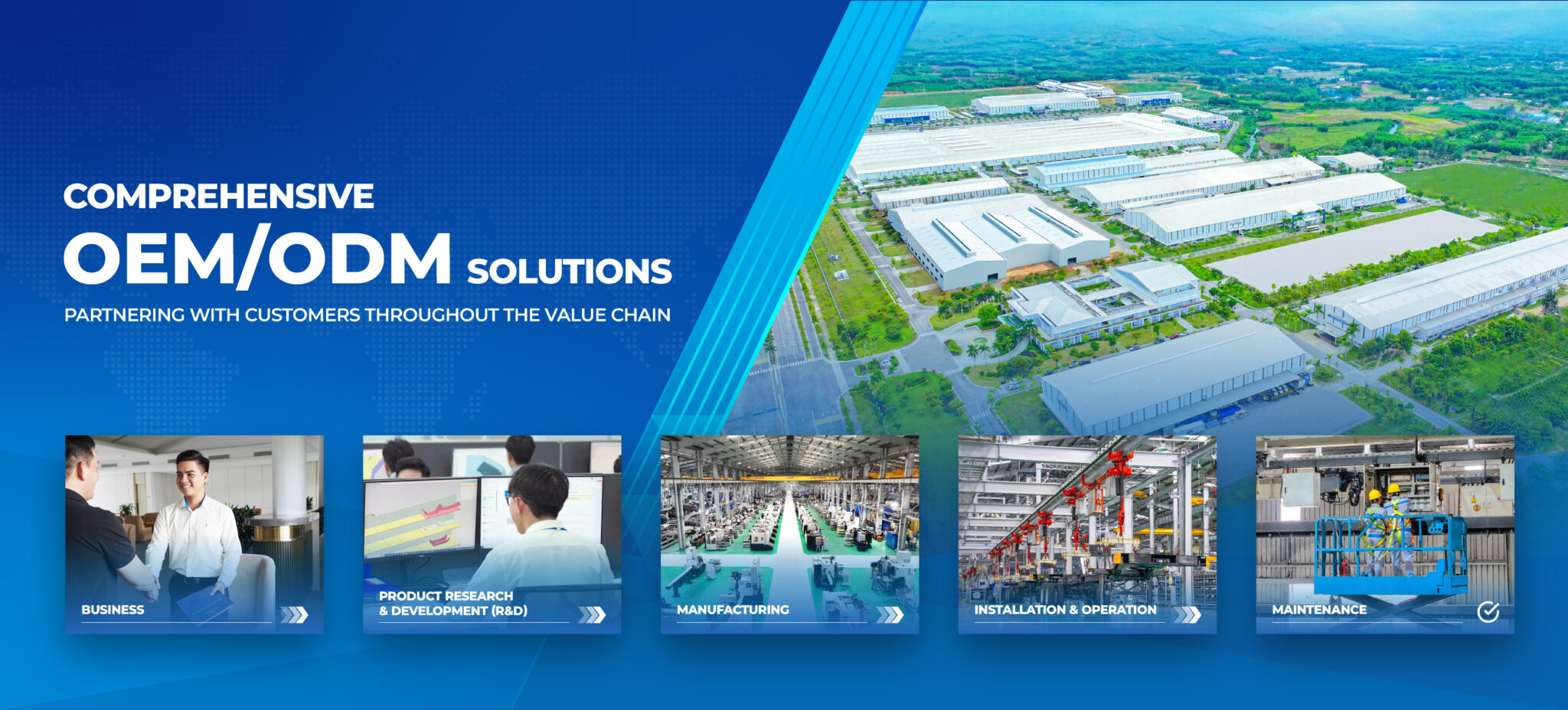
Faster and more efficient production enables businesses to respond quickly to continuously changing market trends and evolving customer demands. As a result, companies can stay competitive, adapt to market shifts.
Define the Core Requirements for Your OEM Partnership
Before contacting any supplier, you must define what you need. This section helps clarify the fundamental requirements you should establish before engaging with an OEM manufacturer.
Production Volume and Scalability
Minimum order quantity (MOQ) must be aligned with your operational model before any supplier conversation begins. An OEM designed for high-volume automotive runs operates very differently from one suited to industrial equipment programs with lower annual volumes and higher specification complexity. The OEM’s proven ability to ramp output as order volumes increase is equally important to assess. Evaluate whether the facility relies on high-level automation, manual assembly, or a combination and how each affects consistency across batch sizes.
Technical Specifications and Engineering Support
Define the scope of service required before shortlisting suppliers. Contract manufacturing is a different relationship than partnering with an OEM that has genuine R&D capability and can co-develop product improvements. Design for Manufacturing (DFM) review is a reliable indicator of engineering depth. Manufacturers that can evaluate your design for yield improvement, cost reduction and producibility.
Compliance and Certification Requirements
Certification requirements must be defined by product category and target market, not applied generically. General operational standards include ISO 9001:2015, ISO 14001:2015 and ISO 45001:2018 as the quality, environmental and safety management baseline. Specific industrial equipment quality standards vary by product category.
For fitness equipment, ISO 20957 and EN 957/EN ISO 20957 govern structural and safety requirements in European markets. Construction machinery and attachments reference ISO 7451:2007 for bucket volume calculation methodology. Industrial mechanical components reference ISO 15236-1:2016. Lifting equipment and heavy-duty structures require FEM 1001/98 (A8-M8) structural design compliance.
Manufacturing certification for fabrication and welding includes AWS D1.6:2017, AWS D1.1:2020, EN ISO 9606-1 and ISO 3834-2 confirm welding process qualification and personnel certification. Market-specific compliance such as RoHS, REACH and EN 957 must also be verified.
Evaluate Manufacturing Capabilities of the OEM Manufacturer
This section helps buyers identify the key factors to examine when assessing an OEM manufacturer’s capabilities.
Production Facilities and Technology
A capable OEM manufacturer operates an integrated production environment not a collection of subcontracted processes. Robotic welding and fabrication confirm process repeatability at volume. Look for robotic welding, fabrication lines and surface treatment systems. Surface treatment systems (powder coating, electrophoretic (ED) coating, galvanizing and corrosion-resistance testing) determine whether the finished product will perform in the environmental conditions it will actually encounter.
Digital production management through ERP systems and real-time production monitoring confirms that the manufacturer can track order status, material traceability and output quality. This is the infrastructure that makes large-scale, multi-SKU OEM programs manageable without quality drift.
Supply Chain Integration
OEM supply chain integration reflects how autonomously a manufacturer manages its material inputs. An OEM that proactively manages raw material procurement introduces far less supply chain risk than one dependent on customer-supplied inputs or a single-source raw material supplier. A high localization rate reduces lead time exposure and logistical complexity for international buyers managing long-haul procurement.
Quality Control System
A credible OEM quality control system operates across three inspection gates: incoming material inspection to prevent unqualified inputs entering the production line, in-process inspection to catch dimensional and fabrication errors while correction is still cost-effective and final validation before shipment to confirm the finished product meets all specifications.
Advanced testing equipment and metrology tools such as CMM and gauges provide measurement accuracy. Real-time SPC monitoring and digital traceability systems support consistent quality.
THACO INDUSTRIES, for example, applies these methods across all production lines. The corporation uses Coordinate Measuring Machines (CMMs) and functional evaluations to verify that every component meets both dimensional and durability requirements before assembly. Statistical Process Control (SPC) is also applied throughout production to reduce risk and maintain stable output across high-volume runs. Final validation before shipment ensures only conforming products leave the factory.
Assess Communication and Project Management of the OEM Manufacturers
Dedicated Account Team
Does the OEM provide a specialized technical team assigned specifically to your project? A dedicated engineering team accelerates problem-solving. Evaluate the speed and efficiency of communication for inquiries and issue resolution. Manufacturers with structured project teams respond in hours; those without them respond in days, which compounds into weeks during critical production phases. Short response lead time indicates organizational discipline.
Transparency in Estimates and Cost Breakdown
A credible OEM manufacturer provides a clear price breakdown covering manufacturing, tooling, packaging, logistics coordination, testing and documentation from the first quotation. Hidden cost risks in sourcing emerge when buyers receive an attractive unit price without visibility into what is excluded. These additional costs, often identified only after production has begun can significantly increase total project expenditure. Understanding hidden cost risks in sourcing protects your budget.
Timeline Commitment and Delivery Performance
On-time delivery performance is best evaluated through actual records. Buyers should request delivery data from comparable programs and speak directly with references who have placed orders of similar volume and complexity. This provides a realistic picture of how a supplier performs under real production conditions.
Actual production cycle time is also a reliable measure than quoted lead times. A manufacturer with sufficient capacity, a skilled workforce, and structured scheduling systems can commit to and consistently meet agreed timelines.
Delivery reliability depends on the supplier’s ability to maintain stable production planning and execute within committed schedules. Manufacturers with documented workflows and consistent operational processes are generally better positioned to deliver predictable timelines across repeat orders.
Common Mistakes to Avoid When Choosing an OEM Manufacturer
Unclear Overhead Cost Structure
A quotation that covers only the unit manufacturing price while excluding tooling, packaging, logistics coordination, testing and documentation costs creates a misleading picture of the total investment required. Additional operational expenses appear later because the OEM did not provide a detailed cost breakdown at the beginning. These hidden expenses can significantly increase the total project cost after production begins.
Poor Communication During Project Setup
Product samples or prototypes that are not formally reviewed and approved before production begins are a common source of costly rework. Specifications, material selections and dimensional tolerances that are communicated verbally or via informal email rather than documented through an official approval process. This often results in misaligned expectations between the buyer and manufacturer, particularly regarding production scalability and quality control processes.
Choosing an OEM Without Sustaining Support
Communication channels for resolving product issues or production inconsistencies remain unclear, causing slow response times when problems occur. Without structured after-sales support, buyers face slow response times, difficulty managing product updates and inconsistent quality in later production batches. This often indicates weaknesses in project management structure, communication channels and long-term OEM partnership planning.
Unclear Contracts
Contract terms that lack clear definitions of scope, production volumes, delivery schedules and scalability capabilities leave both parties exposed. No defined risk management plan or contingency measures to handle production issues or sudden demand increases. These gaps directly affect product quality, order quantities and delivery timelines. These gaps can disrupt operations and reduce overall project reliability.
Inexperienced OEM Manufacturers
Selecting manufacturers with limited industry experience and without recognized quality certifications increases risk across product quality, regulatory compliance and overall program reliability. Experience across comparable product categories and markets is a structural qualification that determines whether a manufacturer’s engineering and production systems are calibrated to the demands of your specific application.
Why THACO INDUSTRIES Is a Strategic OEM Partner
Strategic OEM Supplier for Global Brands
THACO INDUSTRIES serves as a trusted OEM partners for major international brands across industrial equipment, mechanical processing and household appliances reinforcing its manufacturing credibility across multiple product categories and production standards.
As a strategic OEM supplier, THACO INDUSTRIES exports to demanding markets including the United States, Australia, Canada, Mexico, Japan, South Korea, Europe and the ASEAN region. For brands seeking an OEM supplier with proven global exposure and multi-category manufacturing experience, this export footprint serves as a concrete measure of credibility.

Integrated Capabilities for OEM Manufacturing
THACO INDUSTRIES provides end-to-end OEM manufacturing services covering R&D, engineering, production and delivery within a fully integrated system. This consolidated structure eliminates the coordination gaps and quality handoff risks that arise from fragmented supply chains. Customization capability spans 3D modeling, FEA structural simulation and digital engineering tools that support design validation before tooling investment is committed. This reduces both development risk and downstream engineering change costs. Supporting these capabilities, a dedicated R&D Center integrates design, materials research, prototyping and testing under one roof, staffed by engineers with cross-industry expertise.

On the production side, advanced manufacturing technologies include CNC turning, 3-to-5-axis milling for tight-tolerance parts, fiber laser cutting systems, EDM wire cutting, deep hole drilling and automated surface treatment lines. The corporation also offers specialized plastic injection molding and metal stamping manufacturing services for diverse product categories.
Together, these capabilities allow THACO INDUSTRIES to support diverse and technically complex OEM programs, reducing overhead and improving program consistency for the buyer. This breadth of ISO-certified manufacturing process capability supports diverse industrial equipment programs within a single supplier relationship.
Global Standards and Compliance
Manufacturing capability alone is not sufficient without the quality and compliance framework to back it. THACO INDUSTRIES operates under internationally recognized management and production standards.
ISO 9001:2015 governs overall quality management across all production activities. ISO 3834-2 addresses welding quality requirements, confirming certified WPS procedures, qualified welders and compliant NDT inspections across structural fabrication. EN 1090-1 meets execution requirements for steel and aluminum structures specifically for European market access. ISO 45001:2018 ensures occupational safety and health management is systematically maintained throughout operations.
Beyond standard certification, automotive quality standards apply through validated tools including PPAP, FMEA, control plans, MSA and SPC reducing production risk and maintaining stable output across high-volume programs. On the environmental side, compliance with European Commission RoHS and REACH regulations ensures product eligibility across EU markets, giving international buyers confidence in regulatory alignment from the outset.
Supports OEM Projects from RFQ to Mass Production
THACO INDUSTRIES manages OEM programs across the full manufacturing lifecycle, from initial inquiry through to sustained mass production. Projects begin with structured RFQ intake, including secure handling of technical files in STEP, IGES, PDF and BOM formats, alongside clear alignment on volumes, tolerances and Incoterms. Engineering teams then conduct DFM and DFA reviews to evaluate manufacturability, tooling feasibility and cost optimization opportunities before any production commitment is made.
For automotive components, THACO INDUSTRIES delivers full PPAP submissions including control plans, PFMEA, MSA documentation and packaging trials. Long-term programs benefit from 8D corrective action protocols, obsolescence management planning and continuous cost-down initiatives that improve program economics over time.
Compliance with Incoterms Logistics Standards
Flexible logistics options represent one of THACO INDUSTRIES’s strengths, tailored to customer demands. The corporation offers full support for FOB, CIF and FCA shipment terms, providing buyers with the flexibility to align delivery arrangements with their own supply chain structures.
Packaging is engineered for container-loading efficiency, minimizing dead space and reducing freight costs without compromising product protection during international transit. Combined with THACO INDUSTRIES’ strategic location within the THACO Chu Lai Industrial Park, the corporation offers direct multimodal access by road, sea and air. Buyers also benefit from competitive landed costs and reliable delivery timelines. This logistics capability ensures that the value created on the production floor is preserved all the way through to final delivery.

Ready to find the right OEM industrial manufacturer? Contact THACO INDUSTRIES at partsales@thaco.com.vn or call (+84) 389 067 557 (Ms. Linh).


