
Industrial Equipment
Material Handling Equipment Manufacturer: Understand Selection Criteria for an Ideal Partner
Material handling equipment (MHE) is embedded in every stage of modern industrial production, from raw material intake through storage, processing, dispatch and distribution. When correctly specified and properly arranged to suit workflow and warehouse space, MHE directly improves production line efficiency and generates measurable cost savings across labor, cycle time and operational safety.
As the global B2B industrial market continues to expand, procurement teams across industries like mining, logistics, ports, manufacturing and construction are increasingly evaluating OEM manufacturing partners rather than standard catalog suppliers. This guide covers key sectors of material handling equipment and provides essential criteria for selecting the right material handling equipment manufacturers for your operation.
What Is Material Handling Equipment?
Industrial material handling equipment encompasses a diverse range of equipment, storage systems, vehicles, and accessories involved in transporting, storing, controlling, tracking and protecting products at any stage of manufacturing, distribution, consumption, or disposal. These systems improve operational efficiency, reduce manual handling and enhance workplace safety across warehouses and production facilities. Working with experienced material handling equipment manufacturers ensures you get equipment designed for your specific operational context.
Main Types of Material Handling Equipment
Understanding equipment categories helps you communicate requirements clearly to potential material handling equipment manufacturers.
Transportation
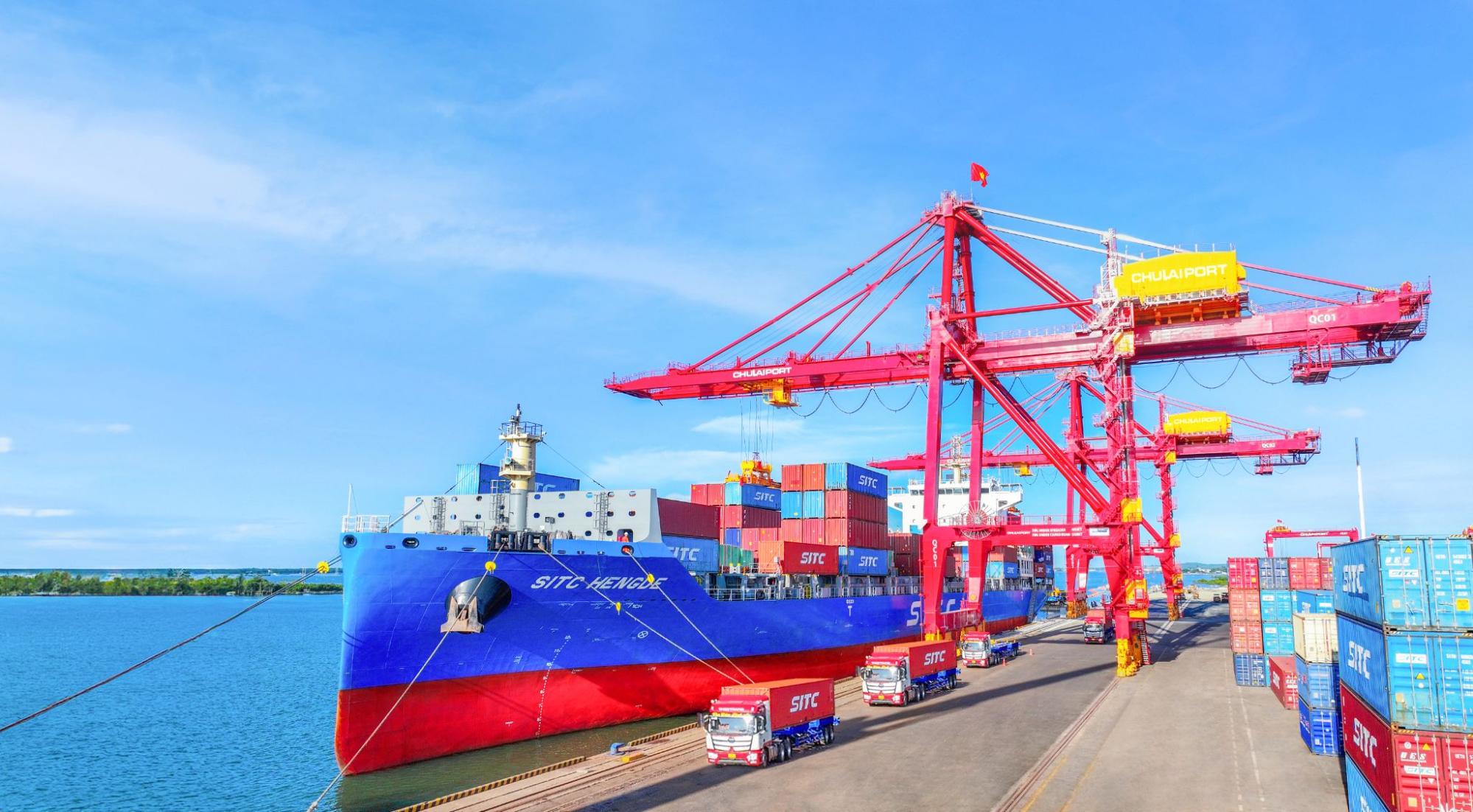
Transportation equipment moves materials between points within a facility or across a site. Conveyors, industrial trucks, forklifts, cranes and AGV (Automated Guided Vehicle) systems are the primary examples. This category forms the largest share of MHE infrastructure in most manufacturing and logistics operations.
Positioning
Positioning equipment supports machining, assembly and processing operations at individual workstations. Robots, index tables and rotary tables are representative examples. Precision and repeatability under load are the defining performance criteria for this category.
Unit Formation
Unit formation equipment consolidates materials into standardized load forms suitable for transport and storage. Bins, pallets, skids and containers perform this function. Consistent unit load design reduces handling cycle time and minimizes equipment stress across the facility.
Storage
Storage equipment holds or buffers materials over time within the production or distribution flow. Automated Storage and Retrieval Systems (AS/RS), pallet racks, cantilever racks and shelving systems are the most widely deployed configurations. Storage system efficiency directly affects floor space utilization, inventory accuracy and order fulfillment speed.
Advantages of Outsourcing with Material Handling Equipment Manufacturers
Cost Efficiency and Reduced Capital Investment
Material handling equipment manufacturers operating at OEM scale allow buyers to access production capacity, tooling investment and engineering capability without replicating it internally. Instead of purchasing new machinery to expand production capacity, businesses can collaborate with OEM factories to produce large quantities under shared investment.
MHE produced to specification also reduces operational accidents, lowering the indirect costs associated with equipment-related incidents.
Access to Advanced Engineering and Technology
The material handling industry is transitioning from manual and standard machinery to high-technology equipment integrating AI, sensor networks and automation systems across the production chain. This shift requires substantial R&D investment that most individual buyers cannot justify at the equipment procurement level. Collaborating with manufacturing partners that have already made this investment gives buyers access to cutting-edge technology including automated welding systems, precision CNC machining and digital production management without bearing the development cost directly.
Improved Productivity and Operational Efficiency
Automated material handling systems reduce picking, packing and dispatch time, enabling faster response to market demand without significantly increasing labor costs. Replacing manual processes with automated equivalents also concentrates the skilled workforce on quality control and supervisory functions, improving overall output quality. Efficient handling directly accelerates goods movement across the production line, reducing throughput time and increasing the volume of product that can be processed within a given production window.
Scalability and Customization
To meet large orders when market demand increases, investing in too much machinery can sometimes be wasteful as buyers spend more capital on production while trying to keep up with customer preferences. In many specialized industries, on-demand processing can also cause production delays due to a lack of necessary machinery and technology before products can be shipped. That is why buyers tend to switch to OEM manufacturers to take advantage of diverse machinery in the production process, promptly providing flexibility during manufacturing.
Enhanced Safety and Compliance
Credible OEM manufacturers apply rigorous quality control processes that ensure components and equipment meet both client specifications and applicable industry standards. Equipment that is manufactured to verified compliance standards performs more predictably in service, preventing the safety incidents that arise from inconsistent production quality. Strict adherence to product-specific certifications also ensures that the material handling processes enabled by that equipment meet the regulatory requirements of the operating environment.
OEM/ODM Manufacturing Process for Material Handling Equipment
Product Design and Engineering
The production process begins with load requirement definition, establishing static and dynamic load ratings that govern every subsequent structural decision. Function definition determines whether the equipment is a forklift, conveyor, AGV, crane, or storage system. Ergonomic design is developed in consultation with the buyer, accounting for storage space constraints, usual operational workflow and operator interface requirements.
A thorough consultation with the engineering team at this stage produces a design that is both technically sound and operationally appropriate. CAD modeling and structural simulation using NX, HyperWorks, SAP2000, Tekla and EPLAN validate the design digitally before physical production begins.
Material Preparation and Cutting
Material preparation and cutting is where manufacturing precision is established for the entire production run. Tube cutting using laser cutting or CNC sawing produces structural profiles to the exact dimensions required by the engineering drawings. Metal forming processes shape plate and profile material into the geometries specified for each component. Structural reinforcement is applied at high-stress joints and load concentration points. Reinforcement positioning is validated against the load calculations established at the design stage, ensuring the finished structure performs effectively throughout its service life.
Welding and Structural Assembly
Welding is the most structurally critical manufacturing stage in material handling equipment production. MIG/MAG (GMAW) or TIG (GTAW) welding can be performed through manual or robotic methods depending on joint specifications and frame design requirements. These processes fabricate the primary structural assemblies. Precision jig-based welding also ensures dimensional repeatability across production batches, preventing manual fit-up errors and structural inconsistencies. To speed up the process, some manufacturers also apply automated assembly conveyors to maintain consistent throughput between sequential welding operations.
All welding processes comply with AWS D1.1 and EN ISO 9606-1 structural welding standards, confirming weld procedure qualification, operator certification and inspection protocol. Visual weld inspection and weld strength checks are conducted at this stage before the structure proceeds to surface treatment.
Surface Treatment and Coating
Surface treatment begins with shot blasting to create a clean, textured substrate for coating adhesion. Surface cleaning and degreasing precede powder coating application to prevent coating failure. Anti-corrosion electrophoretic (ED) coating is applied for premium corrosion resistance in high-humidity or chemically exposed environments.
Powder coating or electrostatic coating complying with SA 2.5 quality standard is applied where specified, followed by oven curing to achieve full coating hardness and adhesion across the structure. For example, equipment operating in coastal ports with salt-laden air typically requires this coating to resist rapid corrosion. Similarly, storage silos holding acidic or alkaline materials specify powder coating to prevent chemical attack on the carbon steel substrate. In contrast, indoor equipment in dry, climate-controlled facilities may not need this additional layer, which is why it is only applied when project specifications explicitly require it.
Mechanical Components Assembly
Purchased mechanical components including adjustment systems, wheels, rollers, motors, belts, bearings and fasteners are installed, aligned and secured to the fabricated structural frame. Hardware torque is controlled to specification and verified. Stability and wobble checks confirm that the assembled equipment performs without structural movement under rated load. OEM branding, custom logos and private label information are applied at this stage before final packaging.
Equipment Trial
For different MHE, there are several tests conducted both on-site and by operational testing procedures. In general, manufacturers should conduct five key testing and validation procedures before shipment.
Plant Testing & Quality Inspection
- Load testing applies a load exceeding the maximum operational rating to verify structural integrity and safety margins under overload conditions.
- Stability and tipping resistance checks assess performance under dynamic load conditions by simulating the movement and acceleration loads the equipment will experience in service.
- Factory Acceptance Testing (FAT) at the manufacturer’s test facility covers functional operation, external inspection, performance testing, emergency stop validation, safety guard and interlock verification, alarm systems and sensor confirmation before the equipment leaves the production environment.
- Electrical and control system testing validates wiring correctness and labeling, PLC program logic and communication between components, confirming that the electrical architecture meets all specifications before operational deployment.
Compliance & Certification Validation
Compliance and certification validation confirms that the equipment meets applicable market-specific or international standards. Third-party inspection, when specified by the buyer or destination market, provides independent confirmation of safe operation and long-term reliability.
Logistics and Packaging
Knock-down shipping designs reduce freight volume and protect components during transit. Custom logos, accessories and “Made in Vietnam” labeling are applied before packaging. Protective export packaging using wooden racks, PE foam and industrial plastics prevents surface and structural damage across international shipping routes.

Key Criteria for Evaluating a Material Handling Equipment Manufacturer
- Engineering expertise
This is the first and most consequential criterion. A credible industrial material handling equipment manufacturer demonstrates capability across the industrial sectors relevant to the buyer’s application. This capability enables the manufacturer to develop equipment designs suited to the specific operational process rather than adapting standard catalog products. Components must also be manufactured with the dimensional precision required for future replacement and maintenance without custom modification.
- Manufacturing quality control
To ensure consistent product quality, OEM factories need rigorous output quality control processes or precise evaluation methods throughout the production line. For example, in crane structures and load-bearing assemblies, material grade errors that reach the assembled product create structural risks, which would lead to complete disassembly and waste investment capital.
- Customization ability
Beyond precision machining capabilities, OEM factories need the ability to customize designs for diverse operating environments beyond standard compliance. Different warehouse systems, operational environments and load profiles require different equipment configurations. A capable manufacturer should proactively propose engineering improvements when initial specifications could be better served by a design modification, enhancing workflow efficiency when adapting to the existing operations.
- After-sales support
After-sales support in material handling equipment covers operator training, safety instructions, maintenance documentation and spare parts availability, all of which directly affect whether the equipment continues to operate safely and efficiently after installation. Incorrect operation of MHE is a primary driver of premature component failure and maintenance cost. Manufacturers that provide structured post-delivery support reduce this risk and extend equipment service life for the buyer.
Common Standards and Compliance Requirements for Manufacturers
Beyond operational capabilities, compliance adherence is a crucial factor when evaluating manufacturers. Quality Management Systems and standard quality control like ISO 9001:2015 and ISO 14001:2015 are essential, but manufacturers should also adhere to other standards that directly link to specific industries:
- OSHA 1910.176-178: A combination of formal instruction, practical hands-on training and documented evaluation of competency
- OSHA 1918.64: Specifically for powered conveyor belts
- EN 1090-1: Requirements for conformity assessment for structural components
- ISO 3834-2: Welding Qualification requirements
- IEC 61439: For material handling equipment that involves electric panels, this standard covers low-voltage switchgear and controlgear assemblies
THACO INDUSTRIES – A Trusted Supplier for Material Handling Equipment
Engineering and R&D Capability
THACO INDUSTRIES operates a closed industrial ecosystem where every major component is produced internally, which helps maintain quality consistency across the full value chain, including Business and R&D, Manufacturing, Installation and Warranty and Repair. An experienced engineering team provides consultation from the first project specification through final design validation, ensuring that equipment configuration is structurally sound, operationally appropriate and cost-optimized before production begins.
The corporation continuously invests in digital production management and advanced process technology such as manufacturing monitoring systems, following the latest changes in the manufacturing industry. With established strength in mechanical processing and industrial equipment manufacturing, THACO INDUSTRIES delivers capability across MHE component manufacturing and complete equipment production, while maintaining quality control from R&D consultation through pre-shipment inspection.
International Quality Certifications
- THACO INDUSTRIES operates under globally recognized management and production standards. The compliance framework includes Quality Management System like ISO 9001:2015, ISO 14001:2015, ISO 45001:2018, to welding certification like ISO 3834-2, and ISO 14064 for greenhouse gas emissions management. Besides common standards for welding and manufacturing, specific standards related to workplace safety, environmental compliance and material control, including OSHA and REACH requirements.
Positioning as a leading manufacturer in Vietnam, THACO INDUSTRIES also achieved EN 1090 with EXC4 certification, which is the highest execution class for welded steel structures and AS/NZS 5131 for structural steelwork fabrication that complies with Australian and New Zealand market requirements.
Manufacturing Capability Across MHE Segments
THACO INDUSTRIES delivers OEM manufacturing capability across all four functional categories of material handling equipment, demonstrating the breadth of production competence that multi-category MHE buyers require from a single manufacturing partner:
- Mining and Construction Equipment Manufacturing covers high-volume, heavy-duty production of excavator buckets, grab bucket systems, crusher components, conveyor structures and electrical cabinet housings, applying structural fabrication and heavy welding capability at production scale.
- Lifting Equipment Manufacturing addresses crane structures and components, including portal cranes, STS (Ship-to-Shore) cranes, gantry cranes, E-RTG cranes and overhead crane systems, all manufactured according to the structural and load-rating standards required for port and industrial lifting applications.
- Storage Equipment Manufacturing covers silo systems, hoppers, steel tanks in various material grades and wall thicknesses and agricultural processing lines including fruit and vegetable processing equipment, while integrating vessel fabrication with process integration capability.
- Transportation Equipment and Solutions Manufacturing includes supermarket overhead conveyors, conveyor structures across industrial applications and crane travel systems. The manufacturing process covers both structural fabrication and the mechanical assembly stages required for complete transport system production.
- Components Manufacturing supports structural frames, outer casings and support structures for equipment where drive and motor components are customer-specific and sourced separately. This production approach provides manufacturing flexibility for buyers that already maintain supplier relationships for critical sub-components.
Your material handling system is only as good as the manufacturer behind it. Choose THACO INDUSTRIES. Email partsales@thaco.com.vn or call (+84) 389 067 557 (Ms. Linh) to start your project.


