
Industrial Equipment
10 Best Countries for Industrial Equipment Manufacturing: Where to Source in 2026
The global construction equipment market continues its steady expansion, driven by infrastructure investment and industrial automation adoption. Machinery manufacturing has become a basis of cornerstone development for many nations. Choosing the right sourcing country is a strategic decision that affects cost, quality and supply chain resilience. This article defines the best industrial equipment manufacturing destinations to help you make informed sourcing decisions.
The Evolving Structure of the Global Industrial Equipment Industry
Market Segmentation in Industrial Equipment
The industrial machinery sectors driving global equipment demand can be divided into six primary categories, each with distinct manufacturing requirements and sourcing ecosystems.
- Heavy equipment and machinery includes excavators, cranes, loaders and autonomous dump trucks for construction, mining and infrastructure projects.
- Mining equipment covers earthmoving attachments, crushing and screening systems… for quarrying and raw material extraction.
- Material handling equipment comprises crane and lifting systems, conveyor structures and storage equipment for manufacturing plants, logistics hubs, ports and industrial processing facilities.
- Agricultural equipment includes tractors, combine harvesters, sprayer systems and agricultural drones for high-tech and precision agriculture.
- Industrial automation equipment such as robotic arms, collaborative robots and vision-based inspection systems dominate automotive assembly, packaging and quality control environments.
- Energy and utilities equipment includes turbines, hydraulic systems, pipeline boring tools and renewable energy systems, serving oil and gas, power and water infrastructure sectors.
Key Technology Trends Shaping Industrial Equipment
As industrial equipment manufacturing enters a new era, technology is no longer just a supporting factor; it is the primary driver of competitive differentiation across global supply chains.
- Smart manufacturing and IoT systems integrating IoT connectivity and real-time monitoring are transforming how equipment is designed, produced and maintained across all major segments.
- Digital twin technology enables manufacturers to simulate, test and optimize equipment performance before physical production begins.
- Automation and robotics integration is driving productivity gains across mechanical processing, assembly and fabrication operations.
- Artificial intelligence and predictive analytics are transforming maintenance and quality control, allowing manufacturers to anticipate failures and reduce downtime.
- Electrification and energy efficiency have become central design priorities, driven by tightening sustainability requirements across global supply chains.
- Advanced materials and lightweight engineering including aluminum alloys and carbon fiber composites are expanding what is mechanically achievable in equipment design.
- Additive manufacturing and precision fabrication is enabling faster prototyping, reduced material waste and greater geometric complexity in industrial components.
- Remote operation and autonomous equipment capabilities are redefining how industrial machinery is deployed and managed in the field.
- Cybersecurity in industrial systems has emerged as a critical consideration as connectivity deepens across production environments.
- Sustainability and green manufacturing commitments are accelerating the adoption of cleaner processes, energy-efficient equipment and circular economy principles across the industry.
What Defines the Best Countries for Industrial Equipment Manufacturing?
OEM Production Competence
Total manufacturing output value and manufacturing value added as a percentage of GDP are key indicators of a country’s industrial production capacity. Export value of HS Code 84 (machinery and mechanical appliances) from the UN Comtrade database provides the most direct measure of actual competitiveness as a global equipment exporter. These indicators confirm not just production capacity but the sustained ability to deliver to international buyers at commercial scale and quality.
Integrated Industrial Ecosystem
Strong supplier networks for components and raw materials help manufacturers reduce procurement lead times by ensuring faster and more reliable access to essential inputs. This advantage is further strengthened by the local availability of precision machining, casting, forging and surface treatment services, which minimizes dependence on distant vendors and streamlines production processes. A skilled engineering workforce, supported by technical universities and vocational training systems, provides the technical expertise required for complex manufacturing operations.
Industrial Equipment Quality Standards and Manufacturing Certification
Industrial equipment quality standards define acceptable performance, safety and reliability levels. Such as:
- ISO standards provide international baselines for quality management and product specifications.
- CE marking confirms compliance with European health, safety and environmental requirements.
- ASTM standards govern material properties and testing methods.
- JIS standards apply to products entering Japan and Japan-influenced industrial environments.
- QA/QC systems within manufacturing facilities ensure consistent adherence to these requirements.
Manufacturing certification from recognized bodies demonstrates that a factory has undergone an independent audit and maintains documented processes. Buyers should verify that potential suppliers hold relevant certifications for their target markets.
Logistics Infrastructure
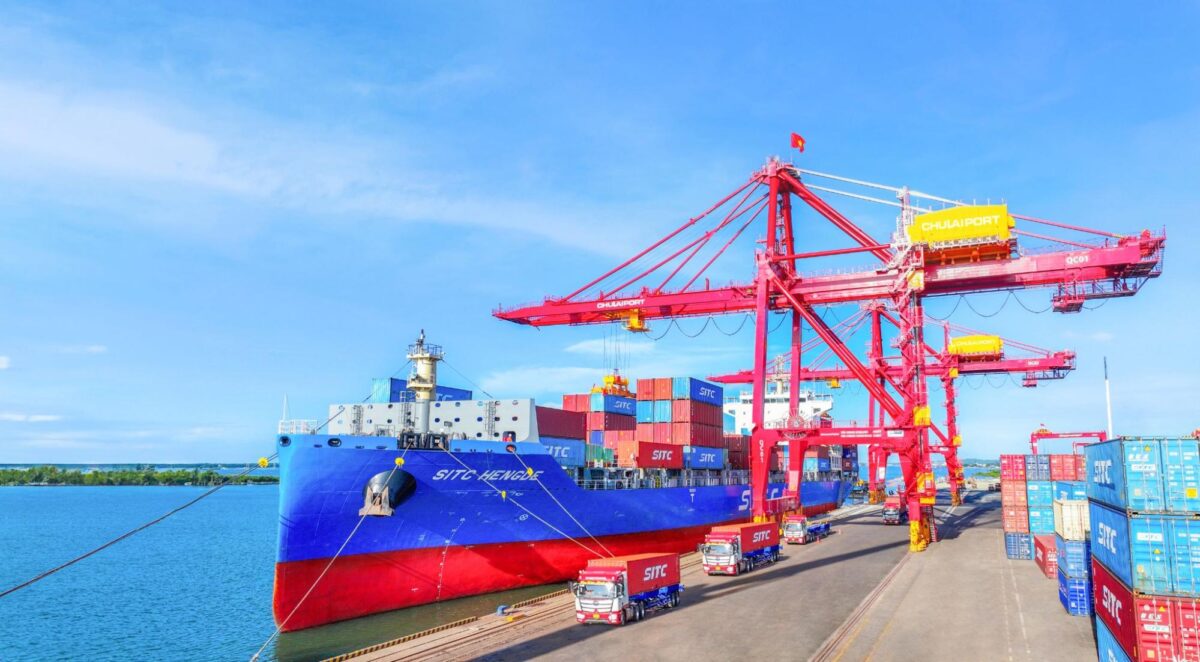
Port connectivity, free trade agreement (FTA) coverage and the depth of supporting industry ecosystems directly affect total landed cost and delivery reliability of machinery exports. Countries with deep-water ports, established freight forwarding networks and FTAs covering major destination markets reduce both the financial and operational risk of cross-border equipment procurement.
Manufacturing scale, international quality standards and export infrastructure all play a critical role in determining global competitiveness. Countries that perform strongly across these areas are typically the ones trusted by international buyers and large-scale contractors.
Total Cost of Ownership
When evaluating total cost of ownership (TCO), buyers often focus primarily on unit price, although several additional factors significantly influence the overall cost structure. Shipping cost varies by location and countries with strong export logistics and major shipping hubs can reduce delivery costs while improving supply chain efficiency. Tariffs also play a role because manufacturing in a country that has free trade agreements with major markets can reduce or even eliminate tariff expenses. Labor cost influences manufacturing efficiency and factories that use automated production lines can reduce manual labor requirements while improving product consistency.
Maintenance costs are lower when the manufacturing hub has strong engineering expertise and established supplier networks. This ensures easier access to parts and technical support. Lead time risk refers to the time required to produce and deliver equipment. Countries with automated production lines and efficient logistics minimize this risk. Labor cost influences manufacturing efficiency, but automated production lines reduce reliance on manual labor, making the total cost more predictable.
The 10 Best Countries for Industrial Equipment Manufacturing
Industrial equipment manufacturing is concentrated in countries with strong engineering capabilities, advanced production technologies, integrated supply chains, and global export competitiveness. The following countries are recognized as leading hubs for industrial equipment manufacturing worldwide.
Note: The countries below are not ranked strictly by manufacturing output. Instead, they are presented based on their overall attractiveness as sourcing destinations for international OEM buyers in 2026, considering the balance of cost, quality, scalability, and supply chain reliability.
Vietnam
In 2024, Vietnam’s manufacturing sector reached a value added of approximately $116.38 billion, representing a 10.31% increase year-over-year. Exports to the European Union in particular continue to gain traction, driven by the EU-Vietnam Free Trade Agreement (EVFTA), which opens access to one of the world’s largest consumer markets and gives Vietnamese manufacturers a measurable edge over competitors outside the agreement.
This export strength is built on a combination of competitive production costs, a strategic location within ASEAN trade corridors, and expanding market access through both the EVFTA and RCEP. Backed by consistent policy stability and targeted investment incentives, the country has developed OEM manufacturing capability across mechanical processing, metal fabrication, and assembly operations. This capability is increasingly backed by internationally recognized quality standards, with a growing number of Vietnamese manufacturers holding certifications, enabling them to meet the compliance requirements of industrial buyers across Europe, North America and beyond.
About the core segment, Vietnam stands out as a particularly strong sourcing destination for industrial electrical equipment, metal fabrication, industrial machinery, and OEM contract manufacturing of mechanical components, making Vietnam one of the most attractive sourcing destinations for internationally certified industrial equipment manufacturing at competitive costs.
India
In 2024, India’s manufacturing sector reached a value added of approximately $490.40 billion, accounting for 12.53% of GDP, a scale supported by a large engineering workforce and an established heavy industry base that together underpin the country’s export capabilities.
This foundation is reflected in India’s engineering goods exports, which hit a record $116.67 billion in fiscal year 2024/25, confirming competitive strength in heavy engineering, process machinery and fabricated components at international scale. India is a particularly reliable sourcing destination for heavy engineering equipment, process machinery, pumps and valves, and fabricated engineering goods.
Mexico
Mexico’s manufacturing value added reached approximately $363.79 billion in 2024, positioning it among the top manufacturing economies globally. Proximity to the United States, combined with USMCA trade provisions, has made Mexico a primary near-shoring destination for North American supply chains, with automotive-grade manufacturing standards such as IATF 16949 and ISO 9001 well-established across the industrial base. As a result, Mexico is best suited for buyers sourcing automotive tooling and components, industrial automation cells and metal fabrication intended for the North American market.
China
China’s manufacturing value added reached approximately $4.661 trillion in 2024, maintaining its position as the largest manufacturing economy in the world. This scale is made possible by a complete domestic supply chain that enables production across virtually every industrial category at unprecedented volume and competitive cost.
Rapid investment in robotics, automation and smart manufacturing systems is further accelerating the technology level of Chinese industrial equipment exports, broadening the range of applications where Chinese suppliers can compete. For buyers, China remains the go-to source for electrical machinery, electronics manufacturing equipment and high-volume general industrial machinery.
United States
US manufacturing value added reached approximately $2.913 trillion in 2024, anchored by high-technology and innovation-driven sectors that distinguish it from volume-based manufacturing economies. This foundation supports a machinery export profile built on global engineering standards and an innovation-driven R&D ecosystem that continuously pushes the technology frontier of industrial equipment.
The United States remains a leader in smart manufacturing systems development, and is the primary sourcing destination for buyers requiring semiconductor manufacturing equipment, industrial automation equipment and aerospace manufacturing equipment where technical precision and advanced capability take precedence over cost.
Germany
Germany stands as one of the world’s manufacturing powerhouses and the primary hub for mechanical engineering in Europe, with the machinery and equipment sector alone generating approximately €364.91 billion in revenue in 2024 while employing roughly 1.3 million workers. This depth of industrial specialization is reflected in Germany’s global export standing, where the country ranks among the top three in 24 out of 31 machinery and equipment segments. Underpinning this is a commitment to high-precision manufacturing that meets advanced standards including ISO, CE marking and DIN engineering norms.
Germany is the benchmark sourcing destination for machine tools, industrial automation, process equipment and packaging machinery.
Japan
Japan’s manufacturing value added stands at approximately $867 billion, concentrated in high-precision engineering and advanced electronics, sectors that have long defined the country’s industrial identity. This specialization underpins a global reputation for precision, durability and reliability in industrial machinery, governed by JIS standards and ISO certification across the production base.
A strong R&D culture further sustains continuous technology advancement, particularly in CNC machine tools and industrial robotics, making Japan the reference destination for buyers requiring precision manufacturing equipment, specialized electrical machines and robotics applications across automotive and electronics assembly.
Italy
Italy’s manufacturing value added reached approximately $345.29 billion in 2024, with the country holding the position of Europe’s second-largest machinery producer and a particular strength in specialized industrial engineering. Italy’s packaging machinery industry alone achieved a historic turnover of approximately €10 billion in 2024, reflecting the depth of capability in this segment. EU certification compliance is standard across Italian industrial machinery exports. Buyers looking for packaging machinery, food-processing equipment, machine tools and specialized industrial machinery will find Italy among the most capable sourcing destinations available.
Netherlands
The Netherlands boasts a highly advanced manufacturing sector, recording a manufacturing value added of approximately $128.21 billion in 2024, with a strong concentration in high-technology industries. The country’s competitive edge in machinery exports is driven by an innovation-led R&D ecosystem and strict adherence to global engineering standards, including ANSI, ASTM, and ISO. Consequently, the Netherlands serves as a premier hub for semiconductor manufacturing equipment and precision mechatronics systems.
France
France features a manufacturing sector with a manufacturing value added of approximately $300 billion in 2024. The country’s export strength in machinery is backed by its prestigious engineering reputation across industrial systems and a strict adherence to EU industrial certifications. Given these capabilities, France stands out as a premier hub for industrial engineering systems and aerospace manufacturing equipment.
Leading countries in industrial equipment manufacturing demonstrate more than cost advantages. Sustainable competitiveness depends on integrated production capacity, strong OEM experience, efficient logistics and cost competitiveness. Machinery exports from these nations collectively shape global supply chains. Each international equipment supplier offers distinct strengths based on its industrial heritage and investment priorities. These factors determine a country’s ability to serve global industrial sourcing demands.
THACO INDUSTRIES – A Trusted Industrial Equipment Manufacturing Partner from Vietnam
THACO INDUSTRIES is Vietnam’s leading mechanical engineering and supporting industries corporation established as a trusted OEM manufacturing partner with proven capability in delivering high-quality industrial solutions for global equipment exporters and procurement teams across multiple sectors and geographies.
Integrated Industrial Ecosystem
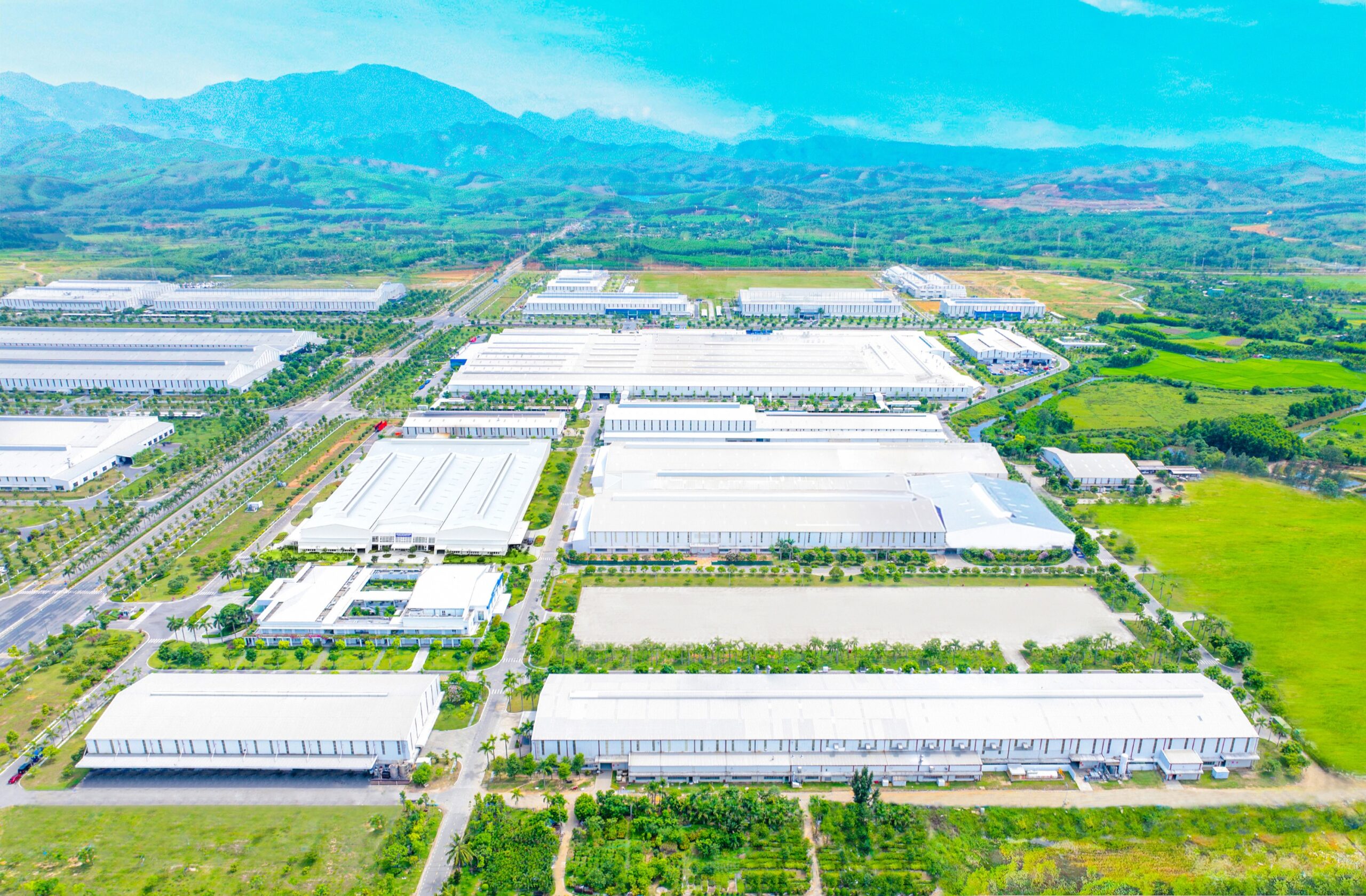
THACO INDUSTRIES operates a 320-hectare integrated manufacturing complex in Chu Lai, Vietnam. The corporation runs an all-in-one value chain integrating Business and R&D, manufacturing, installation, warranty and repair into a seamless end-to-end OEM solution. This structure eliminates inter-supplier quality variance and compresses lead times across the full production lifecycle.
The corporation also invests in advanced manufacturing technologies and automated production lines, including over 200 fabrication machines such as:
- CNC machining systems: 5-Axis CNC Machining for complex surface machining and multi-angle parts.
- Robotic welding line: MIG/MAG Robotic Welding, TIG Robotic Welding, Spot Welding, meeting AWS D1.1 and AWS D1.2 standards.
- Laser cutting: Fiber Laser cutting systems; sheet laser cutting machines (3–15 kW), compliant with European standards.
This technology base supports both high-volume standard production and precision custom fabrication within the same integrated facility.
Strong Engineering and R&D Capabilities
THACO INDUSTRIES invests in engineering and product development through a dedicated R&D center supported by many qualified engineers and technical experts. This integrated capability enables customized product delivery from initial specification through prototype validation and series production.
The corporation actively conducts market research and product development to keep pace with evolving industry trends and customer demands. Its R&D activities span the entire development cycle, including design, simulation, prototyping, testing and product optimization. The company is equipped with advanced design and simulation software, modern testing systems and technologies such as AI, IoT and automation solutions.
Diverse Product Portfolio
THACO INDUSTRIES maintains a portfolio of over 500 industrial equipment product types across multiple segments:
- Automotive Components: The corporation specializes in product design, testing, validation and development. The company manufactures and supplies automotive components, assemblies and spare parts for both domestic and international automobile manufacturers.
- Multi-purpose Mechanical Engineering: THACO INDUSTRIES manufactures products using advanced materials such as aluminum and carbon fiber. Our capabilities include blank fabrication and forming, high-precision machining, structural welding, surface treatment and production of mechanical products and equipment for multiple industries.
- Railway Industry: THACO INDUSTRIES is also expanding into the railway sector, covering locomotive and railcar manufacturing, specialized electromechanical equipment, large-scale repair and maintenance operations and high-technology concrete components for infrastructure construction.
- Heavy Industry: THACO INDUSTRIES researches, designs, engineers and manufactures oversized and ultra-heavy structures. The corporation also engages in shipbuilding and offshore equipment production, along with specialized equipment for industrial and energy infrastructure construction projects.
- High-tech Industry: The corporation focuses on research, development and manufacturing of industrial electrical and electronic components and equipment. We produce automation lines, intelligent control systems, smart factory solutions, including industrial robots, AGVs, AMRs, UAVs and drones.
Certifications and Global Standards
THACO INDUSTRIES holds internationally recognized certifications confirming production system quality and process compliance across all manufacturing programs:
- ISO 9001:2015 – Quality Management System
- ISO 14001:2015 – Environmental Management System
- ISO 3834 – Welding Quality Requirements for metallic materials
- EN 1090-1 – Structural steel and aluminum execution for European market compliance
- ISO 45001:2018 – Occupational Safety and Health Management System
- RoHS and REACH – Environmental and hazardous substance compliance for EU market access
These certifications position THACO INDUSTRIES as a credible international equipment supplier for buyers in regulated markets across Europe, North America, and Australia.
Logistics Infrastructure Supporting Global OEM Production
THACO INDUSTRIES supports a full range of Incoterms, including FOB, CIF and DDP, alongside export documentation preparation and freight consolidation assistance. Packaging is optimized for international transit, with container-loading configurations designed to minimize freight cost and protect equipment integrity across long-haul shipping routes.
Global Export Markets
THACO INDUSTRIES serves more than 50 international customers exporting industrial equipment to the United States, Australia, Canada, Mexico, Germany, India, Sweden, France, Japan, New Zealand, Singapore, South Korea and across the ASEAN region. This export footprint confirms the depth of compliance and the logistics capability required to serve buyers across regulated and cost-competitive markets simultaneously.
Through projects delivered across multiple industrial sectors, THACO INDUSTRIES has worked with both domestic and international brands in OEM manufacturing, supporting customers with large-scale production capabilities, manufacturing flexibility, and export coordination for global supply chains.
Ready to source from one of the best countries for industrial equipment manufacturing in Southeast Asia? Contact THACO INDUSTRIES at partsales@thaco.com.vn or call (+84) 389 067 557 (Ms. Linh).


