
Industrial Equipment
Key Engineering Standards and Requirements for Conveyor Belt Manufacturers
Conveyor belts are foundational components in industrial material handling. From mining operations, logistics hubs, port terminals, food processing facilities and manufacturing plants, conveyor systems move bulk materials and packaged goods continuously, replacing manual labor with reliable, automated throughput.
This guide covers different types of conveyor belts, their key applications and important standards when choosing conveyor belt manufacturers to help buyers select the right manufacturing partner for their operations.
What Is a Conveyor Belt?
A conveyor belt is a continuous loop of material that transports goods or raw materials from one point to another within a conveyor system. The belt wraps around two or more pulleys and forms a closed loop. One pulley, known as the drive pulley, powers the belt’s movement. The other, the idler pulley, maintains tension and direction. Both must rotate in the same direction to function correctly.
The system includes other conveyor system components such as rollers and motors. This mechanism is widely used in mining conveyor systems and automated production lines. Bulk material conveying solutions depend on this mechanism to replace manual handling with automated, uninterrupted material flow.
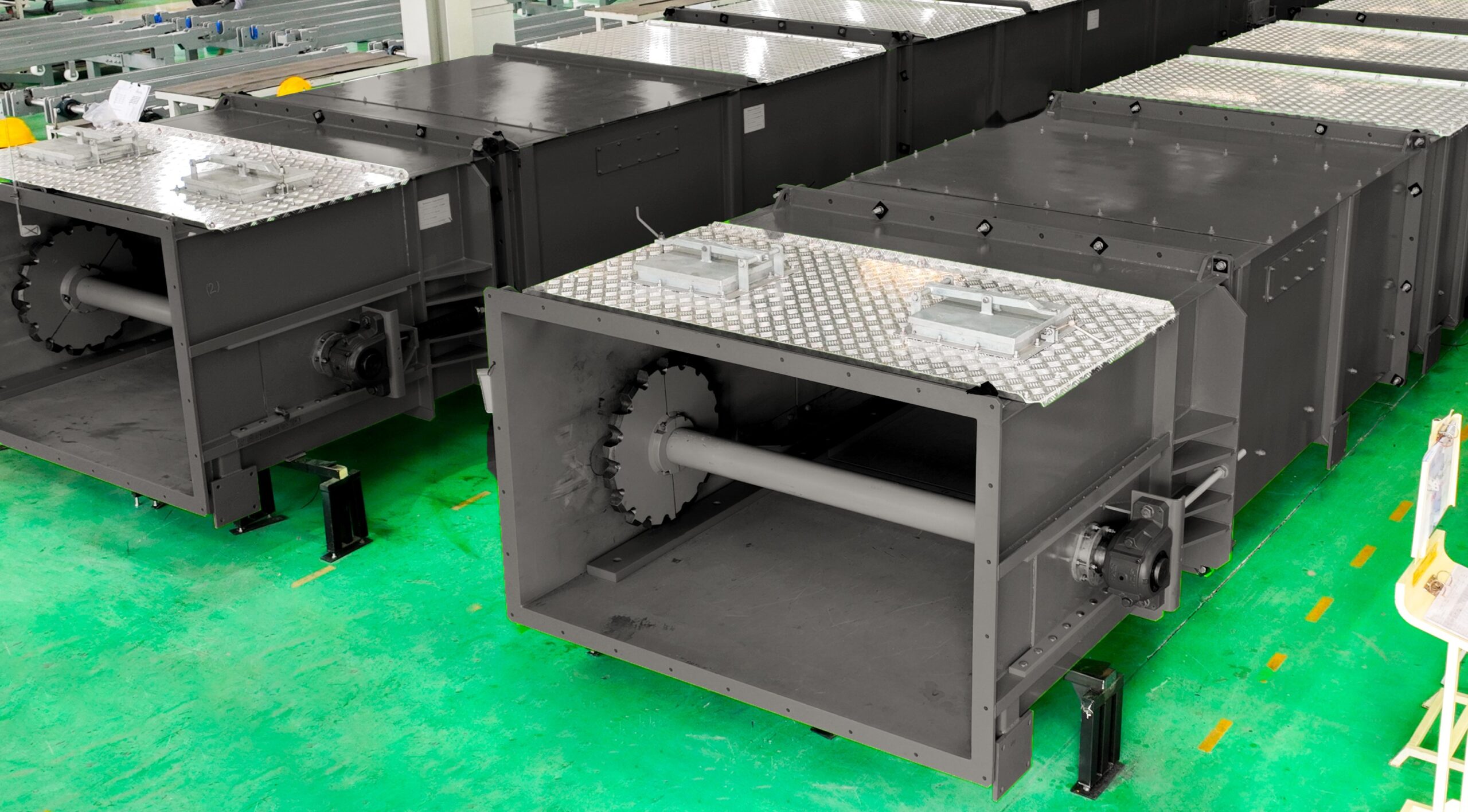
A standard conveyor belt composed of four conveyor belt components: the belt body (made from rubber, PVC, PU, or metal), reinforcement layers (fabric or steel cords), pulleys and rollers and drive motor systems.
Types of Conveyor Belts: Key Features and Applications
Conveyor belt manufacturers produce various types to match specific operational needs. Each design offers distinct structural characteristics and performance benefits.
Gravity Roller Conveyors
Gravity roller conveyors are non-powered systems that rely on gravitational force rather than motors or drives to move items from one point to another. They represent one of the most cost-effective and energy-efficient approaches to material handling, making them a staple choice offered by most roller conveyor equipment suppliers across a variety of industries, including warehouses, production lines and despatch areas.
Structural Characteristics:
- These conveyors are composed of a series of rollers mounted horizontally within a frame, selected to match both the weight and the speed requirements of the specific product and application
- They are designed for safe and cost-effective material handling.
Applications:
- Best suited for items that are loaded onto the belt with gravity assistance
- Highly effective for long-distance transport, as roller surface significantly reduces friction and minimizes the effort required to keep products in motion
- Commonly used for packing, sorting, assembling, inspecting and transporting goods
Flat Belt Conveyors
Flat belt conveyors are among the most versatile and widely used conveyor systems in the industry. Trusted by leading conveyor belt manufacturers across virtually every sector, these systems are prized for their adaptability, reliability and ability to handle a broad range of goods in both light and medium-duty environments.
Structural Characteristics:
- Flat belt conveyors use a series of powered pulleys to drive a continuous flat belt, which can be made from either natural materials or synthetic fabrics such as polyester or nylon.
- They are one of the most versatile conveyor types, capable of handling a wide range of goods across light to medium-duty applications.
Applications:
- They are primarily designed for moving light- to medium-weight loads efficiently from point A to point B within a facility.
- Fitted with the appropriate belt material, they can also transport small, soft or irregularly shaped items without causing damage.
Modular Conveyors
Modular conveyors stand out from traditional belt systems due to their unique construction method. Rather than using a single continuous belt, these conveyors employ interlocking conveyor belts – a single loop of interlocked plastic segments that create a robust, adaptable and highly hygienic conveying surface. Leading conveyor belt manufacturers have developed these modular systems to offer greater flexibility compared to conventional belts.
Structural Characteristics:
- Built from a single loop of hard plastic segments that interlock with one another, forming a rigid yet flexible belt structure
- The plastic composition makes the belt significantly easier to clean and sanitize
- More resistant to sharp, abrasive, or corrosive materials that might degrade conventional belt surfaces
Applications:
- Ideal for conveyor layouts that must navigate corners or unique conveyor configurations
- Widely used in food processing due to easy cleaning and compatibility with metal detection systems
- Spacing between plastic segments is adjustable for applications where fluid should be either drained or retained as it is carried on the conveyor
Cleated Belt Conveyors
Cleated belt conveyors feature vertical cleats or barriers on the belt surface to keep loose materials secure during inclines, declines and directional changes. Many conveyor belt manufacturers offer cleated belts as a customizable upgrade to standard flat belt systems.
Applications:
- Inverted Capital “T”: Best suited for light-duty jobs such as transporting small parts, packaged items and food products
- Forward-Leaning Capital “L”: Curved faces scoop granules; suited for light- to medium-weight bulk material on steep inclines
- Inverted “V”: They’re best for transporting abrasive, heavy or large-piece bulk materials, as they can withstand heavy impacts
- Lugs and Pegs: These kinds of cleats accommodate specific needs such as promoting liquid run-off when transporting washed fruit or vegetables, selectively filtering products by size, or holding individual products securely in place during transport.
Incline/Decline Belt Conveyors
Also called the Z-frame conveyor, this system is designed to move products between different elevations while keeping them stable on the line.
Structural Characteristics:
- They are equipped with a center drive, gear motor and take-up with a single or double nose
- Belt surface can be smooth or cleated to prevent product slippage on steep angles
Applications: Used wherever products must be moved between different elevations while preventing them from sliding, tipping, or falling off the conveyor line
Specialty Conveyors
Specialty conveyors are tailored for specific applications not addressed by standard conveyor types. While less common, they serve critical roles in niche industries.
Structural Characteristics: Specialty conveyors differ from standard types in their highly adaptable design. Frame materials, belt width and add-on accessories can all be tailored to the demands of each application. This degree of customisation reflects the OEM fabrication capacity required to produce them.
Typical Applications:
- Fiberglass Conveyor Belt: As the name implies, this type of conveyor belt is made of fiberglass. They are useful for tasks that require extreme temperatures, making them ideal for industries such as food processing, metallurgy and chemical manufacturing.
- Metal Nub Conveyor Belts: This particular conveyor belt is fitted with metal nubs to better handle complex machines and their parts
- Narrow-Width Conveyor Belts: This type of conveyor belt is the best choice for handling small items such as electronic components, small packaged goods, and precision parts…
- Vacuum Conveyor Belts: This particular conveyor belt creates suction to keep light products (sheets of paper, leaflets, etc.) on the line despite inclines and high speeds
- Magnetic Conveyor Belts: This type of conveyor belt can transport materials that contain iron through equally spaced electromagnets that are placed within the bed of the conveyor
Stainless Steel Conveyors
Stainless steel conveyors are the standard choice for sanitary industries. Most leading conveyor belt manufacturers recommend them for food, beverage and pharmaceutical environments.
Structural Characteristics:
- Designed to withstand these procedures and provide a food-safe surface.
- Smooth, crevice-free surfaces minimize areas where contaminants, residues, or microorganisms could accumulate
Typical Applications: Required in food and beverage processing, pharmaceutical manufacturing and other industries mandating strict sanitation procedures.
Comprehensive Procedure of Conveyor Belt Manufacturing
Conveyor belt manufacturers follow a precise sequence to ensure strength, durability and system compatibility. The manufacturing process combines engineering design, raw material preparation, advanced metal fabrication, product assembly, quality inspection and testing, shipping and packaging. A key strength lies in welding and precision metal processing, which play a critical role in creating robust conveyor belt structures and components.
Engineering Design and Specification
Design engineers determine belt width, length, tensile strength, material type and load capacity based on the application environment. They then use simulation software such as AutoCAD, SolidWorks…to develop technical specifications and verify compatibility with the wider conveyor system before any production begins.
Raw Material Preparation
Natural rubber, synthetic rubber, PVC or PU compounds, steel cords and fabric reinforcement layers form the primary input materials. Chemical additives are also incorporated to achieve specific mechanical properties such as elasticity, wear resistance and temperature tolerance.
Pulleys and Rollers Processing
Pulley and roller manufacturing begins with raw material cutting. Laser or plasma cutting, CNC lathing and milling produce precise pulley housings and shafts, CNC braking and structural welding are applied to frame and chute components. Steel is rolled and formed into cylindrical profiles for roller tubes, while screw flights are shaped separately.
Surface treatment is then applied to improve wear resistance and operational durability. Common coating materials include rubber lining, polyurethane coating, ceramic coating…
Next, manufacturers will assemble shafts, bearings and tubes into a complete roller unit ready for system integration. Quality control is conducted throughout each stage to ensure every component meets system specifications before dispatch.
With proven experience in precision machining for complex industrial applications, THACO INDUSTRIES delivers pulleys and rollers that are built for durability, load efficiency and long-term operational reliability.
Conveyor Belt Body Processing
Rubber compounds are prepared using industrial mixers with stabilizers and additives calibrated for the required mechanical properties. Leading conveyor belt manufacturers utilize modern conveyor belt manufacturing technology that relies on precision calendering machines to form these compounds into uniform sheet layers.
Reinforcement materials such as fabric layers or steel cords are embedded into the belt structure during this stage. Layers are bonded through vulcanization, a heat-and-pressure process that permanently strengthens the rubber matrix. Surface patterns are added as a final step to enhance grip and material handling performance.
Drive Motor System Preparation
Motor production follows three sequential stages: rotor assembly, stator assembly and final motor assembly. Mechanical and electrical inspections are conducted at each stage. Depending on the industry, some statistics need to be altered, such as speed, torque and power of the motor.
Product Assembly
Individual components such as motor, gearbox, coupling, belt or screw assembly are integrated into a complete conveyor belt production line. PLC (Programmable Logic Controller) systems and sensor networks are incorporated to enable automated operation and monitoring. Belt tension and alignment are calibrated to the customer’s operational requirements before dispatch.
Quality Inspection and Testing
Conveyor belt manufacturers conduct tensile strength testing, unloaded and loaded run testing, abrasion resistance testing and roller dimensional verification. These tests confirm that the system performs to specification under the load conditions it will encounter in service.
Shipping and Packaging
Packaging complies with ISO 5285:2012 for conveyor belt storage and handling. Conveyor structures are secured to pallets using wooden crates or strapping. Motors and electrical components receive individual protection. Belt sections are wrapped in UV-resistant film to maintain material properties during transit and outdoor storage.
How To Choose The Right Conveyor Belt: Key Criteria To Choose The Suitable Option
Buyers evaluate several factors when selecting from conveyor belt manufacturers:
Evaluate Material Type and Load Characteristics
The first step is to identify the type of material being transported, whether bulk materials, packaged goods, food products, or other goods. Each material type places different demands on the belt surface. From there, select a belt material such as rubber, PVC, PU, or steel cord that can handle the specific load conditions without excessive wear. As an industrial conveyor belt supplier, the engineering team recommended choosing the right belt construction based on detailed material analysis to ensure long service life.
Consider System Design and Operating Conditions
Belt width, length and operating speed must align with the conveyor system’s layout and throughput requirements. Additionally, conveyor belt operating conditions should also be considered such as high temperatures, oil exposure, chemical contact, abrasive materials, or outdoor weather. Environmental factors must be carefully evaluated to choose the most suitable belt cover and carcass.
Check Belt Strength, Compliance Standards and Certifications
Tensile strength and reinforcement specification must match the maximum expected load. Verify that the belt meets applicable standards before procurement (ISO, DIN, or food-grade requirements if applicable). Some certifications include ISO 2109:1975 for light-duty belt conveyors handling loose bulk materials, ISO 14890:2013 for rubber and plastic-covered textile conveyor belts and ISO 15236-1:2016 for steel cord conveyor belt design and mechanical requirements. Compliance with these conveyor belt performance standards is a baseline requirement.
THACO INDUSTRIES: A Trusted OEM Partner for Conveyor Belt Systems
THACO INDUSTRIES aims to become a strategic partner in providing high-quality conveyor belts and systems for various industries. With decades of experience supplying mechanical components, structural steel assemblies, and precision-engineered parts to automotive OEMs, mining operators and infrastructure projects across multiple continents, the corporation applies proven industrial manufacturing standards to every conveyor system it produces.
Significant Specialized Production Capacity
THACO INDUSTRIES establishes a comprehensive all-in-one value chain by integrating its R&D Center with specialized production units like the Mechanical Complex and the Specialized Equipment Company. This synergy allows the group to operate as a leading material handling equipment manufacturer with complete control over the design and fabrication process. As one of the trusted conveyor belt manufacturers, the corporation leverages the expertise of other affiliates such as the Molds Company and Plastic Components Company, the group ensures a seamless supply of high-quality components for complex systems. This integrated model highlights the group’s unique capability to provide end-to-one solutions for global partners
Every major mechanical component and precision part is produced internally, maintaining consistent quality for the product outcome. This structure eliminates inter-supplier variance and maintains consistent quality across the full value chain: Business to R&D, then transferring to Manufacturing and Installation, and finalization with Warranty & Repair. The corporation continuously invests in digital production management and advanced technology to support large-scale, complex orders.
Proven Capability In High-volume And Precision
THACO INDUSTRIES applies leading-edge technology in Vietnam with a modern production line, machinery, and equipment system such as: a laser cutting line with nine 15,000 – 30,000W machines and 5-axis CNC milling machines that handle loads up to 25,000 kg. A robot welding line equipped with 100 robots performs precise GMAW/MIG/MAG welding for frames and SAW/FCAW for pulleys. The use of customized industrial jigs enhances accuracy and efficiency while saving labor across the automated stations.
The Mechanical Complex Company delivers an annual capacity of 200,000 tons of steel and 300,000 mechanical products. This massive scale supports the production of heavy-duty equipment like excavator buckets and large-scale structures. To dominate the mining sector, the Specialized Equipment Company employs CNC pressing and 4-axis plate roller machines for high-precision machining, with the assistance from the Molds Company and Plastic Components Company to build outstanding products, meeting strict demands from buyers.
International Quality Certifications
THACO INDUSTRIES ensures that all industrial conveyor belt systems operate under globally recognized management and production standards. Quality compliance includes ISO 9001:2015, ISO 14001:2015, ISO 3834-2 and EN 1090-1 EXC4 — the highest execution class for welded steel structures. CE Marking is applied where applicable, alongside REACH and RoHS compliance for component materials.
Flexible Logistics & Export Support
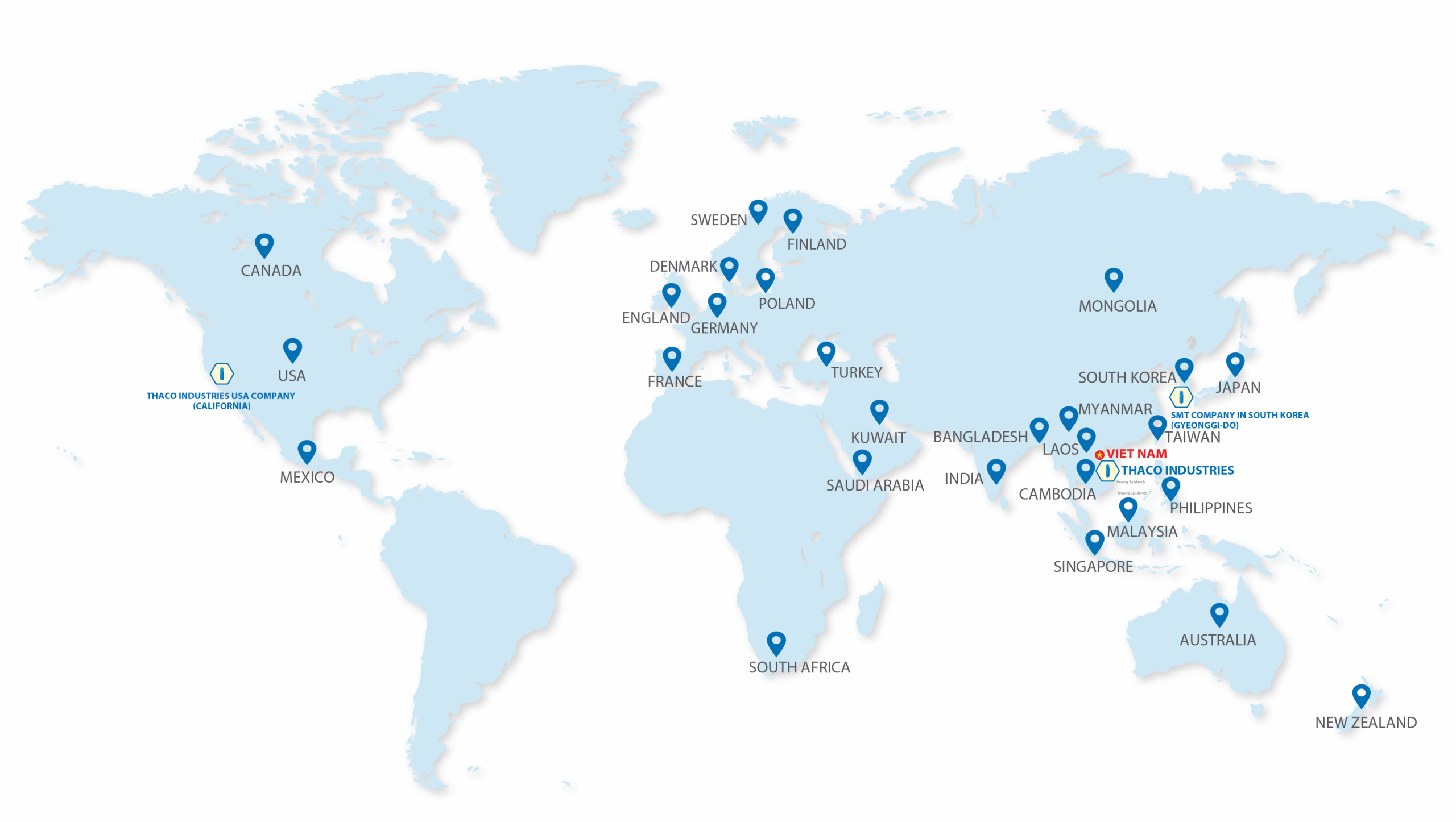
THACO INDUSTRIES supports FOB, CIF and FCA shipment terms with container-optimized packaging and complete export documentation. Deliveries are scheduled and routed according to each customer’s specific requirements, ensuring that shipment timelines align with their production or project plans. This flexibility reduces logistics cost and delivery lead time for international buyers across North America, Europe, Australia and ASEAN markets.
Contact THACO INDUSTRIES to discuss your next conveyor belt manufacturing project: partsales@thaco.com.vn or (+84) 389 067 557 (Ms. Linh).


