
Product information
Reliable Plasma Cutting Services for B2B Industrial Projects
Plasma cutting services provide precise, efficient metal fabrication for industrial manufacturers in construction, automotive, shipbuilding, and heavy machinery. THACO INDUSTRIES offers advanced CNC plasma cutting for carbon steel, stainless steel, and aluminum, supporting OEM production and large-scale B2B projects with ISO-certified quality. Integrated workflows including cutting, welding, painting, and assembly, ensure streamlined production and consistent adherence to technical specifications for global markets.
What Are Plasma Cutting Services?
Plasma cutting represents a thermal fabrication process that uses ionized gas to cut electrically conductive metals through controlled heat application. The method generates a high-velocity plasma jet capable of melting and removing material along predetermined cutting paths, making it essential for both structural fabrication and detailed component manufacturing.
The process accommodates various conductive metals including carbon steel, stainless steel, aluminum, brass, copper, and specialized alloys. Industrial applications typically range from 1mm to 50mm material thickness, depending on equipment specifications and project requirements.
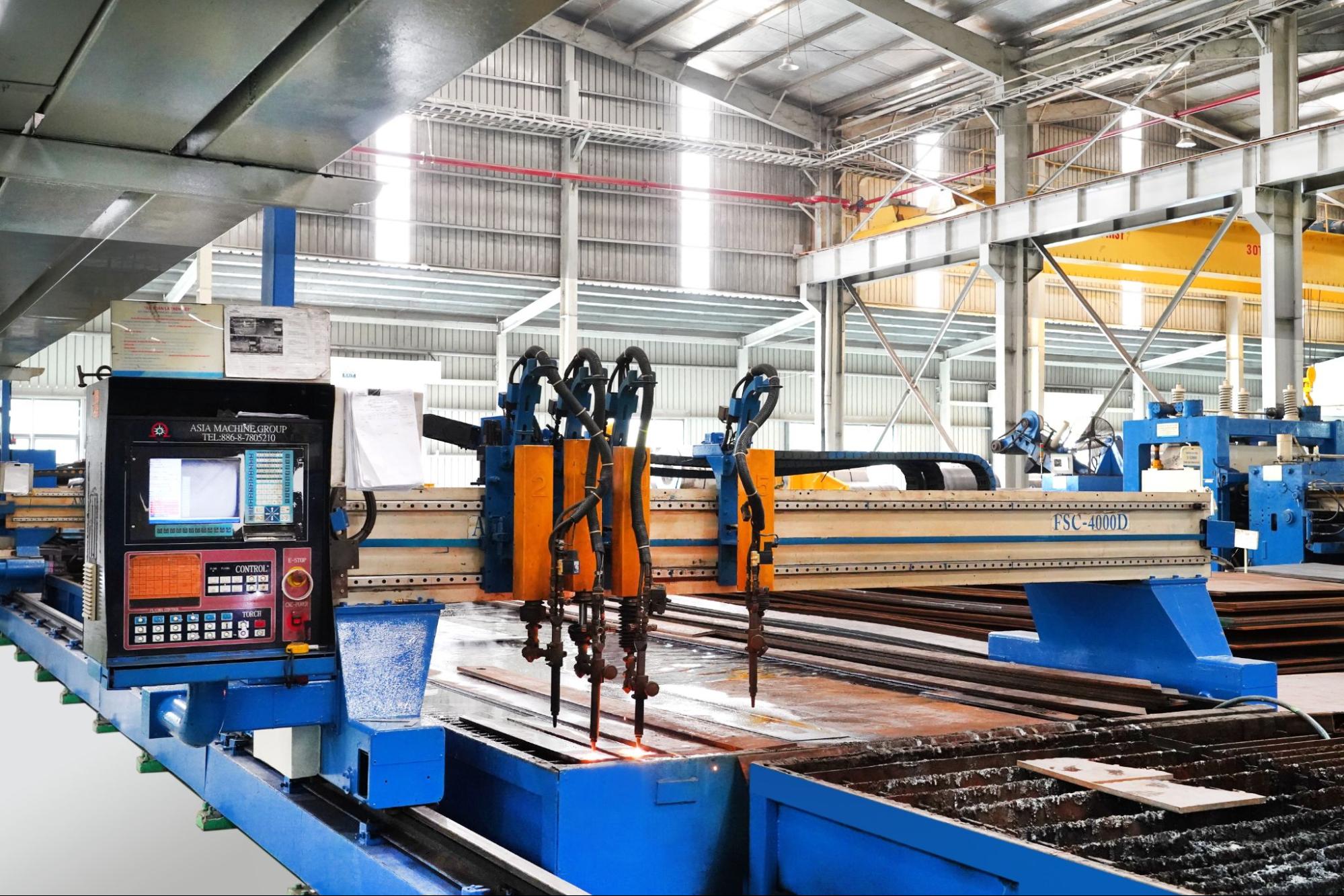
A standard plasma cutting workflow follows a systematic approach: Customer provides technical drawings/specifications → Quotation based on requirements → Plasma cutting (CNC or conventional) → Inspection to ensure accuracy → Optional post-processing (deburring, welding, painting) → Delivery to client. This structured process ensures dimensional accuracy, delivery schedule adherence, and component readiness for downstream assembly operations.
For B2B industrial clients, plasma cutting services prioritize precision, on-time delivery, and seamless integration with existing production workflows. THACO INDUSTRIES maintains rigorous quality control protocols throughout the fabrication cycle to meet customer specifications and international manufacturing standards.
How Does Plasma Cutting Work?
The plasma cutting mechanism relies on electrical arc generation between an electrode and the workpiece material. Compressed gas, typically air, nitrogen, oxygen, or argon, passes through a constricted nozzle where the electrical arc ionizes the gas stream, creating plasma with temperatures reaching 20,000°C to 30,000°C.
Plasma cutting operations rely on four primary components working in unison to generate, control, and deliver the plasma arc with precision. The power source converts electrical input into the high-frequency arc required for plasma generation. Plasma gas, selected based on material type and desired cut quality, flows through the torch assembly at controlled pressure. The cutting torch houses the electrode, nozzle, and gas distribution system, directing the plasma jet toward the workpiece. Finally, CNC control systems coordinate torch movement, cutting speed, and power parameters to achieve programmed geometry with repeatable precision.
Plasma cutting technologies can be broadly classified into two types, each serving distinct fabrication needs. Conventional plasma cutting provides cost-effective solutions for moderate precision applications and standard thickness materials, typically used for structural components and straightforward geometric profiles. High-definition plasma cutting employs advanced torch design, precise gas flow control, and optimized power delivery to produce smoother edge surfaces and tighter dimensional tolerances, making it suitable for complex shapes, intricate hole patterns, and applications requiring minimal secondary processing.
Advantages of Plasma Cutting Services
Plasma cutting technology delivers multiple operational benefits that address critical manufacturing priorities for industrial fabricators.
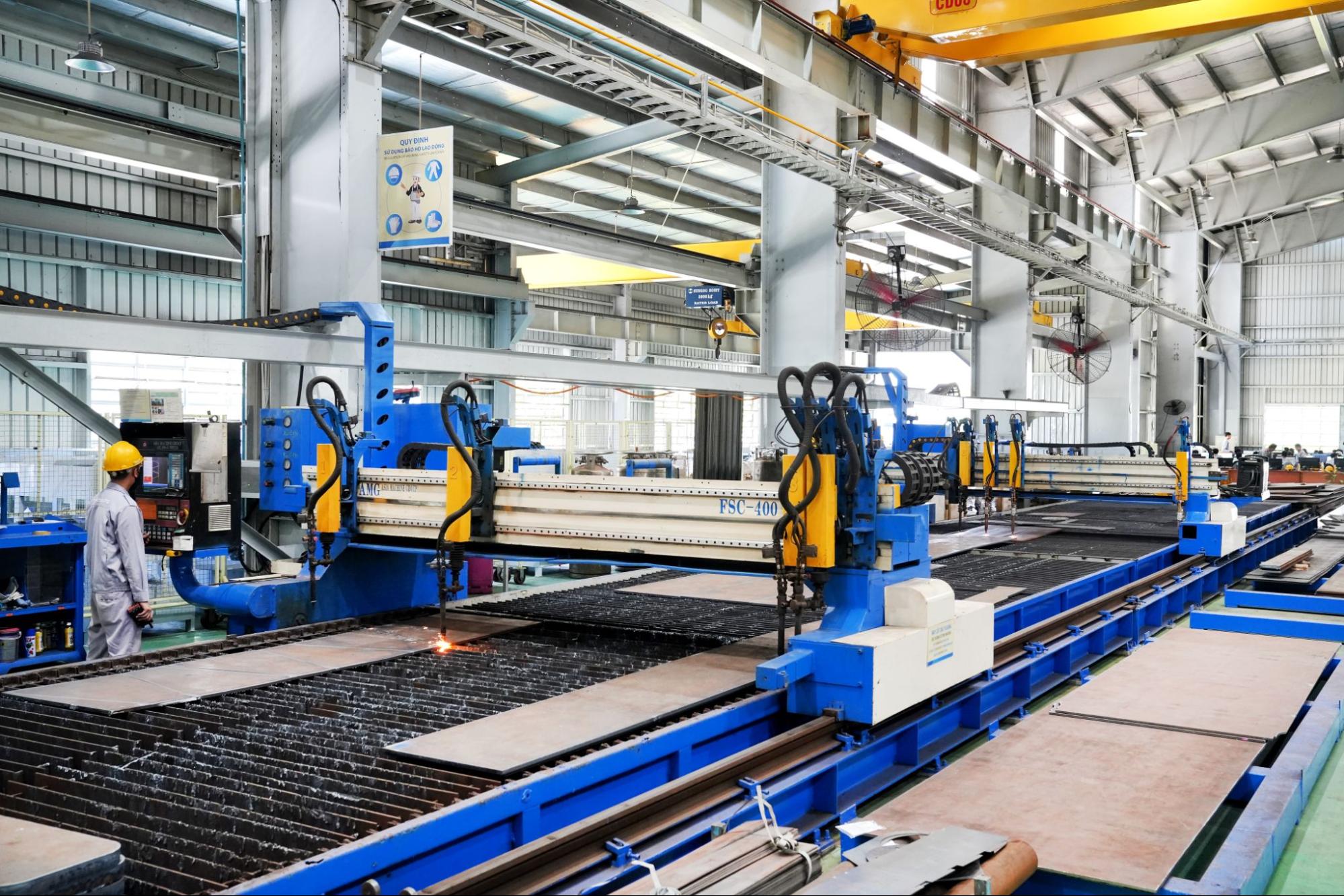
Versatility in Materials and Thickness
Plasma cutting systems process conductive metals across a broad thickness spectrum, typically handling materials from 1mm thin sheet stock through 50mm heavy plate. The technology accommodates ferrous metals like carbon steel and stainless steel, non-ferrous materials including aluminum and copper, as well as brass and various alloy compositions.
Equipment scalability supports both small precision components and large structural plates within a single fabrication facility. Production flexibility allows manufacturers to fulfill diverse project requirements without investing in multiple specialized cutting technologies.
Speed and Efficiency
Plasma cutting outperforms oxy-fuel and mechanical cutting methods when processing medium to thick metal sections. Cutting speeds for 10mm carbon steel typically reach 1,000-1,500mm per minute with conventional plasma systems, while high-definition equipment may achieve 800-1,200mm per minute with superior edge quality.
Faster cutting cycles directly reduce production lead times, enabling manufacturers to meet compressed delivery schedules. The efficiency gains become particularly significant in high-volume production environments where cumulative time savings across multiple parts substantially impact overall project timelines.
Cost-Effective Solution
Plasma cutting delivers lower operational costs compared to laser cutting when processing thicker metal plates, typically materials exceeding 6mm in thickness. Equipment acquisition costs, consumable expenses, and energy consumption remain moderate relative to output capacity.
The economic advantage proves especially valuable for high-volume industrial production where material thickness exceeds the optimal range for fiber laser systems. Metal processing facilities can achieve target quality standards while maintaining competitive pricing structures for B2B clients.
Precision with CNC Control
CNC plasma cutting machines execute programmed toolpaths with consistent repeatability, maintaining dimensional tolerances typically within ±0.5mm for conventional systems and ±0.25mm for high-definition equipment. Automated torch height control compensates for material warpage, ensuring uniform standoff distance throughout the cutting cycle.
Computer-controlled operation enables complex geometric profiles, precise hole placement, and intricate nested part arrangements. The technology supports direct integration with CAD/CAM software systems, streamlining the transition from engineering design to physical fabrication.
Minimal Finishing Required
High-quality plasma cutting produces clean edge surfaces with limited dross formation and minimal burr development. Cut edges typically require less grinding, deburring, or edge preparation before welding operations compared to oxy-fuel cutting methods.
Reduced secondary processing requirements translate to lower labor costs and shorter production cycles. Components proceed more rapidly to subsequent fabrication stages including welding, coating application, and final assembly.
Applications of Plasma Cutting Services
Plasma cutting technology serves diverse industrial sectors requiring reliable metal processing capabilities.
Construction & Structural Steel
Plasma cutting fabricates load-bearing components for building construction and infrastructure projects. Structural beams, column plates, connection brackets, and framework assemblies require precise dimensional control to ensure proper field assembly and structural integrity. Heavy plate cutting for bridge components, industrial building frames, and steel structure elements represents core applications within this sector.
Heavy Machinery & Agriculture
Agricultural equipment manufacturers and industrial equipment producers utilize plasma cutting for component fabrication. Tractor chassis parts, implement frames, equipment housings, and mounting brackets require durable steel construction with accurate hole patterns for assembly. Heavy-duty machine bases, support structures, and protective guards also rely on plasma-cut components.
Automotive & Trailers
Automotive OEM suppliers and trailer manufacturers depend on plasma cutting for chassis components, subframe assemblies, mounting brackets, and structural reinforcements. The technology supports both prototype development and high-volume production runs. Truck body components, trailer frames, and specialized vehicle structures benefit from the combination of cutting speed and dimensional accuracy.
Shipbuilding & Offshore
Marine fabrication requires thick steel plate cutting for hull construction, deck structures, bulkheads, and offshore platform components. Shipyards utilize plasma cutting to process heavy-gauge steel plates that form the primary structural elements of vessels and maritime installations. The technology handles the material thickness and cutting volume typical of marine construction projects.
Metal Fabrication Shops
Job shops and contract manufacturers employ plasma cutting services to produce OEM components, custom fabrications, and specialized assemblies across multiple industries. The technology provides flexibility to accommodate varied material types, thickness ranges, and geometric complexity without dedicated tooling investment. Small batch production and prototype development benefit from the rapid setup and programming capabilities of CNC plasma systems.
Plasma Cutting vs Other Cutting Methods
Different metal cutting technologies present distinct performance characteristics that influence selection for specific manufacturing applications.
| Method | Plasma Cutting | Laser Cutting | Oxy-Fuel Cutting | Mechanical Cutting |
| Precision | Moderate for thick metals | High precision for thin metals | Moderate precision for thick metals | Moderate precision |
| Speed | Fast for medium to thick metals | Slow for thick metals | Slower for thin metals | Slower for thick metals |
| Cost | Cost-effective for thicker materials | Expensive for thick materials | Less cost-efficient | High operational cost |
| Material Thickness | 1mm to 50mm | Thin metals only | Moderate thickness | Moderate thickness |
| Edge Quality | Clean with minimal burrs | High quality edges | Rougher edges for thicker materials | Rough edges for complex cuts |
| Best For | Large, complex parts, and thick metals | Thin, precise cuts for detailed parts | Cutting thick materials quickly | Complex shapes with little stress |
Plasma cutting occupies a strategic position within the metal fabrication technology landscape. The process delivers optimal results for medium to thick materials where laser cutting becomes economically impractical, while providing superior speed and edge quality compared to oxy-fuel methods. Manufacturers processing material thickness between 6mm and 50mm typically find plasma cutting offers the best balance of cost, speed, and quality.
Laser cutting maintains advantages for thin-gauge materials requiring extremely tight tolerances and minimal heat-affected zones. Oxy-fuel cutting remains viable for very thick steel plates beyond the practical capacity of plasma systems, though at reduced cutting speeds. Mechanical cutting methods like shearing or sawing serve specific applications but generally cannot match the geometric flexibility of thermal cutting processes.
Why Choose THACO INDUSTRIES for Plasma Cutting Services?
THACO INDUSTRIES operates as a leading OEM manufacturer in Vietnam’s mechanical engineering and supporting industries sector, providing integrated metal fabrication solutions for international B2B clients.
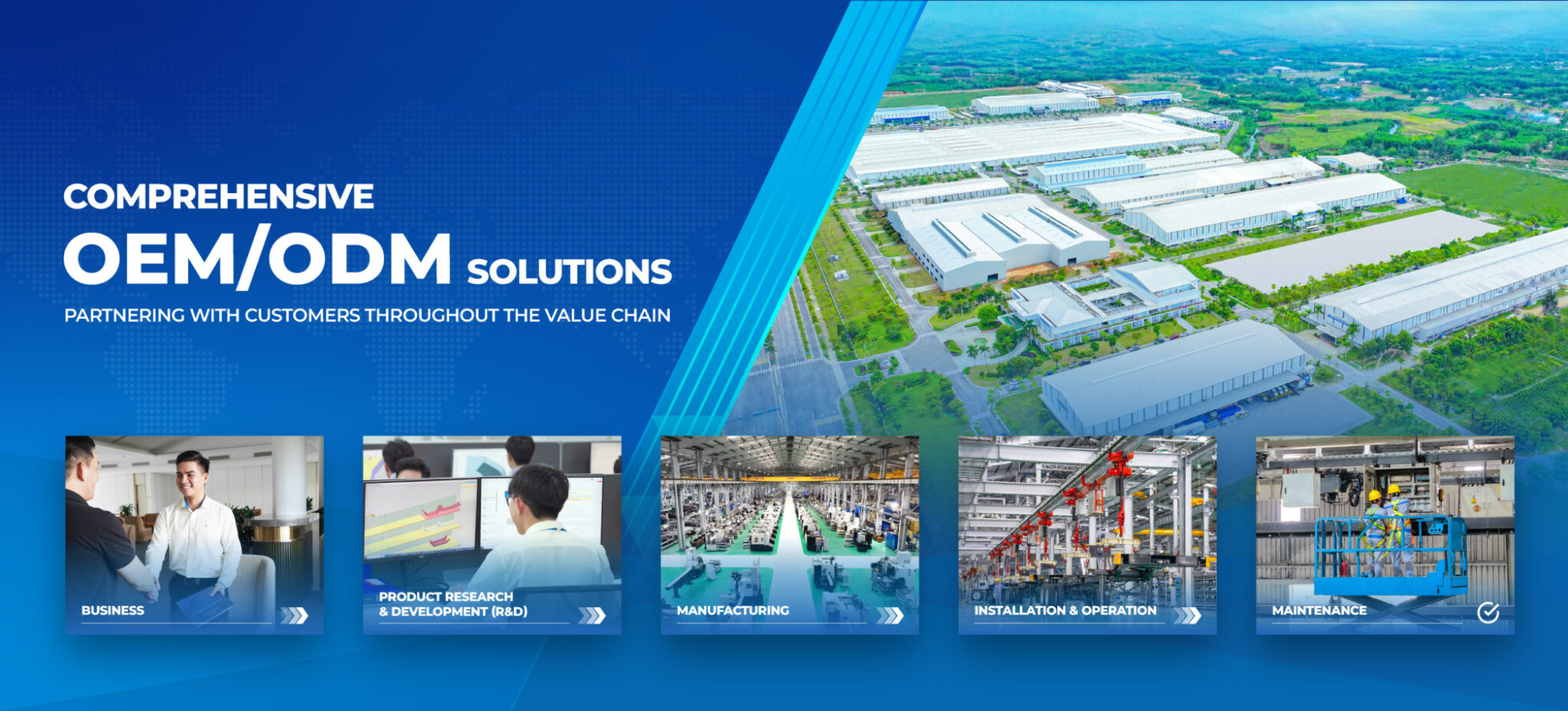
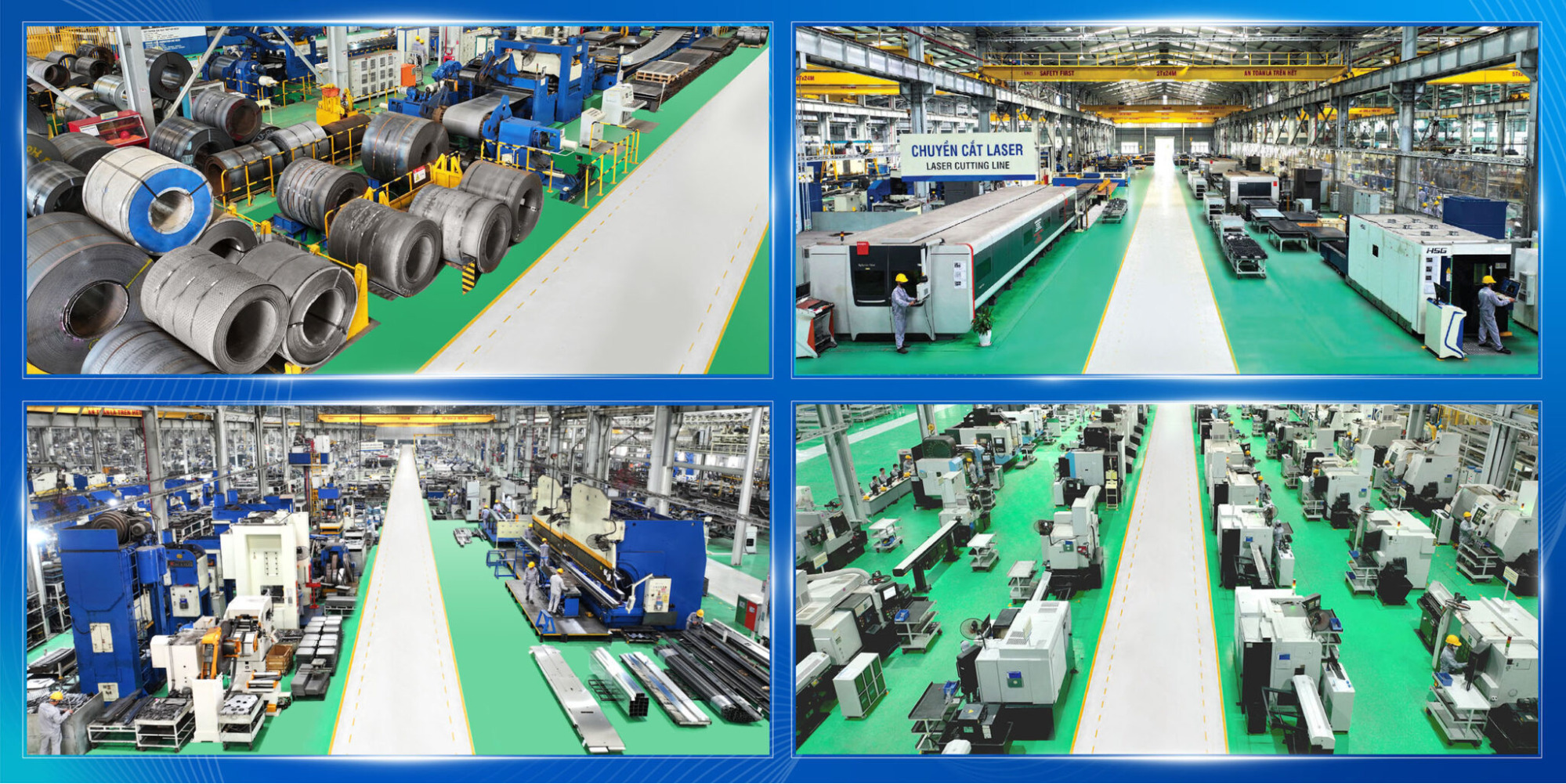
The corporation maintains advanced manufacturing infrastructure equipped with modern CNC plasma cutting machines capable of processing carbon steel, stainless steel, aluminum, and alloy steel materials. Production facilities accommodate large plate sizes and complex geometric profiles, supporting both individual component fabrication and high-volume production runs.
Comprehensive service integration distinguishes THACO INDUSTRIES from basic cutting job shops. The corporation delivers complete fabrication sequences: Cutting → Welding → Painting → Assembly. This end-to-end capability streamlines supply chain management for B2B clients, reducing vendor coordination requirements and simplifying quality control oversight.
International certification compliance demonstrates the corporation’s commitment to systematic quality management. THACO INDUSTRIES holds ISO 9001 certification for quality management systems, ISO 14001 for environmental management, and ISO 45001 for occupational health and safety management. In addition, the corporation complies with European standards including EN 1090 and CE Marking, ensuring conformity with structural integrity and product safety requirements for export to EU markets. These credentials collectively provide assurance of consistent process control, international compliance, and continuous improvement methodologies.
Global market experience spans multiple regions including the EU, North America, and the Asian market. The corporation’s export track record encompasses diverse industry sectors and technical requirements, establishing proven capability in meeting international standards and customer specifications.
Technical expertise within the engineering team enables accurate interpretation of complex CAD drawings, dimensional tolerancing requirements, and material specifications. THACO INDUSTRIES develops customized plasma cutting solutions aligned with specific project parameters, accommodating unique geometric features, special material grades, or accelerated delivery schedules.
Production capacity supports scalable manufacturing from prototype quantities through high-volume serial production. The corporation maintains flexibility to adjust output levels according to customer demand patterns while sustaining consistent quality standards. Long-term partnership orientation emphasizes collaborative development, continuous process optimization, and responsive adaptation to evolving customer requirements.
FAQs About Plasma Cutting Services
Which metals can be cut with plasma?
Plasma cutting processes all electrically conductive metals including carbon steel, stainless steel, aluminum and aluminum alloys, copper, brass, mild steel, and various tool steels. Non-conductive materials like ceramics, plastics, or wood cannot be cut using plasma technology because the cutting process requires electrical conductivity to establish the plasma arc between the electrode and workpiece.
How accurate is plasma cutting compared to laser?
Conventional plasma cutting typically achieves tolerances of ±0.5mm to ±1.0mm, while high-definition plasma cutting reaches ±0.25mm to ±0.5mm depending on material thickness and system configuration. Laser cutting delivers tighter tolerances, generally ±0.1mm to ±0.2mm for thin materials. However, plasma cutting maintains competitive accuracy for materials thicker than 6mm, where laser cutting becomes less economical. The choice depends on part geometry, material thickness, and tolerance requirements specified in engineering drawings.
Is plasma cutting suitable for mass production?
Yes, plasma cutting is suitable for mass production, offering high cutting speeds, reliable continuous operation, and scalable output from hundreds to thousands of components per shift while optimizing material use and controlling tooling costs.
THACO INDUSTRIES provides reliable plasma cutting services backed by modern manufacturing infrastructure, international quality certifications, and proven B2B expertise across global markets. Contact the corporation’s engineering team to discuss specific project requirements and receive detailed technical quotations for high-precision fabrication solutions.
With extensive expertise in CNC machining services and heavy steel fabrication, THACO INDUSTRIES delivers reliable solutions for industrial and infrastructure projects.
All production processes comply with IATF 16949, ISO 14001, ISO 45001, and ISO 9001 certified standards, ensuring precision, safety, and long-term performance. The production scope includes equipment and systems developed under contract manufacturing services, ODM manufacturing, and EPC manufacturing, supported by CE certified steel fabrication. These capabilities are applied across mining equipment, conveyor systems, industrial silos, and household electric supply systems for industrial applications.
Partner with THACO INDUSTRIES today to enhance your production efficiency and product quality through advanced metal processing technologies.
Contact us via email: partsales@thaco.com.vn or hotline +84 348 620 063.


