
Automotive Components
How Truck Chassis Manufacturers Contribute to the Quality of Heavy-Duty Vehicles
Before a heavy-duty truck carries its first load, its reliability is already determined at the frame level. Decisions made during chassis manufacturing influence durability and how every major component fits and performs.
Things such as material selection and weld integrity decide long-term performance. So, how much do these manufacturing choices affect load handling and service life, and how significantly does the chassis manufacturer influence the overall quality of the vehicle? The answer lies in the manufacturer’s engineering approach and ability to ensure structural consistency throughout the chassis.
What Is A Truck Chassis?
A truck chassis is the engineered load-bearing platform that carries weight and holds every major vehicle system, such as the powertrain, suspension, braking system, steering system, cabin, and cargo body with precision. It consists primarily of longitudinal frame rails connected by cross-members and reinforced mounting brackets. The platform also features pre-engineered hole patterns that allow the engine, suspension, drivetrain, tanks, cab, and body to be securely installed.
The chassis plays a crucial role in supporting static and dynamic loads from cargo and movement without deformation; it also connects all mechanical systems into a single structure so components operate in harmony.
Chassis designs vary by application:
- Medium and heavy trucks use reinforced ladder-type frames designed to support high payload capacity and withstand continuous operational stress.
- Tractor trucks, dump trucks, and specialized vehicles require chassis engineered for equipment mounting and repeated stress from lifting or demanding work cycles.
Role Of A Truck Chassis Manufacturer
Truck chassis manufacturers play a foundational role in designing and building the robust “backbone” (chassis) that supports the entire load (engine, cabin, cargo) and ensures safety and durability during operation. Through disciplined automotive chassis engineering, a manufacturer translates load cases and component interfaces into a frame that resists fatigue and supports every system, including drivetrain, braking, and suspension systems, enabling the vehicle to operate stably on all terrains.
- Engineering And Structural Design Responsibilities
Truck chassis manufacturers define key design aspects such as rail profiles and weld sequencing. These decisions control the quality of the final product. Precision here prevents cumulative misalignment when engines, suspensions, tanks, and bodies are installed. This helps preserve performance across the vehicle’s lifecycle.
- Adherence To Standards That Signal Qualification
An ideal manufacturer proves its capability through disciplined standards. Alignment with ISO quality systems and material selection guided by ASTM International standards ensures traceable inputs and consistent production, which directly translates into reliable fitment and predictable vehicle performance.
Additionally, heavy-duty ladder frame chassis used in construction and logistics must meet structural strength and load-bearing requirements defined by commercial vehicle regulations and structural steel execution standards. Manufacturers document material traceability, welding procedures, and surface treatment processes to ensure each chassis meets its required performance and safety criteria. This application-specific compliance ensures regulatory acceptance and long-term durability across different vehicle classes.
- Designing for Load-Bearing, Durability, and Operational Safety
A truck chassis manufacturer sets measurable targets for cyclic fatigue life and resistance to frame twist on uneven ground. These targets are verified through controlled physical load tests that confirm the frame holds alignment and strength under real operating stresses.
- Technological Capabilities and Modern Machinery
Technological capabilities and modern machinery are another critical requirement for an OEM truck chassis manufacturer as chassis production depends on consistently achieving tight dimensional accuracy, repeatable weld and hole patterns, and reliable material performance across high loads and long service lives.
For example, with the help of CNC cutting/drilling, controlled welding processes, and digital quality checks helps ensure the chassis is built right, reducing variation that can create fitment problems during body installation.
Types of Truck Chassis Manufactured
Truck chassis come in varying designs, each ideal for different use cases:
Ladder Frame Chassis
This remains the backbone of many heavy-duty vehicle chassis platforms. Two parallel rails joined by multiple cross-members form a structure that withstands high payloads and repeated loading without losing alignment. The design suits mass production because it is predictable to manufacture and easy to upfit.
Industries that benefit most include mining and heavy industry, construction and infrastructure, logistics, and conventional freight transport. In these sectors, durability and load capacity matter more than weight savings.
Modular And Custom Chassis
A custom truck chassis built on modular chassis systems allows manufacturers to alter wheelbase and mounting provisions to match specialized equipment serving agricultural and trade sectors. This flexibility supports vehicles that carry tanks, lifts, cranes, and other equipment without sacrificing frame integrity. Such adaptability serves municipal and specialized service vehicles, logistics, and specialized freight transport.
Body-On-Frame
In body-on-frame construction, a rolling chassis is produced first, and the vehicle body is mounted afterward. Commonly built on a ladder frame, this approach excels in towing, rough terrain, and demanding environments such as overlanding, rock-crawling, and muddy worksites, where structural resilience is critical.
Unibody Chassis
A unibody chassis integrates the frame and body into a single structure. The result is lower overall weight, improved fuel economy, and simpler production with less material. While more common in lighter commercial vehicles, unibody designs can be used in applications where efficiency and material optimization are priorities.
Truck Chassis Manufacturing Process – Introduction Of A Rigorous Process
A reliable frame is the outcome of a controlled sequence. The truck chassis manufacturing process tracks accuracy from material intake to final inspection. Each stage in automotive frame production contributes to how the chassis will carry loads and endure service conditions.
These are the key manufacturing processes:
- Material selection: An ideal material, such as high-tensile steel (HSLA, heat-treated steel, martensitic steel), is chosen due to its strength and fatigue resistance. It serves as the basis for fabricating a durable steel chassis.
- Precision welding and fabrication: Robotic, jig-guided chassis welding and assembly hold rails and cross-members in strict alignment.
- Surface treatment and painting: The application of ED coating technology creates uniform corrosion protection across internal and external surfaces.
- Quality control and load testing: Weld inspection and physical tests confirm structural targets.
- Integration with axles and suspension: Install the main systems onto the chassis including suspension system (truck leaf springs, shock absorbers); front and rear axles (axles); engine and transmission; braking system, fuel lines.
During chassis integration, suspension components including truck leaf springs are installed with precise alignment to support load-bearing performance, absorb road impact, and maintain structural stability over extended service cycles
Key Factors When Choosing A Truck Chassis Manufacturer
When you choose a truck chassis manufacturer, focus on how their engineering depth and integration capability translate into consistent vehicle performance over time. These four aspects are worth paying attention to:
- Engineering Capability And Production Scale
Advanced computer-aided design (CAD), and simulation tools have pushed the boundaries of what’s possible, meeting complex customer requirements with high accuracy. Large-scale lines with controlled fixturing and repeatable processes deliver uniform frames batch after batch. This consistency shortens assembly time and lowers overall cost.
- Customization And OEM Integration
The best OEM chassis manufacturing partner designs mounting points, wheelbases, and cross-members that match specific components and body plans, tailoring to specifications from customers. For example, body mounting points, rail layouts, subframes, and clearances need to match the body design so the upfit can be installed without inefficient rework.
- Strictly Adhering to Quality Certifications
Adherence to recognized international standards demonstrates controlled manufacturing processes and consistent quality. These are key indicators of a reliable chassis supplier trusted across global markets.
- Long-Term Durability And Lifecycle Value
Heavy-duty chassis quality directly affects how long a vehicle stays in service. A well-built frame resists corrosion and structural fatigue, even in demanding environments such as mining, agriculture, or muddy construction sites where constant vibration and uneven terrain accelerate wear. This reduces repair frequency and delays replacement. The result is stronger lifecycle value and more sustainable use of materials over time.
Why Choose THACO INDUSTRIES As Your Truck Chassis Manufacturer
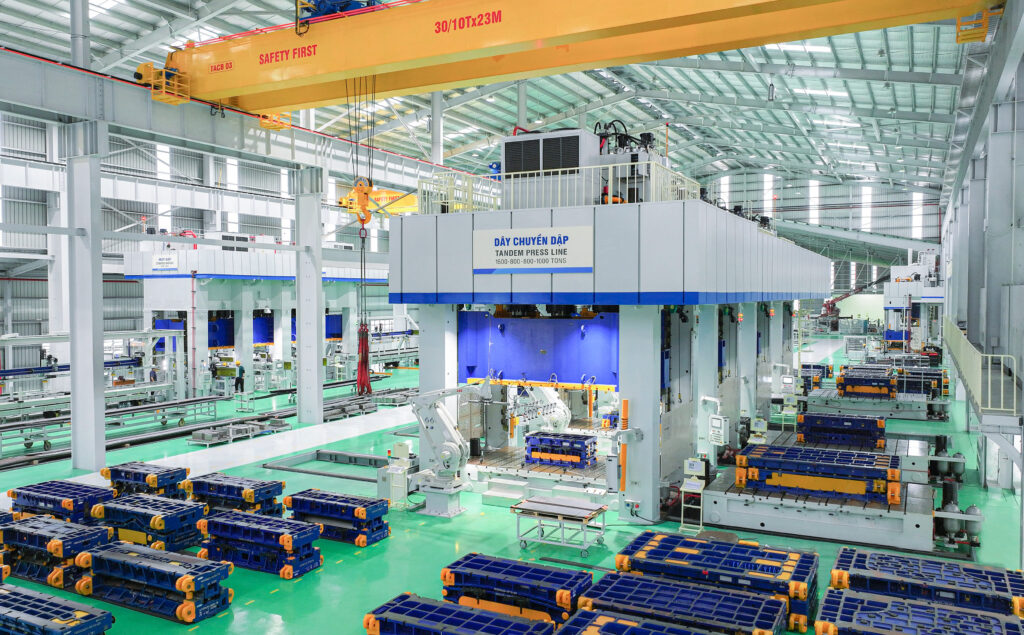
AUTOMOTIVE CHASSIS & BODY PARTS COMPANY (under THACO INDUSTRIES) provides solutions designed to support high-volume and export-oriented demands from customers. The company continuously invests in upgrading production technologies and managing operations on digital platforms to improve process control and production consistency.
At the same time, THACO INDUSTRIES actively expands international partnerships and seeks to strengthen its export capabilities to become a leading OEM automotive component manufacturer in the region with deeper participation in the global supply chain. Here are the key reasons THACO INDUSTRIES would be your ideal pick:
- Integrated Industrial Manufacturing Ecosystem
As a leading Vietnam truck chassis manufacturer, THACO INDUSTRIES operates an all-in-one manufacturing model that integrates design, tooling, fabrication, forming, welding, final assembly, and surface treating and coating with supporting industries, component supply, and logistics infrastructure. This integration shortens lead times and ensures consistent quality across every production stage.
- Advanced Fabrication And Assembly Facilities
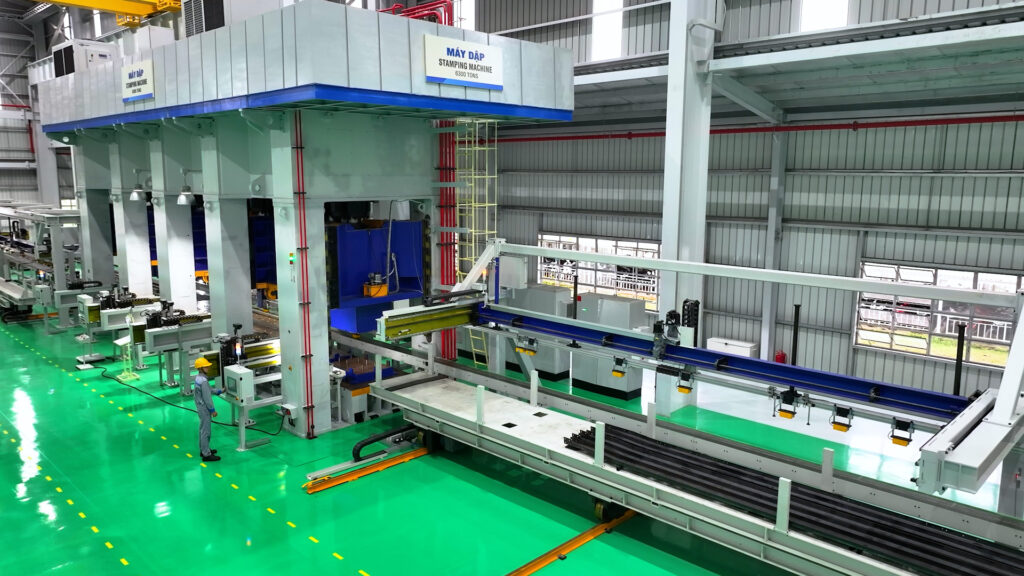
Production using automated robotic material-feeding systems ensures a stable flow and dimensional accuracy before components enter the welding process.
The facilities feature laser cutting machines, robotic welding lines, combined mechanical stamping systems, electrodeposition (ED) surface treatment lines, and dedicated quality control and load-testing stations; all of which form a complete industrial chassis manufacturing workflow.
- Proven Experience In Commercial And Heavy-Duty Vehicles
With extensive experience supplying frames and structural components for buses, trucks, and specialized vehicles, THACO INDUSTRIES understands load behavior and real operating conditions. This helps improve product quality, ensure operational safety, and enhance brand reputation. As a result, it strengthens the Group’s role as a trustworthy commercial vehicle chassis supplier across multiple industries.
- Meets International Certification Standards
THACO INDUSTRIES’ manufacturing processes are aligned with internationally recognized standards. The following certifications signal trustworthiness and readiness for global markets.
- ISO 9001:2015 – Quality management systems that ensure process control and consistent output.
- ISO 14001:2015 – This standard helps companies control environmental impact and ensure compliance with environmental regulations. Certification demonstrates a structured approach to sustainable and responsible production.
- IATF 16949:2016 – This is a global quality standard that focuses on defect prevention and continuous improvement across the supply chain.
- ISO 3834:2021 – This is a welding quality standard that is critical for structural safety and fatigue performance.
- EN 1090:2018 – Structural execution standards required for CE-marked load-bearing steel or aluminum components
- Broad Component And Chassis Portfolio
THACO INDUSTRIES produces a wide range of automotive parts, including curved cross member, side member, straight slide member stiff, chassis frames . This breadth allows OEMs to consolidate sourcing and maintain uniform quality across platforms.
- R&D Capabilities And Global Integration
Continuous investment in R&D and digitalized production management strengthens efficiency and traceability. At the same time, THACO INDUSTRIES actively expands international cooperation and export programs. This enhances competitiveness and advances its goal of becoming a leading regional OEM automotive components manufacturer deeply embedded in the global supply chain.
Contact a Trusted Truck Chassis Manufacturer
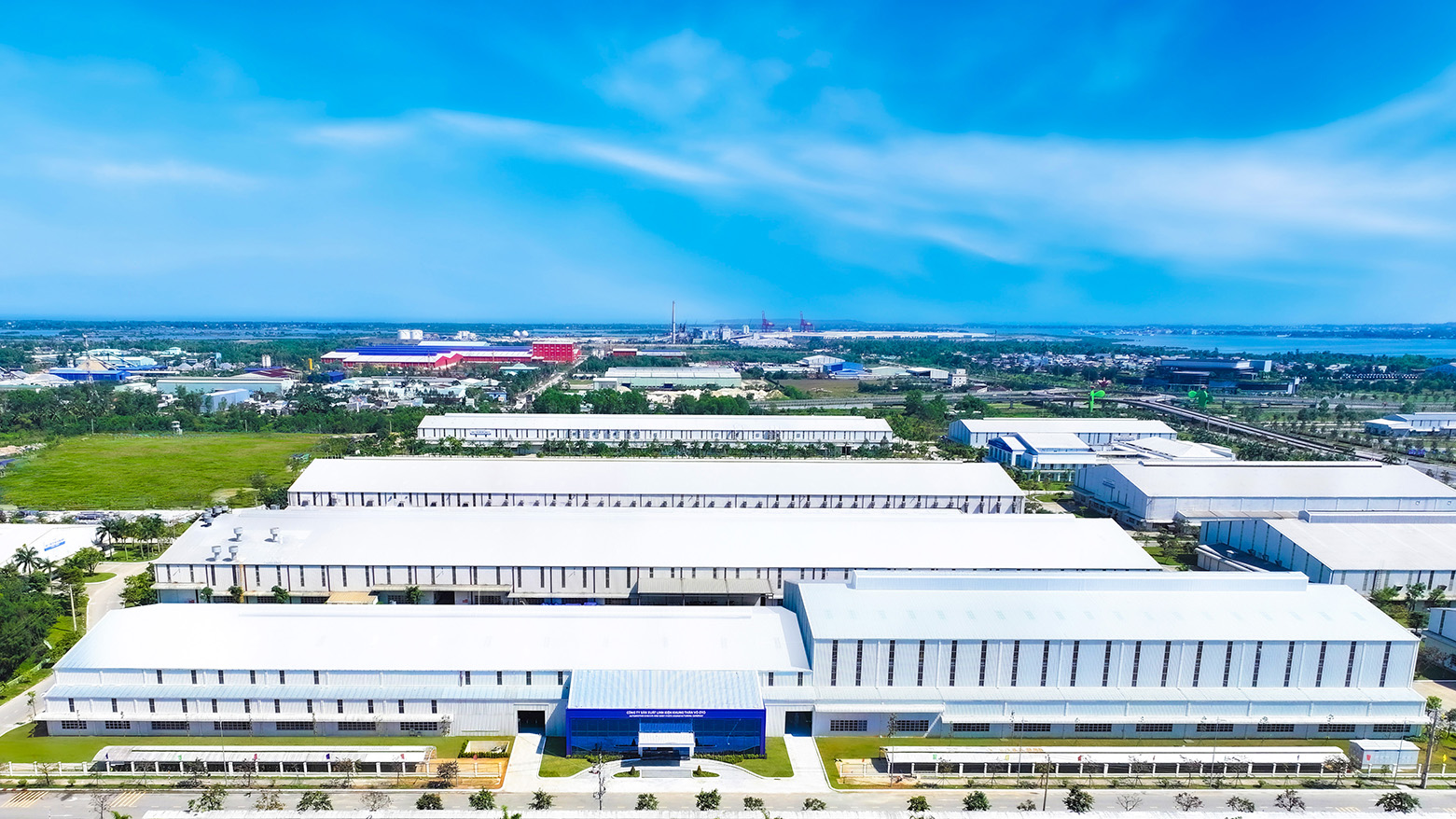
Reliable chassis supply depends on a partner with proven engineering expertise, advanced manufacturing infrastructure, and the ability to scale with your production needs. THACO INDUSTRIES integrates advantages from design, tooling, precision fabrication, forming, robotic welding, components assembling, surface treatment and painting, to rigorous load testing to deliver chassis solutions that meet demanding structural and OEM requirements.
Contact THACO INDUSTRIES today to discuss custom chassis development, high-volume production, and long-term supply programs supported by certified processes and export-ready manufacturing capabilities.


