
Industrial Equipment
Storage Equipment for Industrial Applications
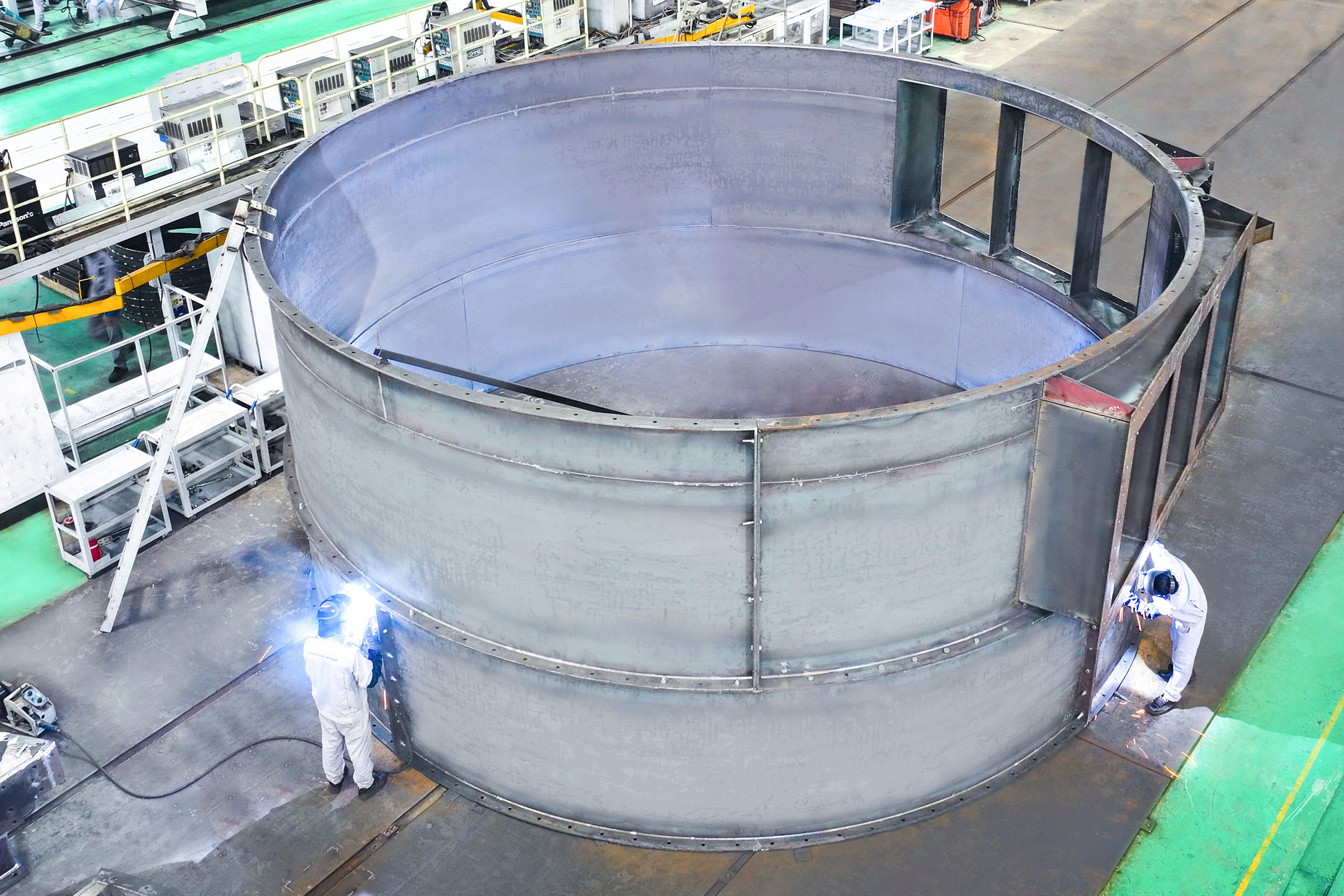
THACO INDUSTRIES fabricates storage equipment such as silo systems, hoppers, and steel tanks in various thicknesses. Large plate-rolling, welding, and surface-treatment lines handle structures up to 17,000 mm in length and 5,000 kg, enabling turnkey manufacturing of silo shells, support frames, and conveyor interfaces for bulk material storage projects.
Key Production Capacities:
- Annual capacity of 16,800 tons of non-standard steel structures
- Up to 60,000 agro-industrial components, parts, and equipment
Our Products
Bulk Solid Storage Systems
THACO INDUSTRIES manufactures robust silos, hoppers, and bins for storing dry bulk materials such as cement, grain, plastic granules, and fly ash.
Liquid Storage Systems
Our liquid storage solutions include vertical and horizontal tanks as well as pressure vessels for water, chemicals, fuel, and industrial liquids. To select the right storage equipment, it is important to understand the difference between silos and tanks based on the type of material being stored. Each tank is fabricated with appropriate material grades, welded seams, and surface protection to resist corrosion and maintain structural integrity.
Warehouse Storage Systems
Our comprehensive warehouse storage solutions include versatile pallet racking, shelving, cantilever racks for long materials like steel bars and pipes, and high-efficiency Automated Storage & Retrieval Systems (AS/RS). These modular systems are designed to maximize floor space, support high load capacities, and integrate seamlessly with modern warehouse management software.
Specialized Storage Equipment
THACO INDUSTRIES also fabricates cryogenic tanks for LNG and liquid nitrogen, as well as hazardous material storage units. These specialized systems comply with strict safety and thermal performance requirements for sensitive or dangerous contents.
Our R&D Process
Requirement Definition
Every storage system project begins with a structured definition of the core technical requirements including storage capacity, material characteristics, operating environment, temperature range, internal pressure or vacuum conditions where applicable, and site constraints. Based on these inputs, each system is mapped into its key functional modules, such as the shell, support frame, access systems, and discharge interfaces.
Technical Research & Feasibility Study
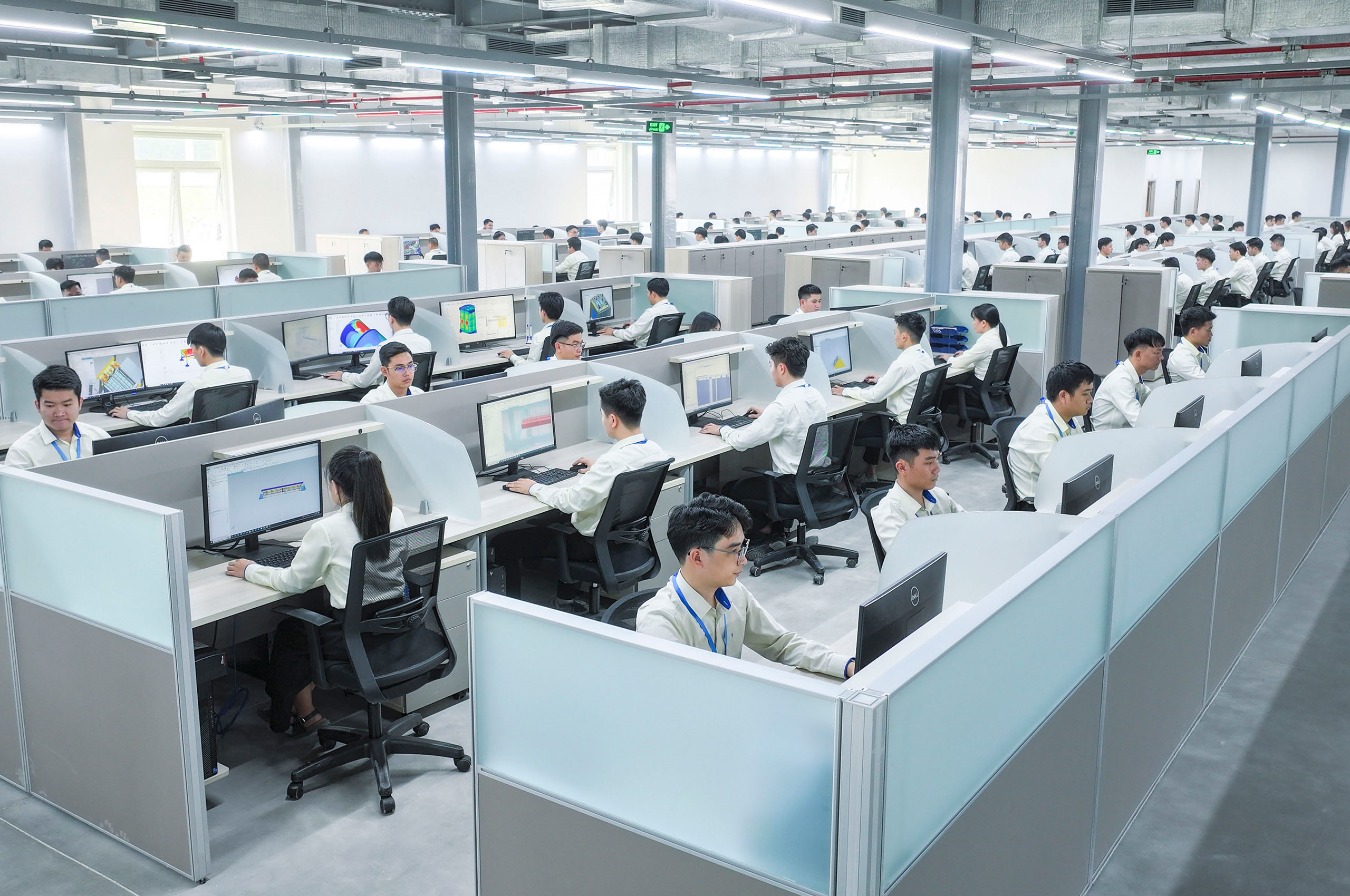
Our engineering team conducts a thorough study of material behavior, structural load requirements, discharge performance, corrosion resistance, and any operational constraints specific to the application. This research phase identifies the most suitable technical directions and rules out approaches that would not meet the project’s functional or safety requirements before committing to detailed design.
Concept Development
Initial design concepts are developed for the storage system as a whole, addressing the structural form of the shell, support configuration, access and inspection provisions, and the geometry of discharge interfaces. Multiple design variants are evaluated side-by-side to identify the most efficient and reliable solution for the customer.
Engineering Design & Structural Calculation
Detailed engineering designs are produced and supported by structural calculations that verify load-bearing capacity, stability under operating and exceptional loads, and long-term durability. Key factors such as internal pressure, wind load, material load, and installation conditions are considered where applicable.
Material & Component Specification
Based on validated technical requirements, we define the exact material grades, steel plate thicknesses, component structures, and connection methods. This specification covers all primary structural elements including shell plates, stiffening rings and ribs, flanges, support brackets, and interface components to ensure material procurement and production planning are aligned with the validated engineering design.
Design Optimization
The initial design is reviewed and refined with the objective of improving structural efficiency, reducing material consumption, enhancing maintainability, and ensuring the design is practical for production. Adjustments are made to ensure the solution is both technically reliable and practical for future production.
Simulation & Technical Review
Where required, engineering analysis tools are applied to evaluate structural performance, stress concentration, deformation, sealing requirements, or material discharge behavior under expected operating conditions. Potential risks and weak points are identified and addressed before trial production or final manufacturing.
Prototype/Trial Validation
When required, we construct and evaluate physical prototypes or trial models to validate dimensional accuracy, sealing capabilities, and discharge behavior. This testing phase guarantees that the final product meets all specified operational and quality requirements.
Final Design Standardization
Once the design is validated, THACO INDUSTRIES finalize all technical specifications, assembly drawings, bills of materials, and engineering documentations. These standardized outputs serve as the official technical basis for procurement, manufacturing, quality control, and future production.
Production Process
During production, THACO INDUSTRIES can apply a combination of mechanical manufacturing technologies, including:
- Plate preparation: Coil slitting, decoiling, and sheet preparation based on required plate thickness (decoiling capability up to approximately 12 mm).
- Plate cutting: Laser cutting (commonly 6 kW–15 kW) for profile cutting, fixture holes, patterns, and plate components.
- Machining: Drilling, tapping, mounting holes, threaded holes, and assembly interfaces for smaller components.
- Other processes: Forming, welding, surface treatment, and finishing.
Certifications & Quality Standards for Storage Equipment Manufacturers
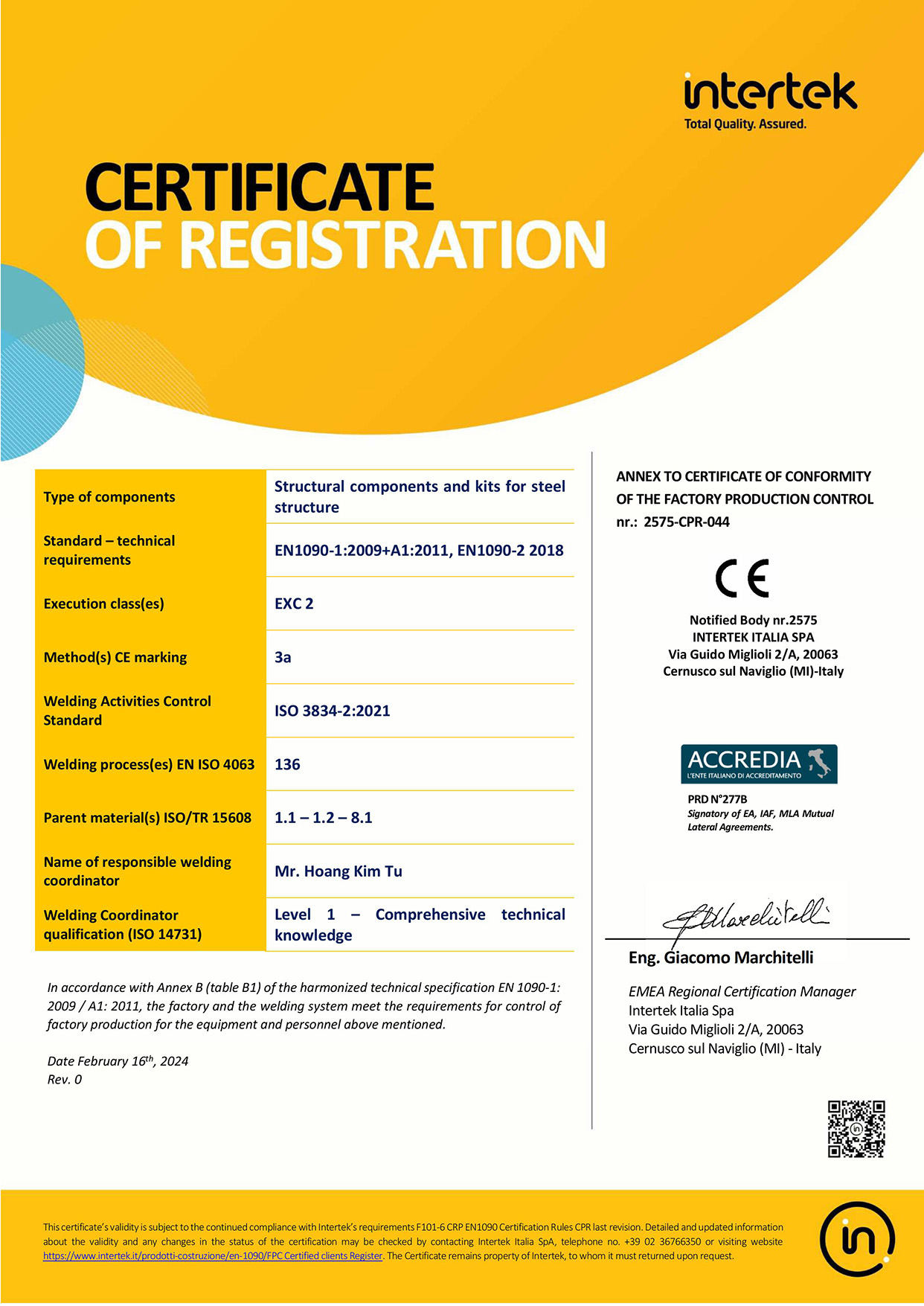
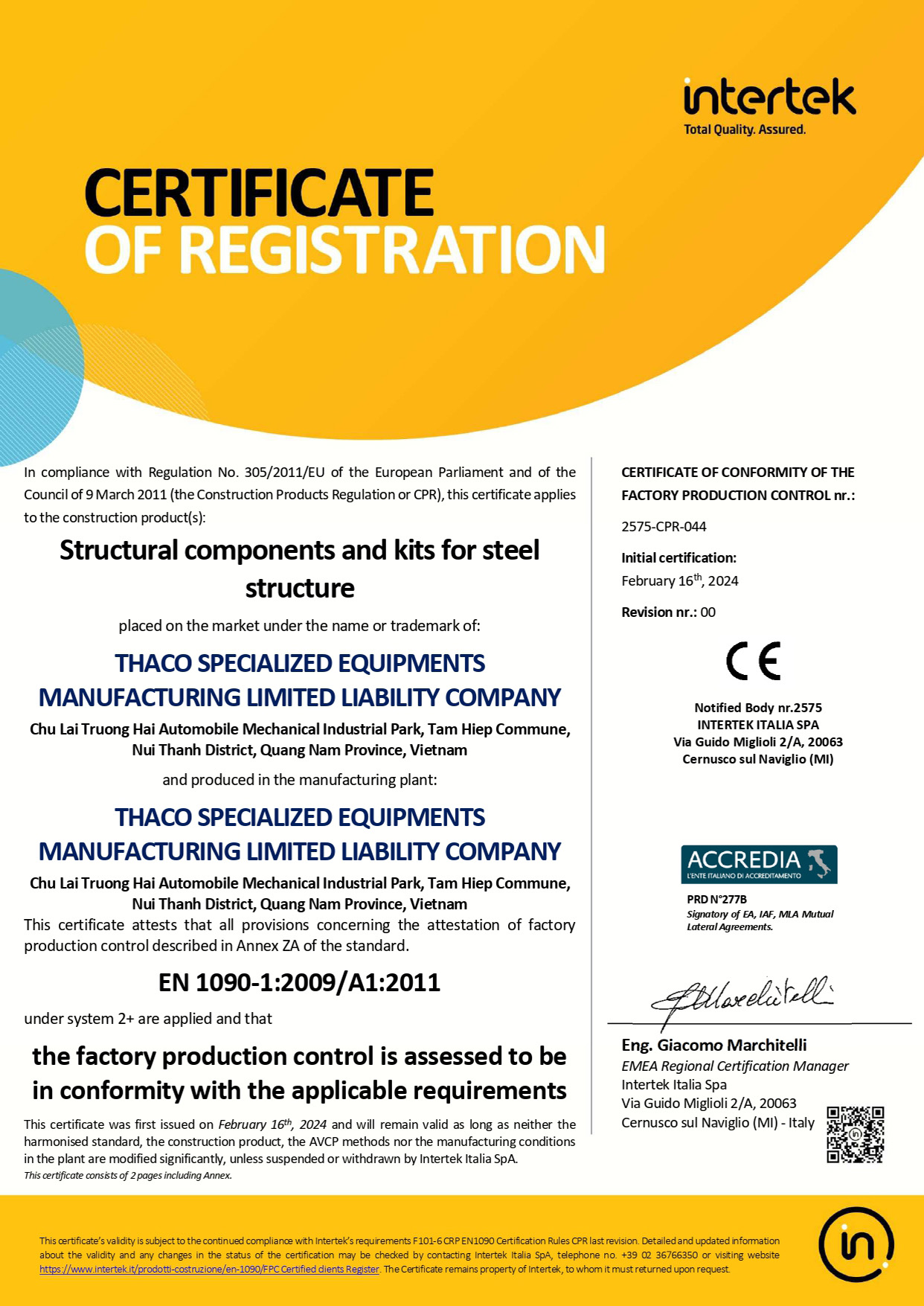
Our storage equipment programs align with these management system certifications: ISO 9001, ISO 14001, ISO 45001, and fabrication structure certifications: ISO 3834-2, EN 1090 or ASTM and ISO 14064-1
 |
 |
Our Markets
THACO INDUSTRIES supplies storage equipment to global markets, such as Germany, Spain, Italy, Finland, New Zealand, Australia, etc., and is currently in collaboration with 20+ partners from 10+ countries.
For further inquiries or to start your project discussion, please contact THACO INDUSTRIES at partsales@thaco.com.vn or reach out directly via phone at 0389067557 (Ms. Linh)
FAQs
What Types Of Storage Equipment Does THACO INDUSTRIES Manufacture?
The supported part: silos, tanks, hoppers, steel storage structures, industrial/agricultural storage equipment are reasonable. THACO documents show feed silo, air tank, and fuel tanker/tank-related products, plus steel structures and specialized equipment.
The unsupported part: certified pressure vessels, cryogenic containment, hazardous material containment systems, warehouse racking, cantilever systems, and AS/RS. I would remove these unless THACO ID can provide direct proof.
What Is Your Maximum Fabrication Capacity?
Storage Equipment will be manufactured at our Specialized Equipment Plant, which has an annual capacity of 16,800 tons of steel structures and 60,000 agro-industrial equipment and mechanical products. For large fabricated components, processing limits vary by production stage. For example, THACO INDUSTRIES’ surface treatment capabilities include shot blasting for parts up to 15,000 × 8,925 × 11,078 mm with a maximum load of 5,000 kg, ED coating for parts up to 17,000 × 1,600 × 3,700 mm, and powder coating for parts up to 20,900 × 9,200 × 7,140 mm with a maximum load of 4,000 kg.
Can Your Silos Handle Difficult Materials Like Cement, Fly Ash, Or Wet Bulk Materials?
Yes, our silos are specifically engineered with optimized cone angles, smooth internal walls, and optional fluidizing or vibration systems to ensure reliable discharge. These design features effectively prevent flow issues like rat-holing or bridging when handling cohesive, heavy, or abrasive materials.
Can You Design According To International Standards Or Specific Project Requirements?
Yes. Our engineering team can design and calculate storage structures according to customer specifications, operating conditions, and applicable project standards. Depending on the project, calculations may consider material load, wind load, seismic conditions, installation requirements, corrosion protection, and maintenance access. Compliance with specific standards such as EN, ASTM, JIS, ASME, or local regulations can be reviewed and agreed during the technical requirement stage.


