
Industrial Equipment
Difference Between Silos and Tanks: How to Choose the Right Storage Solution for Your Operation
Silos and tanks are widely deployed across industrial operations. However, buyers regularly conflate the two, selecting equipment based on visual similarity rather than functional specification. The result is mismatched storage systems that underperform, require costly modification, or create safety compliance gaps that could have been avoided entirely at the procurement stage.
Understanding the difference between silos and tanks is a prerequisite for making the right capital investment. This guide will help you define the basic difference between silo and tank structures, their applications in different industries, and how to choose the right type for your operation.
Key Differences Between Silos and Tanks
Silos and tanks are both large-capacity industrial storage applications but they are engineered for fundamentally different material types and operating conditions. Buyers might assume these two systems can overlap, but different structures handle different materials. You need to be cautious about selecting the right equipment.
In some industries like agriculture and brewing, both can be used. However, most of the time they are designed very differently and must be used separately. Using the correct storage system selection criteria from the outset determines whether the installed system performs reliably, meets safety requirements and integrates with existing production workflows.
Structural Design
Structural design of storage systems varies significantly between silos and tanks. A silo is a large storage option built in a cylindrical shape with a cone-bottom. This design encourages gravity flow of dry materials. A tank can be horizontally or vertically built to match different storage layouts.
On the other hand, tanks can have conical bottoms to support product discharge, although their primary function differs from the gravity-driven bulk flow design commonly used in silos. Instead, it serves as an unloading mechanism for liquid or gaseous materials to enable better transportation and production. Silo structure design is relatively standardized, while storage tank design types include cylindrical, spherical and rectangular configurations depending on the material being stored.
Stored Materials
Cement storage silo systems specialize in storing grains, cement, plastics, pellets and other dry bulk materials. These systems are widely used for dry bulk material storage in industrial manufacturing, agriculture, construction and material handling operations. These storage systems help preserve material quality, prevent contamination and support efficient bulk handling operations. Due to the contents’ nature, silos can be designed to handle low pressure conditions.
On the contrary, fuel storage systems and industrial liquid handling applications require tanks built for liquid and gaseous materials. These contents create hydrostatic pressure against tank walls. A tank must be sealed completely to avoid leakage. Engineers also face greater difficulty calculating the structure to prevent buckling from pressure and transportation stresses. This is a fundamental difference between silo and tank that determines their respective applications.
Structural Material of Construction
Silo construction materials can vary from aluminum, carbon steel, or stainless steel to concrete. Concrete silos are designed to distribute force evenly across side walls, making them particularly suitable for very heavy dry materials.
For tank designs, material selection becomes even more diverse to fit different liquid contents. Fiberglass storage tanks effectively carry water and fuel, while plastic tanks offer excellent anti-corrosion ability for chemical storage. Stainless steel works well for food-grade liquids, and carbon steel suits fuel and oil. Industrial storage materials must be verified for compatibility with the stored substance before any storage solution is selected. The right material choice directly affects equipment lifespan and operational safety.
Pressure and Load Conditions
Bulk material flow issues create unique challenges for silo operations. A silo must deal with bridging, rat-holing, segregation and compaction of dry solids. It also requires a dust collection system to prevent contamination within the contents. Dust explosion prevention is another critical consideration for silos handling combustible materials such as grain, coal, or wood dust, as accumulated fine particles can ignite under certain conditions.
For tank operations, hydrostatic pressure in tanks requires strict safety compliance. Operators must set a maximum threshold inside the tank that cannot be exceeded to prevent abrupt pressure buildup. Leak prevention systems are mandatory for liquid storage. Tank selection must also consider operating temperature, material characteristics, pressure requirements and the physical state of the stored substance.
Loading and Unloading Conditions
Gravity discharge silo systems use conical ends to distribute grains and dry materials downward. Silos require pneumatic filling, top loading, bottom discharge and feeders for efficient operation. As part of modern bulk material handling systems, silos are commonly integrated with conveying, dust collection and monitoring equipment to support continuous industrial processing. The silo’s main usage is storing dry materials, so it cannot be sealed completely. Instead, it needs a dust collection system and temperature monitoring capabilities to preserve the contents.
Tank pumping systems contain pipe inlets and outlets, pumps, level controls, vents and agitators to distribute liquid and gas. If built on the surface, a tank must be painted with a total reflection coefficient for radiant heat of at least 70 percent. These loading differences represent another key difference between silo and tank.
When to Use a Tank or Silo?
Choosing tanks or silos depends on materials being stored and operational environment, including temperature conditions, installation space, and process requirements. The best storage solution for dry bulk materials is a silo. Use silos in agriculture and construction material handling where dry, bulk materials are main components. For liquid, gas and slurries in chemical, food, or waste treatment industries, tank storage would be a better solution.
Storage system selection for accessories should also consider integration with existing conveying lines, piping systems and automated controls.
Common Customization Options for Silo and Tank Designs
Customization for silos and tanks varies significantly based on specific storage requirements and environmental conditions. In fact, capacity customization depends heavily on geographical location, as different regions have different space availability, transportation restrictions, and local demand patterns. Material selection, whether carbon steel, stainless steel, or other options, follows directly from the type of material being stored and its chemical properties.
Additionally, coating and corrosion protection become essential when equipment is placed outdoors or exposed to specific weather conditions such as high humidity, saltwater air, or extreme temperatures. Each of these customization options must be evaluated together to ensure the final storage solution performs reliably throughout its intended lifespan.
Integration with existing conveying or piping systems is another primary engineering consideration. A silo that discharges at the wrong height relative to the receiving conveyor, or a tank with inlet and outlet orientations incompatible with existing pipework, requires costly on-site modification that could have been eliminated through early engineering coordination.
Working with a single provider for industrial equipment, turnkey storage systems, engineering and fabrication services can significantly reduce coordination complexity and project risk. The quality of fabrication directly affects the durability and safety of your storage investment.
Key Tips To Choose Reliable Industrial Storage Manufacturers
- Work directly with the manufacturer’s engineering team
Before any design work begins, buyers should work directly with the manufacturer’s engineering team to define key requirements. These include the stored material’s physical and chemical properties, operating temperature and pressure range, required storage volume, available installation footprint, and integration needs with existing production lines. Storage equipment that aligns with existing workflows from the design stage operates more efficiently and requires less on-site adaptation during commissioning. This distinction helps separate credible suppliers from standard manufacturers.
- Prioritize qualified fabricating manufacturers
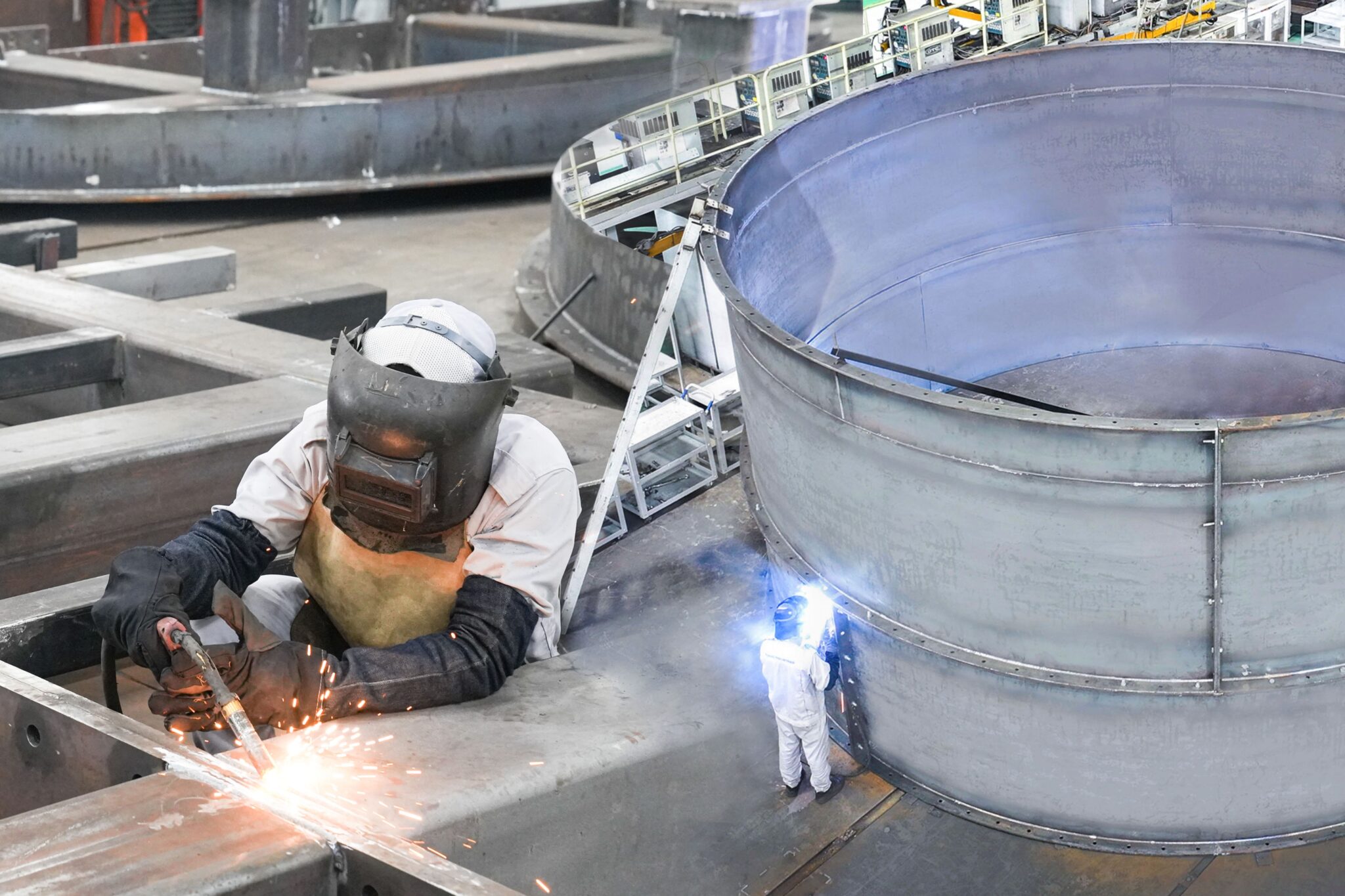
Keeping the original structural integrity of a vessel requires a manufacturer with high fabrication precision and automated production chains. A skilled factory with advanced equipment maintains the exact structural integrity of a vessel as originally designed. When a buyer chooses an end-to-end or highly automated manufacturing chain, the result is dimensionally consistent vessels produced at lower unit cost. Automated welding reduces labor expenses and eliminates the quality variance and logistics costs of moving partially finished components between multiple facilities.
- Choose manufacturers with comprehensive quality control systems
Buyers should also verify that quality control covers their specific stored content. A strong quality system is not merely about general inspection. It must address safe operating procedures for the particular storage type, whether that involves pressurized tanks, combustible dust silos, or corrosive chemical vessels. Each of these carries distinct regulatory requirements and failure risks. A manufacturer whose quality control demonstrates a clear understanding of these differences will produce vessels that pass inspection and remain compliant and safe throughout their service life.
- Select manufacturers with multiple logistics options
Another aspect worth considering is logistics flexibility, as it plays a direct role in controlling total costs. Buyers should look for manufacturers offering multiple Incoterms delivery options, as this allows optimization of total landed cost based on specific import and installation logistics. A single-supplier solution that covers both fabrication and freight coordination is typically more cost-effective than separately managing procurement and shipping. This approach reduces coordination overhead and ensures consistent accountability throughout the delivery process.
THACO INDUSTRIES – A Vietnamese Leading Industrial Storage Solutions Provider
As one of the pioneering factories in Vietnam, THACO INDUSTRIES provides comprehensive solutions in the OEM/ODM field. The corporation utilizes modern processing techniques and advanced machinery to fulfill diverse customer requirements. This gives international customers peace of mind when choosing THACO INDUSTRIES as a strategic partner in the industrial storage system selection process.
Manufacturing Capabilities and Facilities
THACO INDUSTRIES operates across a full value chain: Business intake and R&D, Manufacturing across integrated production lines, Installation coordination and Warranty and Repair support throughout the product lifecycle. This structure eliminates the handoff delays and quality variance that arise when fabrication and installation are managed through separate suppliers.
The corporation also leverages an integrated ecosystem of specialized affiliates to provide diverse material options for storage tank structures. While the Mechanical Complex specializes in processing steel and non-ferrous metals with an annual capacity of 250,000 tons, other units like the Composite Components Company and Plastic Components Company provide advanced capabilities for composite and plastic materials. This collaboration ensures that storage designs can incorporate a wide range of materials, including fiberglass, plastic, and metal, depending on specific storage requirements
Production capability for storage vessels, coordinated through the Specialized Equipment Company, includes a robotic welding line certified to AWS D1.1 and EN ISO 9606-1. The facility employs manual welding techniques qualified to 3G, 4G, 5G, and 6G positions and comprehensive surface treatment from shot blasting through ED coating and powder coating
As a silo manufacturer Vietnam and tank fabrication manufacturer with steel structure fabrication expertise, THACO INDUSTRIES delivers complete custom storage system manufacturer solutions.
Compliance to International Standards
THACO INDUSTRIES strictly complies with international standards in the production of storage equipment and components. Key certifications include ISO 9001:2015, ISO 14001:2015 and ISO 45001:2018. The corporation also proves its manufacturing capability specifically in welding processes with Welding Quality Management System Standards such as ISO 3834-2:2021 and ISO 3834-3:2021.
Additionally, EN 1090 with EXC4 certification represents the highest standard for structural welding, applied in sophisticated structures in storage systems. These credentials position THACO INDUSTRIES as a trusted OEM industrial equipment manufacturer for global buyers.
Efficient Logistics Options
THACO INDUSTRIES provides delivery options matched to the scale and destination of each storage system program. Break bulk cargo, flatrack, knock-down shipment and semi-modular shipping configurations accommodate vessels that cannot be transported as complete assembled units. Anti-shock protection and secured transport fleet options are applied based on component sensitivity. The corporation offers clients transport services, handling delivery and import of packaged goods by sea freight container under CIF Incoterms. This logistics capability ensures your storage equipment arrives on time and in proper condition.
In short, although tanks and silos are both categorized as storage solutions, they have distinct differences in structural designs, material selection, and the materials they handle. To choose a suitable storage solution, you should understand three factors: (1) the desired material to be stored, (2) the storage space available for installation, and (3) the intended application of the storage equipment. Understanding the difference between silo and tank is the first step toward making a confident, cost-effective investment in industrial storage.
THACO INDUSTRIES provides comprehensive storage solutions, ranging from silo systems, hoppers and steel tanks in various thicknesses. Contact us today to have a thorough consultation with experienced engineers via: partsales@thaco.com.vn & (+84) 389 067 557 (Ms. Linh).


