
Industrial Equipment
How to Choose An Industrial Machinery Manufacturer: Key Insights for Business
Industrial machinery forms the operational backbone of modern manufacturing, covering everything from material handling and metal forming to transportation, lifting, and storage systems. Across sectors such as automotive, construction, mining, and agriculture, these machines drive output consistency, process efficiency, and long-term production capacity.
As complexity increases, many businesses have moved away from in-house production toward sourcing from mass-produced manufacturers. Understanding what defines a capable industrial machinery manufacturer helps buyers reduce risk, control total cost, and build supply relationships that scale with business demand.
Advantages of Efficient Industrial Machinery Application
Increase Productivity and Efficiency
Machinery automates repetitive tasks, reducing dependence on manual labor while improving throughput consistency. Unlike manual processes, well-engineered machinery delivers precise and repeatable outputs, directly improving product quality through different batches.
Advanced equipment also enables businesses to diversify their production capabilities, expanding into new product lines or services that would not be feasible without the right machinery in place.
Reduced Operational and Labour Costs
Replacing manual operations with machinery significantly lowers labour costs, freeing capital for investment in other areas of the business. Beyond labour savings, machinery increases production capacity, allowing businesses to scale output as market demand grows without proportional increases in headcount.
Better Use of Human Skills and Workforce Upskilling
When routine processes are handled by machinery, businesses can direct human resources toward higher-skill roles, including equipment operation, quality oversight, and process improvement. In short, automation creates opportunities for workers to develop higher-value technical skills rather than simply replacing them.
This shift supports workforce development, maintains operational health and safety standards, and shortens lead time in a dynamic market environment.
Applications of Industrial Machinery
Industrial machinery can be grouped according to the type of process it performs: material handling, machine tools, transportation equipment, and storage systems.
Material Handling Equipment
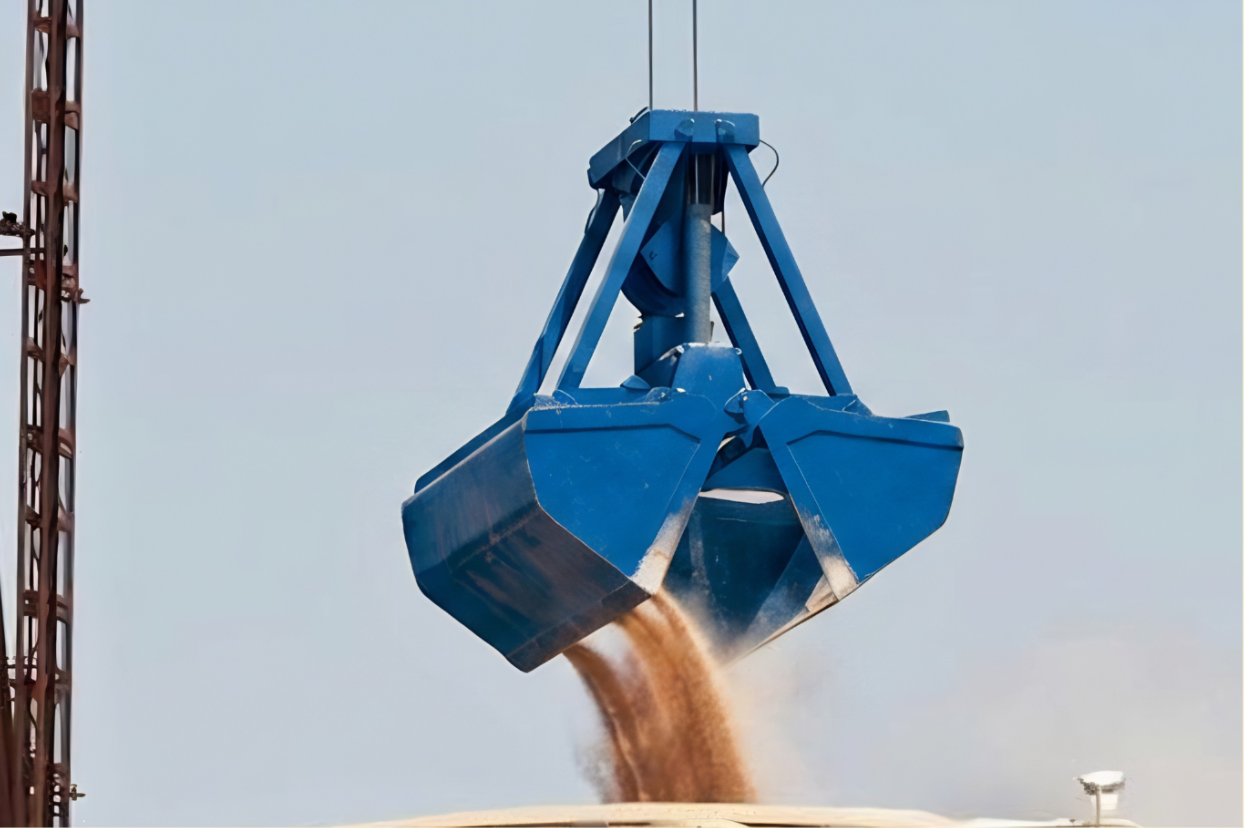
Material handling equipment ensures seamless transportation, storage, and control of materials within industrial premises. This category includes portal cranes, grab bucket systems, excavator buckets, building material mixer, and conveyor structures, all of which are critical to maintaining flow and efficiency across logistics operations.
Machine Tools
The rise of automation has accelerated demand for advanced mechanical processing equipment. Machine tools are foundational to components manufacturing and include:
- Metal forming machines: Hydraulic press brakes, ring roller benders, section bending machines, and hydraulic shear machines used to shape and cut metals with precision.
- Hot and cold forging machines: Power hammers and twisting/scroll bending machines essential for producing ornamental parts and high-strength metal components.
- Engraving and stamping machines: Iron embossing machines and presses for locks, used in the production of customized and accurately machined parts.
- Cutting and machining machines: Including broaching machines that enable high-precision groove production and complex machining operations.
- Metal welding and joining machines: Equipment supporting MIG/MAG, TIG, and laser welding techniques, fundamental in metal structure fabrication, component assembly, and high-precision finishing. Different materials may require different approaches to produce seamless cuts.
Transportation and Lifting Equipment
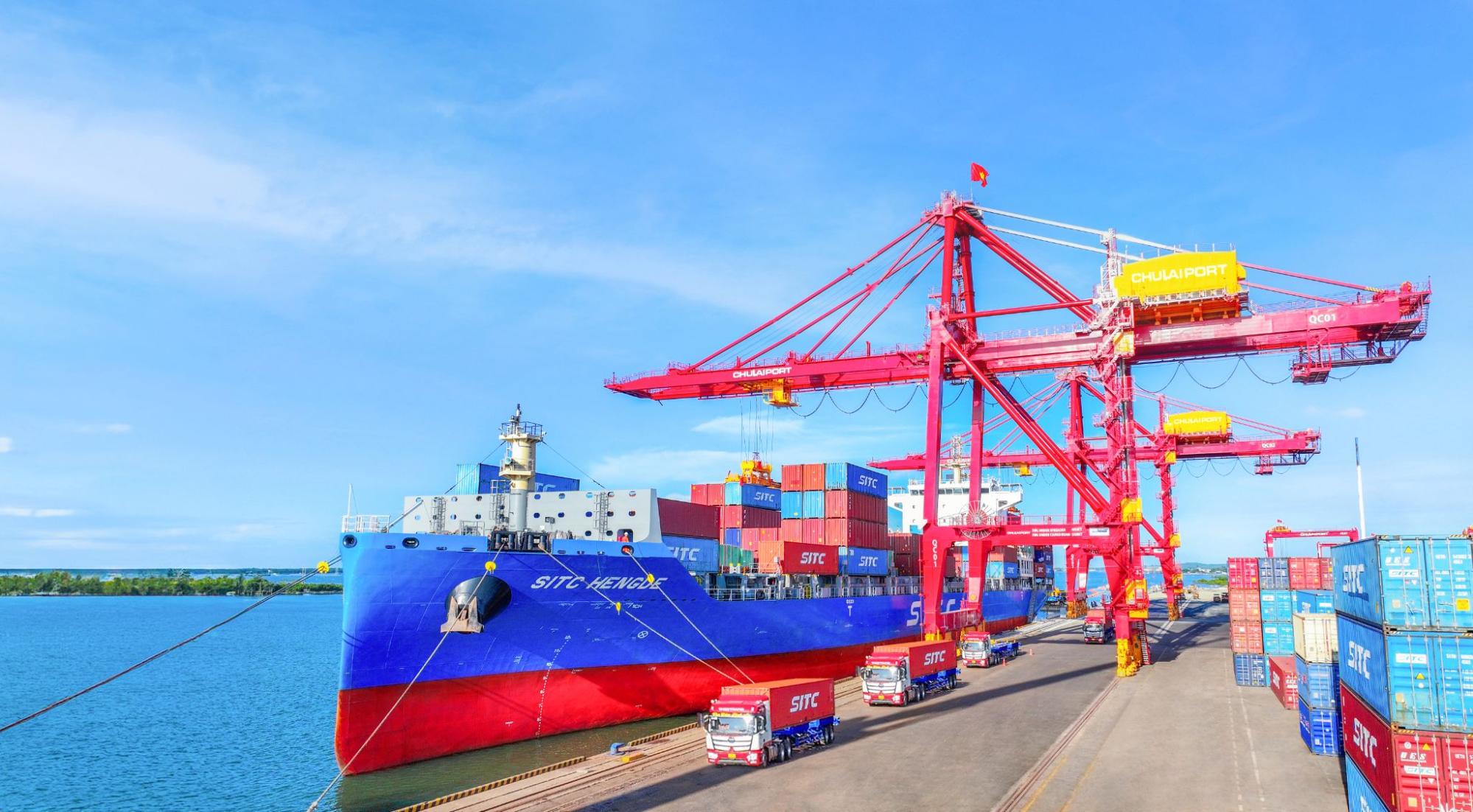
Gantry cranes, manipulators, and automated systems improve operational efficiency, reduce manual handling risks, and manage irregular loads such as coils and drums. This segment includes portal cranes, STS (Ship-to-Shore) cranes, E-RTG cranes, and overhead cranes for lifting applications, as well as AGVs, jigs, fixtures, loading and unloading equipment, EMS systems, and hangers for automotive manufacturing.
Storage Equipment
Silo systems and industrial storage solutions optimize warehouse and production spaces by organizing inventory, maximizing vertical capacity, and protecting materials from environmental exposure. Beyond agricultural products, industrial powders and bulk materials require enclosed storage to prevent corrosion and contamination.
Emerging Industrial Machinery Trends That Shape Buying Decisions
The global industrial machinery market is projected to grow at a CAGR of 3.6% through 2032, according to Congruence market insights, reflecting strong and sustained expansion as industries modernize operations. This growth is not simply a volume increase; it represents a structural shift toward smarter, more integrated production systems.
Industry 4.0 and Smart Factories
Automation, robotics, AI, IoT, and digital twins are reshaping how machinery is designed, operated, and maintained. These technologies improve productivity, reduce unplanned downtime, and create safer working environments by shifting routine monitoring to connected systems.
Sustainability and Green Manufacturing
Regulatory pressure and shifting market expectations have made green manufacturing a strategic priority for maintaining a competitive environment. A recent report shows that the sustainable manufacturing equipment market is projected to reach USD 310.2 billion by 2035, growing at a CAGR of 2.3%, reflecting the scale of investment directed toward energy-efficient and lower-emission production systems.
Rise in Prefabricated Construction
Automated cutting, bending, and welding machines are increasingly used to prepare construction components off-site. This trend is particularly prominent in North America and Europe, where compressed construction timelines and labor shortages are accelerating adoption of prefabrication in structural projects.
Growth of Predictive Maintenance and Remote Diagnostics
Unexpected equipment failures cost the industrial machinery sector an estimated USD 50 billion annually. With the integration of AI-driven predictive maintenance and remote diagnostics, it has been recorded to reduce this matter, with 37% of newly installed heavy machinery now equipped with real-time monitoring systems that collect and analyze operational data to anticipate failures before they occur.
As a leading manufacturer of industrial machinery, THACO INDUSTRIES produces and exports numerous industrial equipment fitting with current shifts from the industry, reflecting a strong position in providing industrial machinery and equipment that optimizes productivity across the production lines.
Six Tips on How to Choose an Industrial Machinery Manufacturer
Evaluate Manufacturing and Technical Capability
Assessing technical capability requires looking at the full picture, from R&D and design through to production and after-sales support. A manufacturer that cannot demonstrate engineering depth at the concept stage might be risky for further collaborations.
Look for evidence of advanced production technology, experienced technical teams, and structured processes that connect design intent to production output. The proportion of machinery deployed across the production line, alongside workforce proficiency, reflects how efficiently the manufacturer converts input into consistent output.
Review Quality Control and Certifications
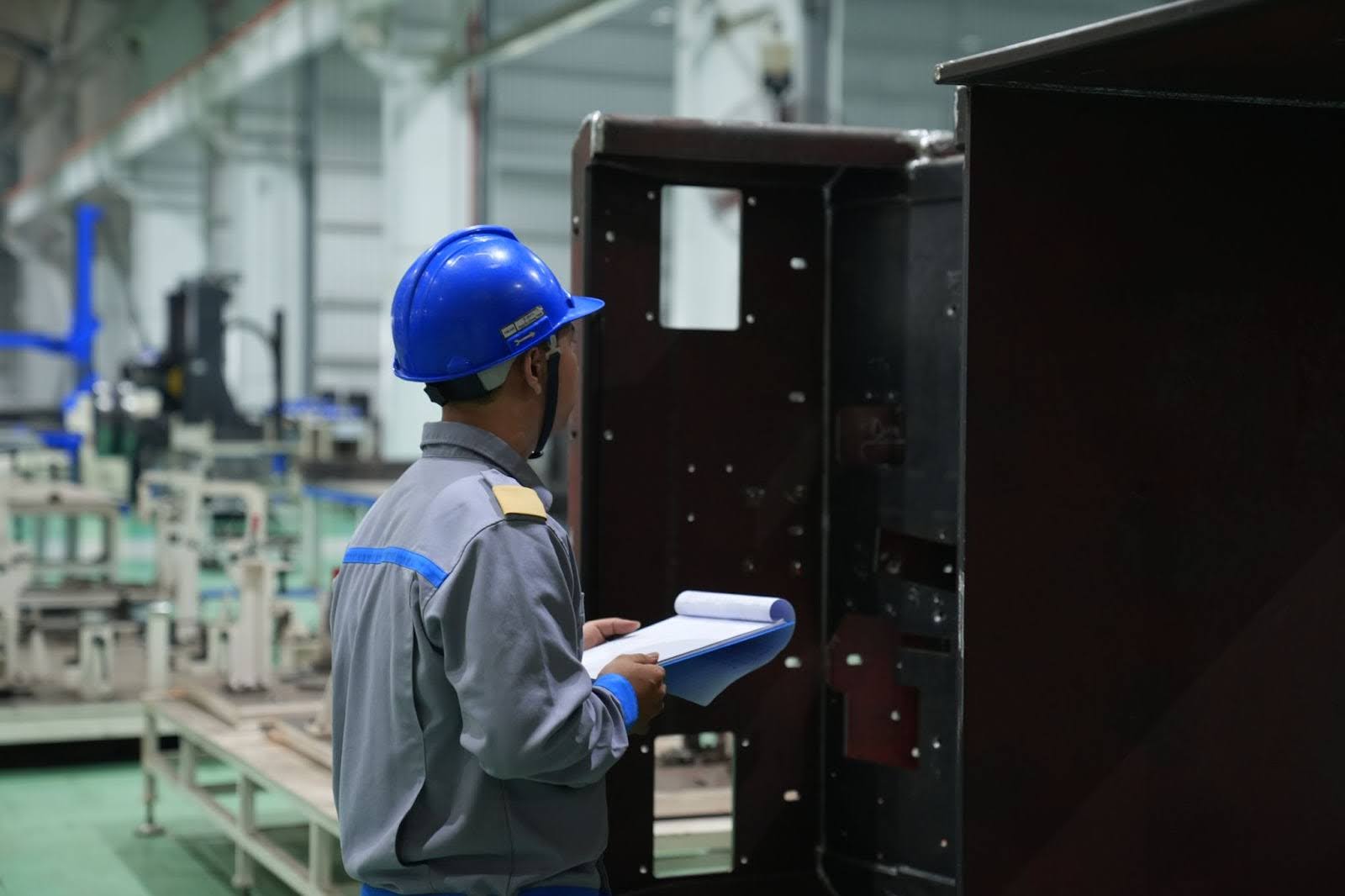
Quality control confirms that production meets international standards and that the manufacturer is fulfilling documented commitments. Any reduction in specification compliance is a direct signal of system quality risk. Buyers should verify which standards apply to the equipment category being sourced and confirm that certifications are current and industry-relevant to prevent exaggerating during consultations.
Assess Customization and Project Flexibility
A reliable manufacturer must be able to meet diverse processing requirements, adapting to special dimensions, load specifications, operating environments, and evolving project parameters. This is especially relevant in OEM, ODM, and engineer-to-order models where standard products are not sufficient, as one-size-fit-all solutions are becoming obsolete.
Examine Supply Chain Integration and Delivery Reliability
Cost efficiency extends beyond the production process into logistics. Choosing the right logistics method for each product directly affects delivery timelines and total landed cost. Buyers should look for manufacturers that support flexible trade, preferably based on Incoterms standards (EXW, FOB, CIF, DDP) and also optimize packaging and container stacking to reduce cost per unit.
Integrated supply chains with clear coordination between engineering, production, and logistics teams reduce the risk of delays when specification changes or volume adjustments occur mid-program.
Look for Industry Experience and Relevant Project References
Beyond the production process, buyers should also examine the broader range of industries and applications a manufacturer has served. Similar machinery built for comparable use cases, documented customer requirements, and verifiable case studies all provide evidence that the manufacturer understands the application context. This track record reduces procurement risk and gives buyers confidence in program execution.
Compare Total Value, Not Just Unit Price
Contrary to usual misconception, the lowest quoted price rarely represents the lowest total cost once quality failure risk, rework, delivery delays, communication gaps, and fragmented sourcing are factored in. These hidden costs can compound significantly over the course of a supply program.
Evaluating manufacturers across multiple criteria, including technical capability, certification depth, delivery reliability, and documentation quality, consistently produces better outcomes than price-first selection.
Reasons Why THACO INDUSTRIES Is Your Ideal Industrial Machinery Manufacturer
Significant Specialized Production Ecosystem
THACO INDUSTRIES operates an integrated all-in-one value chain in which Business, R&D, Manufacturing, Installation, Warranty and Repair are coordinated within a single system. Each stage connects directly to the next, maintaining specification consistency across components and production batches.
The production line is supported by high-precision equipment imported from the U.S., Germany, Italy, Japan, and South Korea, including slitting lines, fiber laser cutting systems, CNC machining centers, robotic welding systems, ED coating lines, and automated powder-coating operations.
Product Scalability and Technical Capabilities
With modern production technology integrated across the manufacturing chain, THACO INDUSTRIES supports a diverse product portfolio covering specialized equipment used in heavy industries, with the production lines ranging across 4 main sectors:
- Mining & Construction Equipment Manufacturing: excavator buckets, grab bucket systems, crusher parts, conveyor structures, etc.
- Lifting Equipment: Friction drive conveyor, AGV, Loading & unloading equipment, etc.
- Storage Solutions: silo systems, hoppers, and steel tanks in various thicknesses.
- Transportation Equipment & Solutions: portal cranes, STS (Ship-to-shore) cranes, E-RTG cranes and overhead cranes.
With over 500 products across four main industrial equipment sectors and 200 fabrication machines in different production lines, THACO INDUSTRIES demonstrates both the breadth and depth expected of a serious industrial machinery manufacturing partner. To keep an up-to-date vision, high-tech equipment is also involved to incorporate Artificial Intelligence, tailored to customer needs.
R&D and Customization Capabilities
THACO INDUSTRIES invests continuously in engineering and simulation capability, adapting with different orders. Using modern design and calculation software including NX, HyperWorks, CATIA, and Moldflow, engineers can proactively optimize production designs based on specific application requirements, supporting customization across a wide range of buyer demands.
Compliance with International Standards and Practice
As a pioneer in the manufacturing industry, THACO INDUSTRIES operations comply with International Standard, ranging from Overall Quality System to Specific Welding Structure, including ISO 9001:2015, ISO 14001:2015 for Overall Quality and Environmental Management, while ISO 3834-2 and EN 1090-1 related to Welding quality requirements for metallic materials.
Besides, ISO 45001:2018 as Occupational Safety and Health Management and Material compliance standards including RoHS and REACH regulations ensure that products meet European Commission requirements for hazardous substance restrictions. With all the standards having been strictly adhered, THACO INDUSTRIES proves a reliable position in the field, ensuring satisfaction to customers.
Efficient Logistics Options for Multiple Machinery
To optimize the cost, THACO INDUSTRIES also offers flexible logistics solutions tailored to each customer’s delivery requirements. Full support for FOB, CIF, and FCA shipments, combined with optimized container-loading packaging, reduces logistics costs and delivery timelines for international OEM programs. This integrated logistics model ensures shipment visibility, efficient customs processing, and scalable delivery capacity as program volumes grow.
Scale up your industrial machinery manufacturing with THACO INDUSTRIES today by contacting partsales@thaco.com.vn or (+84) 389 067 557 (Ms. Linh) for a detailed consultation.


