
Commercial & household products
Inside OEM Commercial Cardio Equipment Manufacturing: A Guide for Fitness Companies
As commercial gym chains, fitness centers are looking for more differentiated fitness solutions, they are moving beyond off-the-shelf cardio equipment and seek trustworthy partners to aid them in developing their own branded product lines through OEM manufacturing.
However, commercial cardio machines must do more than look market-ready. They need to withstand heavy daily use. For fitness brands, choosing the right OEM commercial cardio equipment manufacturer is therefore not just a sourcing decision, but a strategic step to reduce production risk and gain control quality in such competitive markets.
What Is an OEM Commercial Cardio Equipment Manufacturer?
An OEM manufacturer in the fitness equipment industry executes production according to the brand’s technical specifications, or co-develops the product within an agreed scope of collaboration.
OEM cardio equipment manufacturers carry responsibility for establishing controlled manufacturing processes to ensure consistency and stability when products move from prototype to mass production. They also implement multi-stage quality checks (such as incoming material inspection, in-process inspection and final inspection) supported by batch or serial-level traceability records.
Besides, they manage engineering and material changes through formal change control systems, ensuring modifications are evaluated before reaching the production line. They coordinate testing plans and prepare technical documentation aligned with the certification requirements of the target market.
In practice, the key responsibilities of a fitness equipment OEM include:
- Production execution based on technical specifications: OEM manufacturers in the commercial cardio segment follow the brand’s technical requirements, either by producing from provided designs or co-developing products within an agreed scope.
- Ensuring repeatability in mass production (process control): They set up controlled processes to maintain consistent performance, structure and quality at scale.
- Quality control with inspection gates and traceability records: They conduct material, in-process and final inspections while maintaining batch or serial-level traceability records.
- Change control and coordination of testing and compliance plans: The commercial cardio equipment manufacturers manage engineering or material changes through formal processes and align testing and compliance with target market requirements..
So what types of commercial cardio equipment are typically produced through OEM manufacturing?
Types of Commercial Cardio Machines
Different cardio machines vary in complexity and engineering requirements:
Commercial Treadmills
Treadmills are core equipment in most gyms. Commercial treadmill manufacturers engineer these machines to deliver reliable performance for both endurance training and high-intensity workouts.
Typical features and practicality:
Commercial treadmills typically feature heavy-duty frames and reinforced running decks to handle daily operation, along with smooth belt tracking to keep performance stable over time.
For user comfort and training flexibility, commercial treadmills often include shock absorption systems to help reduce joint impact, as well as adjustable speed and incline settings for different fitness levels. Integrated consoles may also provide workout programs, heart rate monitoring, and entertainment options, from basic LED displays to advanced touchscreen interfaces.
Typical OEM scope includes:
- AC or DC motor systems
- Incline adjustment mechanisms
- Heavy-duty running decks
- Console integration (basic LED to smart touchscreens)
Exercise Bikes
Exercise bikes provide low-impact cardiovascular training and are widely used in commercial gyms and boutique cycling studios. Experienced exercise bike manufacturers design modular frame structures that support flexible configurations for different training styles.
Common types:
- Upright bikes
- Recumbent bikes
- Indoor cycling / spin bikes
Typical features and practicality:
Exercise bikes are designed to provide stable and quiet operation, making them suitable for both group cycling classes and individual cardio training. To support different user profiles, commercial exercise bikes often include adjustable seats and handlebars, allowing users of various body types to train comfortably and safely.
They also offer multiple resistance levels, helping users progress from light cardio sessions to more intensive workouts. With a compact, space-efficient footprint, exercise bikes are especially practical for commercial gyms, boutique studios, and high-density fitness areas where floor space needs to be used efficiently.
Typical OEM scope includes:
- Modular frame design and fabrication
- Flywheel, belt-drive, crank, and pedal assemblies
- Console integration, including speed, distance, calories, heart rate, and workout programs
- Branding, color, and exterior design customization
- Packaging and knock-down assembly options for export
Elliptical Trainers
Elliptical trainers provide low-impact, full-body cardiovascular training by simulating natural walking or running motion without high-impact foot contact . Specialized elliptical trainer manufacturers develop front-drive, rear-drive and center-drive configurations to support different user preferences and facility layouts. They appeal to users seeking low-impact alternatives to treadmills.
Typical OEM features:
Key components usually include a heavy-duty steel frame, front-drive, rear-drive, or center-drive layout, flywheel system, belt or magnetic resistance system, crank assembly, linkage arms, pedal platforms, guide rails, bearings, and moving handlebars. These parts must work together to create a smooth, stable, and low-impact motion for commercial users.
Typical OEM scope includes:
- Front-drive, rear-drive, or center-drive elliptical trainer designs
- Heavy-duty steel frame fabrication
- Flywheel and belt-drive systems
- Magnetic or electromagnetic resistance systems
- Guide rails, rollers, bearings, and pedal platforms
- Adjustable stride length or incline mechanism, depending on model design
- Console integration for time, distance, speed, calories, resistance level, heart rate, and workout programs
- Exterior covers, branding, color customization, and logo application
- Safety testing, motion stability checks, noise testing, and durability validation
- Knock-down packaging and export-ready assembly solutions
Rowing Machines (Commercial Grade)
Commercial rowing machines deliver full-body cardiovascular and strength training by replicating the motion of actual rowing. They are highly effective for building endurance and muscular coordination.
Typical features and practicality:
Commercial-grade rowing machines are designed to deliver full-body cardio training while supporting frequent use in gyms, training studios, and fitness centers. They usually feature a strong frame, stable base, smooth sliding rail, comfortable seat, and durable handle system to ensure safe and consistent movement during repeated workouts.
Rowing machines may use air, magnetic, water, or hybrid resistance systems, depending on the target market and training experience. Practical features often include adjustable resistance levels, foot straps, ergonomic handles, and performance monitors that track distance, strokes, time, calories, and power output.
Typical OEM scope includes:
- Air resistance rowers
- Magnetic or hybrid resistance rowers
Stair Climbers & Step Machines
Stair climbers and step machines simulate stair climbing to provide intense lower-body cardio training. They are favored in commercial settings for their ability to deliver high calorie burn in a short time.
Typical features and practicality:
For commercial use, stair climbers and step machines typically require heavy-duty frames, stable step platforms or rotating stair systems, and reliable resistance control to support repeated daily operation. Practical safety features may include handrails, emergency stop functions, non-slip steps, speed control, and user-friendly consoles that display time, speed, calories, floors climbed, and heart rate. This makes them suitable for users who want intense cardio training with strong lower-body conditioning.
Typical OEM scope includes:
- Rotating stair climber or stepper-style machine designs
- Heavy-duty frame fabrication and structural welding
- Step platforms, rotating stair assemblies, or pedal stepping mechanisms
- Resistance or speed control system
- Handrails, side covers, and protective guards
- Emergency stop button, safety sensors, and anti-slip step surfaces
- Console integration for time, speed, calories, floors climbed, heart rate, and workout programs
- Wiring, control boards, sensors, and electronic modules
- Exterior covers, branding, color customization, and logo application
- Stability, load-bearing, noise, vibration, and durability testing
These diverse cardio machines vary significantly in mechanical complexity and production requirements. This is why brands rely on commercial cardio equipment manufacturers instead of basic assembly suppliers.
What OEM Cardio Equipment Manufacturers Do Beyond Fabrication
Before production begins, it is important to understand the broader role of commercial cardio equipment manufacturers. They must ensure system-level consistency and risk control as production scales.
They maintain manufacturing scalability by controlling process variables and supplier networks. They also apply design for manufacturing (DFM) principles to optimize production efficiency.
Key responsibilities include:
- Ensuring consistent quality across production batches
- Managing supplier networks and critical components
- Controlling engineering and material changes
- Maintaining traceability and inspection records
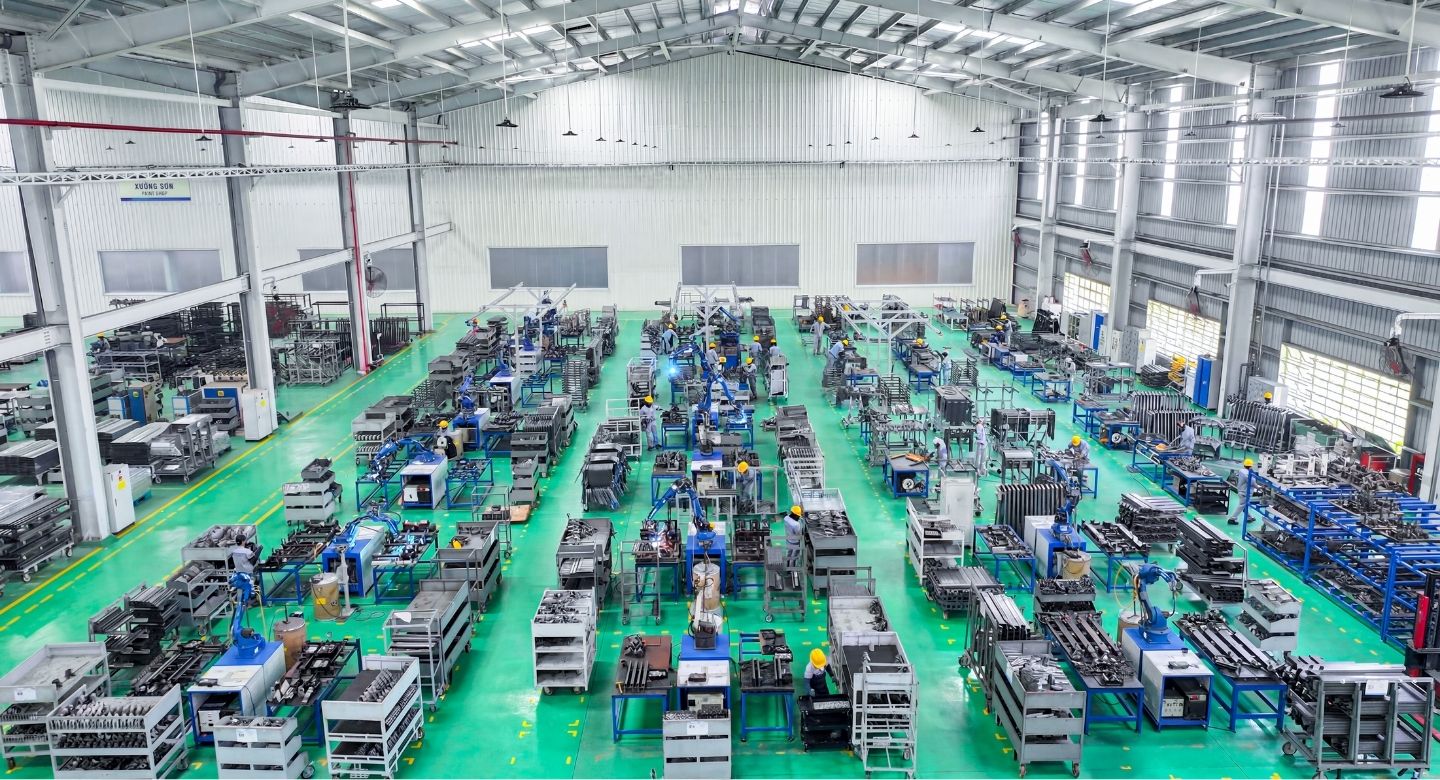
The actual manufacturing process follows a structured sequence:
Customer requirement definition: The process begins with reviewing the client’s specifications, including equipment type, performance targets, user capacity, safety requirements, and target-market regulations.
Concept design and engineering: Engineers translate these requirements into detailed product designs, covering mechanical structure, component layout, system integration, and design-for-manufacturing feasibility.
Material and component planning: Procurement teams develop the Bill of Materials (BOM) for key components such as motors, belts, PCBs, consoles, and sensors, while planning multi-source supply options to support production stability.
Tooling and fixture preparation: Custom tooling and assembly fixtures are prepared and validated before production to ensure dimensional accuracy, consistency, and repeatability across each batch.
Fabrication, welding, and surface finishing: Core components are produced through cutting, machining, forming, and certified welding processes. Weld quality is inspected before parts move to surface treatment, priming, and coating to improve corrosion resistance, durability, and product appearance.
Sub-assembly, final assembly, and system integration: Key systems such as drive units, consoles, safety components, and frame structures are assembled in a controlled sequence before being integrated into the finished equipment.
Quality control, testing, packaging, and logistics: Finished units undergo end-of-line checks covering noise, vibration, electrical burn-in, safety functions, and commercial duty-cycle performance. After final inspection, products are packed to prevent transit damage and prepared for shipment according to the client’s delivery requirements.
Taken together, these processes show that OEM manufacturing is not only about producing equipment, but about creating the conditions for safe, consistent, and scalable customization. This is also why the next step in evaluating an OEM partner is to look more closely at how well they can support different customization needs.
OEM Customization Options for Fitness Brands
Fitness brands operate across diverse market environments, from premium fitness chains to budget gyms. . Each setting comes with distinct performance expectations, space constraints and user demographics. OEM customization allows brands to move beyond off-the-shelf solutions. They can tailor equipment specifications directly to their business strategy. A machine designed for a premium fitness chain will have very different requirements from one deployed in a budget gym.
Common commercial cardio equipment customization areas include:
- Frame geometry and footprint to match space constraints and user ergonomics
- Performance specifications (speed, incline, resistance) based on usage intensity and positioning
- Console integration and UI compatibility aligned with digital ecosystems or user experience goals
- Branding, colors, and aesthetics to reinforce brand identity
- Market-specific configurations to meet regional standards and user behavior
Not all customization carries the same level of complexity. In practice, these requests generally fall into main two categories:
- Scalable customization: includes branding, color changes and console options built on existing platforms These changes have minimal impact on production.
- High-risk customization: includes major structural changes. These require engineering validation and testing before mass production.
For brands seeking reliable execution of such custom solutions, partnering with an experienced manufacturer can offer the necessary technical expertise and proven capability to transform detailed customization requirements into high-quality, production-ready equipment.
How Fitness Brands Should Audit an OEM Cardio Equipment Manufacturer
Before committing to a partnership, we recommend fitness brands conduct a structured factory audit. This helps verify whether an OEM manufacturer can consistently deliver the quality, regulatory compliance and production scalability that commercial-grade equipment demands.
Step 1: Pre-Audit Preparation (Desk Audit)
Fitness brands should review:
- Company profile and factory registration
- Quality certifications (e.g., ISO standards like ISO 9001)
- Compliance certifications for equipment (e.g., UL, CE marking)
- Product test reports (durability, motor safety, EMC)
- Major component suppliers
- Warranty and failure data
- Production capacity data
Step 2: Factory and Operations Audit
Focus areas include production flow efficiency, equipment capability, traceability and critical process control, particularly for welding structures and electronics integration. Attention focuses on layout optimization, dedicated assembly lines, controlled storage, CNC forming, robotic welding and calibrated testing equipment.
Step 3: Other Important Facets To Consider
Beyond facility checks, brands should evaluate:
- Compliance with safety standards
- Production capacity and lead time
- Sample validation and durability testing
A structured Quality Management System (QMS) underpins all of these evaluation areas. It drives consistent output through in-process and end-of-line inspections such as belt alignment, motor load and incline testing.
This process helps fitness brands identify capable commercial cardio equipment manufacturers that can sustain performance and compliance as production volumes grow.
THACO INDUSTRIES – OEM Partner for Commercial Cardio Equipment Manufacturing
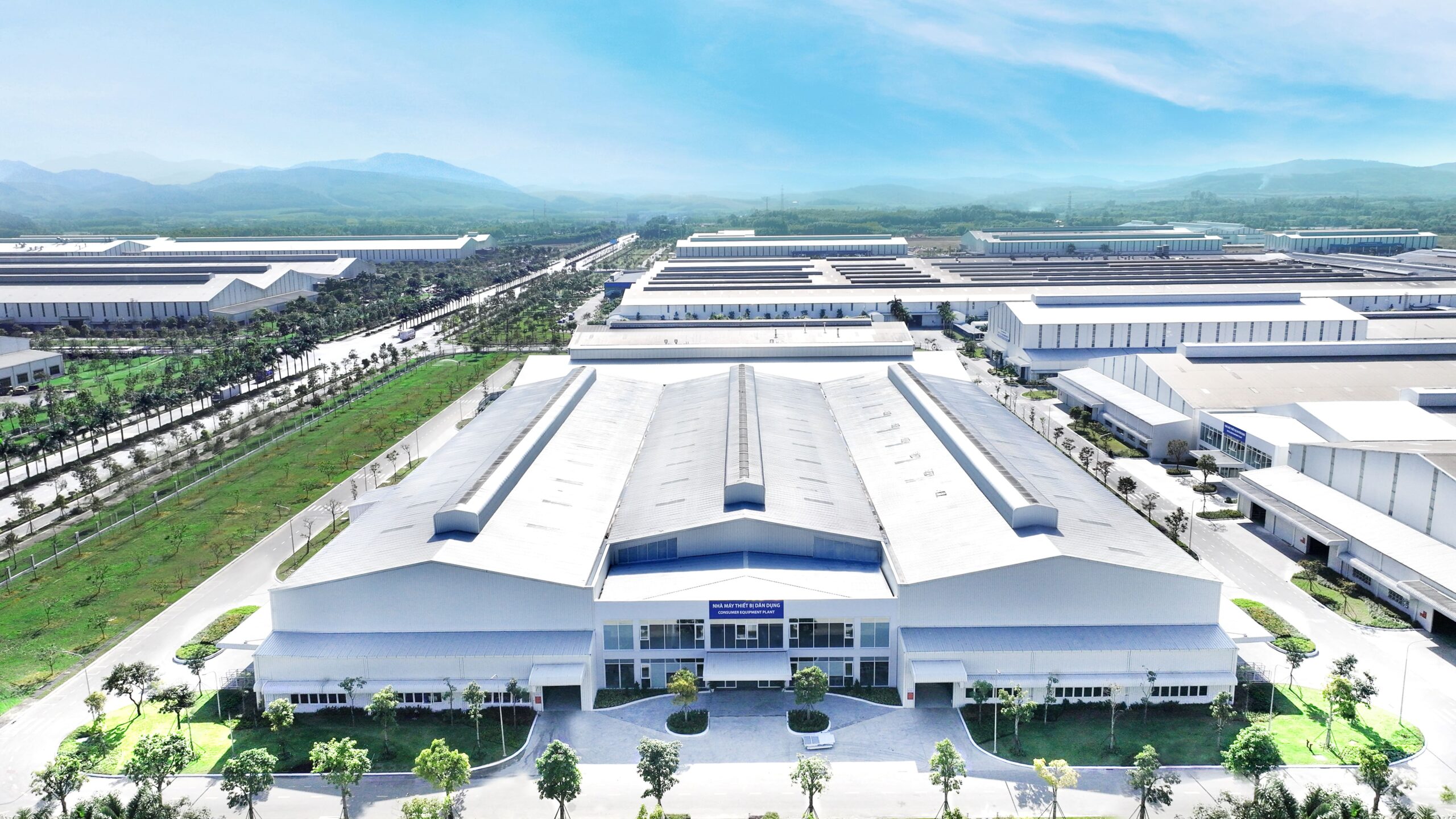
Closed-Loop OEM Manufacturing Model
The Consumer Equipment Plant at THACO INDUSTRIES operates across 25,000 m² with a total capital investment of USD 20 million, supporting annual production capacity of 150,000 fitness equipment units. This production capability is supported by a closed-loop OEM manufacturing model covering customer requirement analysis, engineering and design-for-manufacturing (DFM), material and component planning, fabrication, assembly, finishing and quality control.
Each process within the manufacturing model is designed to comply with international fitness equipment standards, including DIN EN 957-4:2010-08, ISO 20957-6, EN 957 series, RoHS and REACH. Technical documentation and inspection records are centrally managed to support market-specific compliance requirements across different export markets.
Diverse Cardio Equipment Manufacturing Portfolio
THACO INDUSTRIES manufactures a broad commercial cardio range that includes treadmills, upright bikes, recumbent bikes, spin bikes, ellipticals and supporting components. Brands can consolidate sourcing with one reliable partner instead of managing multiple suppliers.
Advanced Manufacturing Technologies
At THACO INDUSTRIES, its Specialized Equipment company plays a big role in producing high-grade OEM commercial cardio equipment, especially for steel-frame structures, moving assemblies, brackets, rails, covers and load-bearing components.
Welding and surface treatment are also important for commercial cardio equipment because these machines must withstand continuous use, vibration, sweat exposure and frequent cleaning. THACO INDUSTRIES operates robot welding lines, welding robot stations and MIG/MAG welding technology, supporting consistent weld quality for load-bearing structures.
Packaging & Logistics for Cardio Equipment
THACO INDUSTRIES provides export-ready packaging solutions for commercial cardio equipment, with packaging designs that can be customized to match the customer’s brand identity, including logo placement, carton design, labeling format and visual specifications.
Protective materials including wooden racks, PE foam and industrial plastics prevent surface and structural damage during international transit. Protective packaging solutions such as wooden racks, PE foam and heavy-duty plastic wrapping safeguard equipment during transit and optimizing logistics costs for large-scale distribution.
Moreover, located inside THACO Chu Lai Industrial Park in Da Nang – Vietnam, THACO INDUSTRIES benefits from an integrated production and logistics ecosystem in one location. THACO INDUSTRIES also supports flexible international delivery terms such as FOB, CIF, FCA, DAP and DDP, helping OEM customers manage shipment planning based on their market requirements.
Contact THACO INDUSTRIES to discuss your commercial cardio equipment OEM project: partsales@thaco.com.vn or 038 9067 557 (Ms. Linh)
FAQs
When should a fitness brand use an OEM manufacturer instead of in-house production?
In-house production suits early-stage prototyping. OEM manufacturing is the appropriate model when volume scales, multiple cardio categories are required, or compliance and product liability exposure increases. OEM partners provide industrial-scale capacity, established quality systems and market-specific certification.
What capabilities matter most when selecting an exercise bike OEM partner?
OEM partners should have proven experience in commercial-grade exercise bikes and strong control over resistance systems and frame alignment. They must also follow ISO-certified processes with in-process inspections to ensure consistent quality.
How much customization is realistic in OEM cardio equipment manufacturing?
Scalable customization such as branding, colors, console UI and connectivity is achievable within validated platforms. FMajor changes to frames or mechanical systems require engineering validation and carry higher risk.
What questions should brands ask before selecting an OEM cardio equipment manufacturer?
Brands should ask about manufacturing scale and capacity, specific experience with treadmills, bikes and ellipticals, quality certifications, realistic customization limits, compliance support and long-term production stability.


