
Industrial Equipment
Key Standards and Requirements for Grab Bucket Manufacturers
Crane grab buckets are essential equipment for demanding environments like ports, steel mills, mining sites, power plants, and waste processing facilities. Choosing the right bucket directly affects material throughput, crane compatibility, and operational safety, while the wrong choice can cause mechanical failure, load loss, or crane damage. This guide explains different grab bucket types divided by key structural and operational specifications, standard manufacturing processes, and the essential certifications a reliable manufacturer must have.
What Is a Crane Grab Bucket?
A crane grab bucket, also called a grab, clamshell bucket or grapple, is a crane attachment designed to handle and transfer bulk and irregularly shaped materials. Unlike traditional hook and sling lifting systems, the bucket operates through a jaws type mechanism to capture loose material before lifting.
Bulk material handling grab buckets are used across coal handling, ore processing, scrap metal management, grain storage and waste incineration. The jaw mechanism allows the bucket to capture material at ground level or within storage pits without manual handling. This enables high-volume, continuous material movement in environments where conventional lifting equipment is impractical. Loose material handling systems built around grab buckets are foundational infrastructure in ports, steel plants and mining operations globally.
Classification of Crane Grab Buckets
Understanding the classification system is the first step toward correct specification. Grab buckets are categorized across four distinct dimensions.
Categories by Load Type
Different materials impose different structural and operational demands. Ore grab buckets, coal grab buckets and wood grab buckets each require specific design modifications to jaw geometry, shell plate thickness and closing force. Material-specific grab buckets are engineered to the density, abrasiveness and particle size of the material being handled. A coal grab bucket used for dry grain handling will operate inefficiently. Conversely, a grain grab bucket designed for ore handling may become unnecessarily overbuilt and operationally inefficient.
Categories by Structural Design
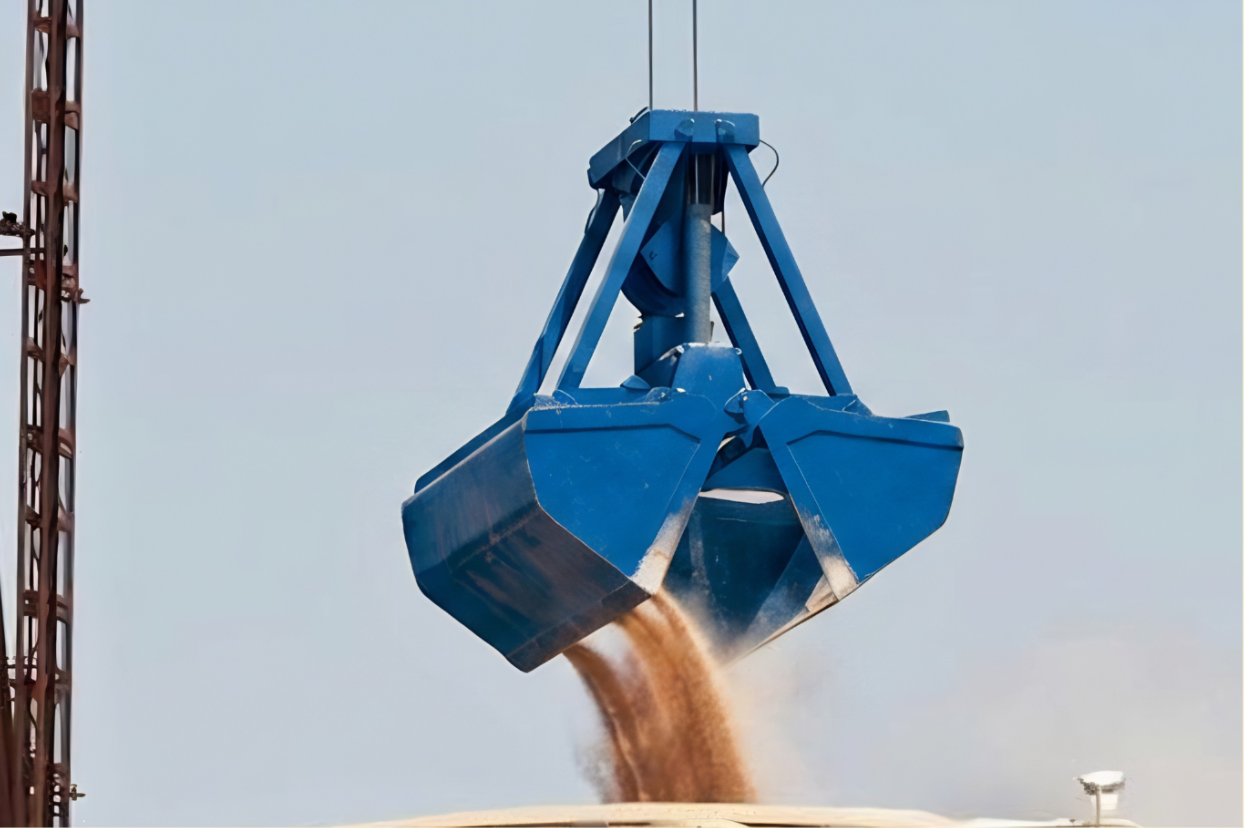
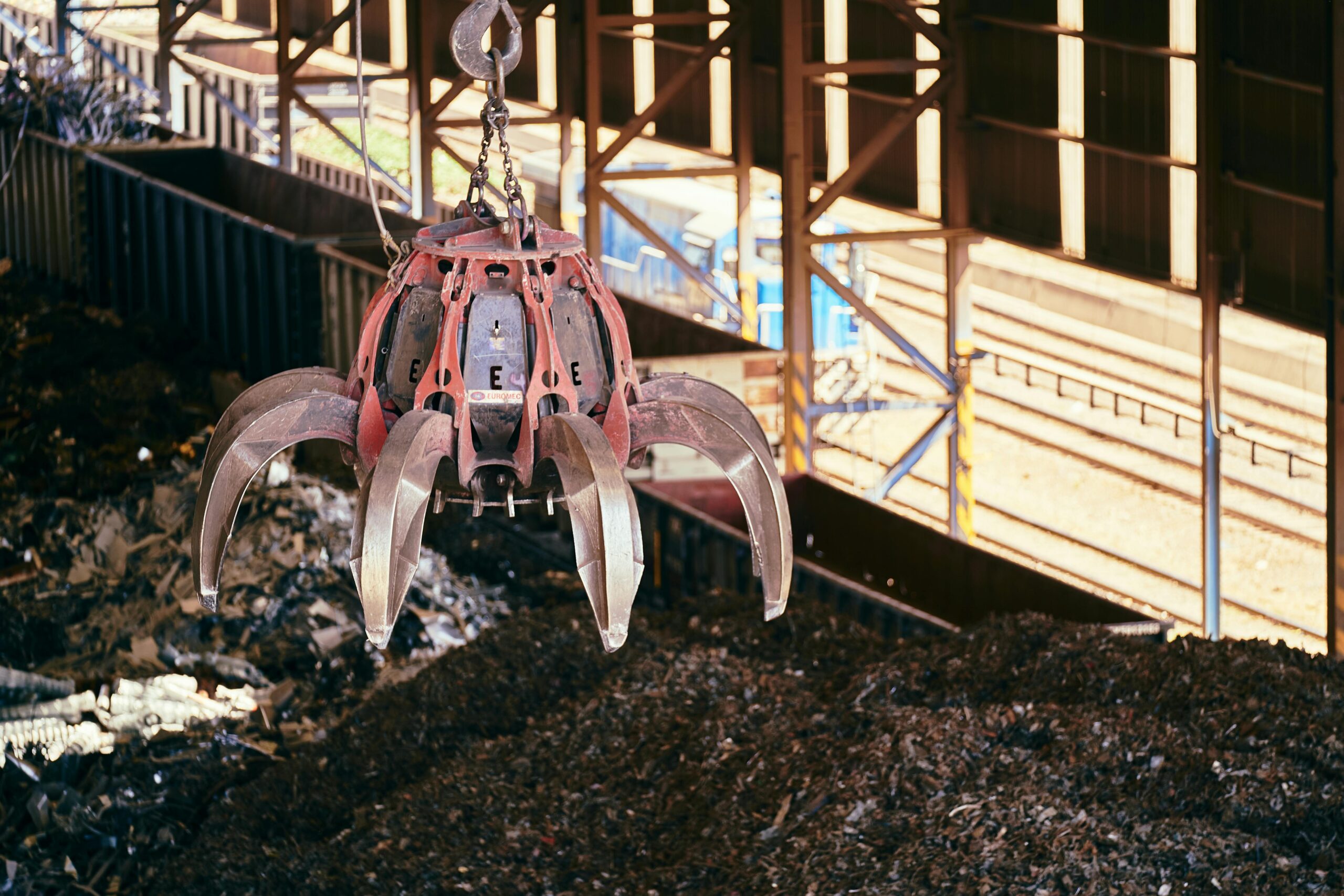
Structural classification consists of three primary grab bucket types: the clamshell bucket structure (two complete shells hinged at the bottom), the cactus grab (four jaws that close completely) and the orange peel grab (three or more jaws). Clamshell grabs are widely used for handling free-flowing materials such as sand and grain. Orange peel grabs handle irregular scrap metal and construction debris. For mining material handling grabs, the cactus design offers superior penetration in compacted ores.
Categories by Drive Method
The drive method determines how the bucket opens and closes during operation. Mechanical grabs operate through wire rope systems directly connected to the crane’s hoist mechanism. Hydraulic grab buckets use onboard hydraulic cylinders powered by an integrated motor, providing independent opening and closing control regardless of crane movement. Electro-hydraulic grab buckets combine crane-supplied electrical power with onboard hydraulic actuation systems. These offer greater control precision and higher close force for demanding applications in different environments.
Categories by Bulk Density
Bulk material density determines the structural rating and shell volume of the appropriate bucket. In bulk material material handling applications, selecting the correct bucket category is essential for maintaining operational safety and equipment longevity:
- Light grab buckets handle materials with bulk density below 1.2 t/m³, such as dry grain, fly ash, aluminum oxide, sodium carbonate, dry slag , etc.
- Medium buckets cover 1.2–2.0 t/m³, such as gypsum, gravel, pebbles, cement, large blocks, etc.
- Heavy duty grab buckets are rated for 2.0–2.6 t/m³, such as handling hard rock, small and medium-sized ore and scrap steel, etc.
- Extra-heavy configurations handle densities above 2.6 t/m³, such as heavy ore, scrap steel, etc.
Types of Grab Buckets: Key Features and Applications
Below are six common grab types. Each suits different cranes, materials and working environments.
Two-Wire or Four-Wire Mechanical Grab Bucket
This mechanical clamshell grab is designed for loads from 5 to 40 tons, working efficiently with materials of bulk density between 0.5 and 3.0 tons/m³. Buyers can install it on overhead cranes, gantry cranes, and other standard lifting equipment. It is especially suitable for grabbing garbage, stones, scrap metal, and other loose materials, making it a reliable choice for port cranes and steel yards.
A key difference exists between the two-rope configuration, which has a simpler design, and the four-rope version, which offers a faster cycle time.
Hydraulic Orange Peel Grab Bucket
This hydraulic grab bucket has a standard volume from 0.12 to 2.0 m³ and a lifting capacity up to 10 tons, with motor power typically between 8.5 kW and 55 kW. It is widely used in confined spaces, ports, and steel mills, especially for handling irregular materials like scrap steel, slag, and rocks that clamshell designs cannot grip reliably. It is a common grab bucket for steel mills and waste incineration plants.
Electro-Hydraulic Orange Peel Grab Bucket
Standard capacity ranges from 0.8 to 20 m³, with motor power of 8.5 to 55 kW, handling block, granular, and irregular bulk materials such as coke, pig iron, scrap steel, slag, garbage, and stones. As a self-powered hydraulic motor grab bucket, it operates independently without relying on the crane’s hydraulic system, which significantly expands crane compatibility.
This configuration cannot be used underwater; sealed variants should be specified for subsea or river dredging applications.
Double-Rope or Four-Rope Mechanical Clamshell Grab Bucket
Lifting capacity ranges from 5.0 to 64 tons, covering material densities of 0.8 to 3.0 t/m³. This bucket is compatible with overhead cranes, port cranes, ship unloaders, and gantry cranes across ports, steel mills, and power plants. As a primary grab bucket for port cranes, it favors high-cycle mechanical operation where crane power is available and cycle frequency is high.
For subsea or river dredging, an underwater grab bucket variant is available, engineered with sealed mechanisms to maintain performance under submerged conditions.
Electro-Hydraulic Clamshell Crane Bucket
Capacity ranges from 0.8 to 26 m³, with motor power of 8.5 to 55 kW. It is compatible with tower cranes, port cranes, and unloaders handling fertilizers, grain, coal, coke, ore, sand, crushed stone, and granular building materials. Precision closing control makes this the preferred waste handling grab bucket for fragile or mixed-composition loads, as it allows controlled fill without over-compression.
Hydraulic Clamshell Crane Bucket
Standard bucket capacity ranges from 0.1 to 3.0 m³, with lifting capacity up to 10 tons. Two synchronized shells are actuated by a hydraulic cylinder, delivering clean and controlled closing action suited to powder and granular bulk materials. This type is widely used in chemical processing industries where material contamination and spillage control are primary requirements.
For timber transport, a wood handling grapple configuration applies wide-opening jaw geometry with smooth interior surfaces to prevent log surface damage. As a grab bucket for mining operations, rugged hydraulic or electro-hydraulic units are engineered to withstand abrasive ore, high impact loads, and continuous duty cycles that mechanical designs cannot sustain at depth.
Comprehensive Procedure of Grab Bucket Manufacturing
Professional grab bucket manufacturers follow a disciplined seven-step process:
Engineering Design and Specification
The manufacturing process begins with application-specific engineering. Engineers define grab type, bucket capacity in m³, working material density, crane lifting capacity, hinge geometry, opening width and closing force before any fabrication begins. CAD and 3D modeling software (SolidWorks, AutoCAD) are used to define bucket geometry, shell curvature and structural arm configuration. Grab capacity calculations and crane compatibility checks are completed at this stage to prevent dimensional or load-rating mismatches in the finished product.

Billet Processing
Steel plates arrive from certified mills. Cutting technologies include:
- Fiber laser cutting: machines ranging from 6kW and up to 60 kW for heavy-plate applications, producing precise edges with minimal heat-affected zone.
- CNC oxy-fuel cutting: For large, complex metal parts up to extreme thicknesses.
- Circular saw: Cutting H, U, V steel sections to exact length.
CNC plasma cutting, plate rolling machines, hydraulic press brakes, heavy-duty welding stations and large fabrication assembly platforms complete the heavy steel fabrication toolkit. These machines shape bucket shells, side plates, arms and reinforcement ribs.
Next, press brakes and plate rollers form the curved bucket shells. This step creates the two clamshell halves or multiple orange peel tines that will open and close during each cycle.
Machining of Key Components
Critical moving parts, including hinge pins, bushings, pulley shafts and bearing seats, require precision CNC machining to achieve the dimensional tolerances required for stable and reliable bucket operation.. These components ensure smooth and stable opening and closing performance during operation. Manufacturers must also be capable of assembling pulley blocks, wire rope systems, hydraulic cylinders and swivel joints to the specified configuration.
Welding and Structural Fabrication
Welding is one of the most structurally critical stages in the grab bucket manufacturing process. Shell plates, side plates, reinforcement ribs, structural arms, and hinge brackets are joined using CO₂ gas shielded welding, submerged arc welding (SAW), and manual arc welding. Some manufacturers also deploy automated robotic welding systems combined with jig setups. These systems enable high-accuracy welding with automatic adjustment, reducing human error on complex joint geometries.
After welding, stress relief heat treatment removes residual stresses. Weld integrity is then verified through non-destructive testing (NDT) typically ultrasonic or magnetic particle inspection before the assembly proceeds to the next stage.
Executing this level of industrial welding fabrication demands documentation that showcases the welding quality from manufacturers. Certified welders, documented welding procedure specifications (WPS), and multi-process proficiency across FCAW, SAW, and GMAW are all prerequisites. These capabilities are what separate professional structural manufacturers from low-cost alternatives.
Surface Treatment and Painting
Shot blasting to SA2.5 standard removes mill scale and rust before coating application. Zinc primer anti-rust coating is applied first, followed by epoxy middle coating and finished with industrial PU topcoat to customer specification. This coating system protects against corrosion in marine port environments, outdoor storage yards and high-humidity industrial facilities.
Load Testing and Quality Inspection
Before delivery, each bucket undergoes dimensional inspection, weld inspection, opening and closing cycle testing, crane load testing and balance and alignment verification. These tests confirm that the bucket operates within its rated safe working load (SWL) and that mechanical systems perform without binding, misalignment, or structural deflection under load.
Final Assembly and Delivery
Lifting hooks or shackles are fitted and verified. The bucket is then packed for transport and delivered to the installation site. Multimodal transport options including road, sea, and air freight are coordinated to meet project timelines and installation schedules at the destination site
Essential Standards for Grab Bucket Manufacturers
Credible grab bucket manufacturers must demonstrate compliance with the following standards:
- ISO 7451:2007: Specifies methods for estimating material volume for excavator and loader buckets.
- FEM 1001/98 (A8-M8): Materials handling federation standard for structural strength under cyclic loading.
- ISO 9001:2015: Overall quality management system.
- EN 1090-1 + EXC4: Conformity assessment for structural steel components. EXC4 is the highest execution class for welded structures.
- ISO 3834-2: Comprehensive welding certification standards for fusion welding of metallic materials.
- Bureau Veritas or similar third-party inspection: Independent verification of each grab bucket before shipment. These crane equipment inspection standards protect both buyer and supplier.
Without these certifications, the buyer assumes all liability for weld failure, structural collapse, or capacity overstatement.
THACO INDUSTRIES – Key Strengths To Be Your Trusted Grab Bucket Supplier
With many years of manufacturing experience, THACO INDUSTRIES offers integrated solutions for manufacturing industrial equipment with an All-in-One value chain. This integration ensures consistent quality across every bulk material handling equipment order.
Integrated Production Capability and Value Chain
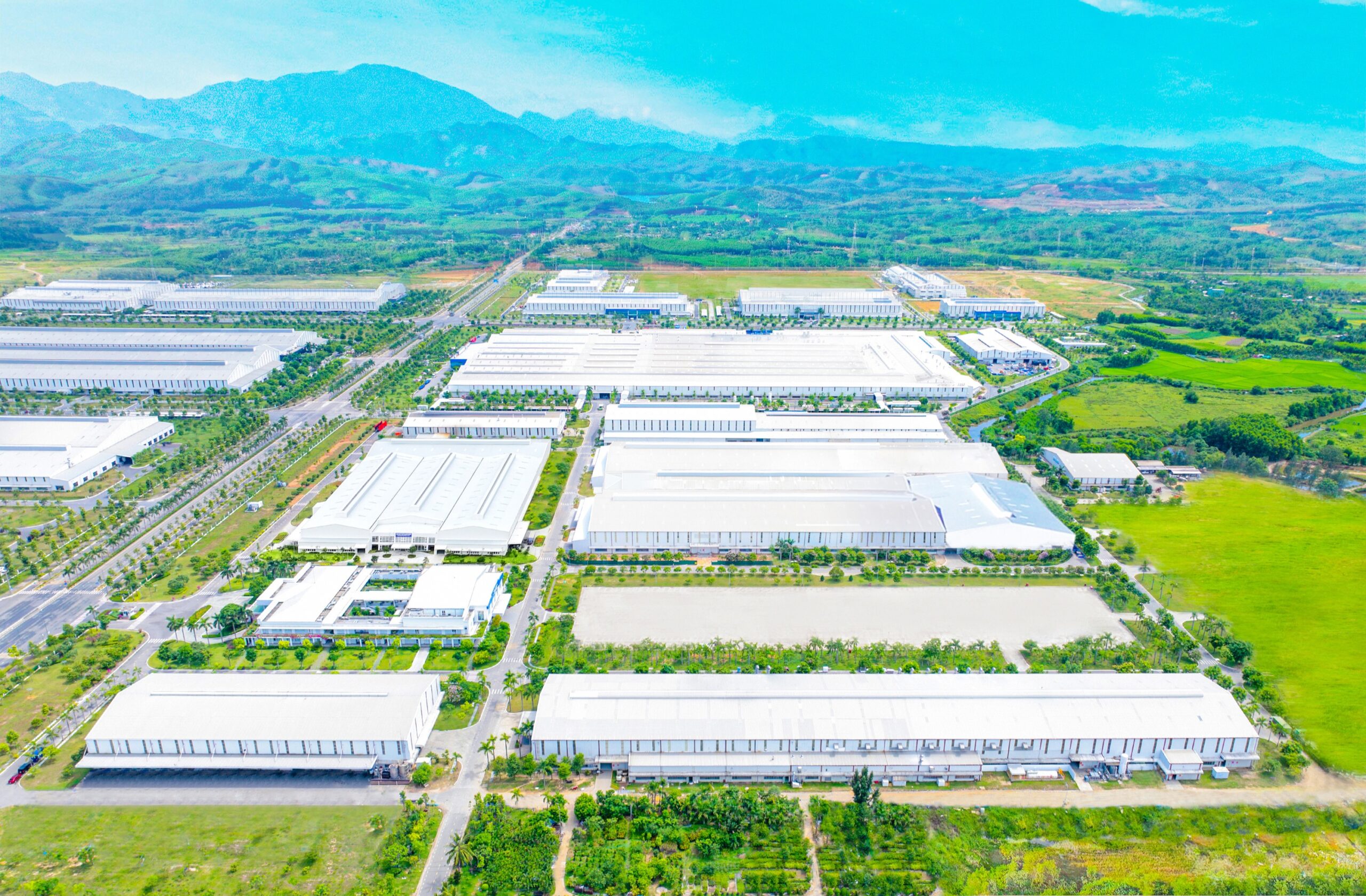
THACO INDUSTRIES operates a 320-hectare, USD 1 billion campus. Every component is produced within this ecosystem. This vertical integration eliminates quality variations common with multi-vendor supply chains.
The corporation continuously invests in digital production management platforms to enhance operational control and manufacturing efficiency. Experienced engineering teams provide technical consultation and application analysis to determine the most suitable equipment configurations based on each customer’s operational requirements and material characteristics. This approach helps optimize production costs without compromising operational safety.
Every project begins at the Business stage, where commercial requirements, application specifications and production feasibility are assessed before engineering resources are committed. The R&D team then develops validated designs running structural simulations, material evaluations and prototype testing before mass production approval.
Manufacturing follows under one integrated roof, covering laser cutting, CNC machining, welding, surface treatment and assembly across highly automated production lines. This streamlined production process supports consistent quality control and efficient system integration before delivery.
This end-to-end model makes THACO INDUSTRIES stand out as custom grab bucket manufacturers that can respond to design changes during production without delays.
International Quality Certifications
THACO INDUSTRIES operates under globally recognized standards. The quality and production framework includes General Quality System like ISO 9001:2015, ISO 14001:2015, to specific welding certifications such as ISO 3834-2 and EN 1090 EXC4 – the highest execution class for welded steel structures, directly relevant to industrial grab bucket production process quality requirements.
CE Marking, REACH and RoHS compliance are applied where product category and destination market require them. These certifications place THACO INDUSTRIES among the leading Lead OEM manufacturers serving North America, Europe, Australia, and global industrial buyers.
Proven Capability in Grab Bucket Manufacturing
As a custom grab bucket manufacturer serving international buyers, THACO INDUSTRIES applies advanced automation throughout production. Automated robotic welding systems using MIG/MAG technology, with flexible integration of manual welding processes certified to 3G, 4G, 5G and 6G positions. This combination delivers both speed (robotic) and accessibility (manual) for complex bucket geometries.
Building on this welding foundation, the fabrication process advances to cutting and shaping. Sheet steel laser cutting machine with outstanding 15,000 W capacity handle sheet sizes up to 6,200 × 2,500 mm. CNC automated oxy-fuel cutting machines process large and complex metal parts, reducing fabrication cycle time across structural components. Beyond cutting and welding, a metal stamping line equipped with 200+ fabrication machines completes dimensional detailing and finishing across bucket shells, reinforcement ribs and structural arms.
Beyond standard configurations, THACO INDUSTRIES is equipped to fulfill customization requirements for specific working conditions and material type. These include wood handling grapple configurations, scrap handling variants and application-specific jaw geometry for non-standard bulk materials.
Compliance with Incoterms Logistics Standards
Flexible logistics option is one of THACO INDUSTRIES’s strengths. The corporation offers clients the benefit of competitive pricing without compromising quality via logistics options, selecting suitable shipping options per customer request. With optimized container-loading packaging and full support for FOB, CIF and FCA shipments help reduce logistics expenses and delivery timelines, ready to be distributed to your stations.
For heavy equipment fabrication company evaluation, logistics capability directly impacts landed cost. Export to countries ensures compliance with documentation, packaging and shipping compliance with each destination’s import requirements.
Scale up your grab bucket manufacturing projects with the leading manufacturer today via partsales@thaco.com.vn or (+84) 389 067 557 (Ms. Linh)


