
Industrial Equipment
Material Handling Manufacturing Cost: Breakdown, Key Factors & Cost Reduction Strategies
The material handling manufacturing industry has experienced strong growth trends in recent years, driven by the increasing demand for automation and efficient production solutions across sectors. As production lines become automated and output volumes continue to rise, controlling costs while maintaining high performance has become a critical challenge for manufacturers.
By understanding the key cost factors and implementing effective optimization strategies, manufacturers can significantly reduce production costs without compromising quality or efficiency.
What Is Material Handling?
Material handling is the process of moving, storing, controlling and protecting materials and products throughout manufacturing, distribution, consumption and disposal.
Material handling focuses on optimizing these flows to cut waste and boost productivity. The material handling process can account for a significant portion of total production costs, depending on the industry and system complexity. When managed efficiently, it can reduce overall manufacturing system costs by 15–30%.
Common material handling equipment includes conveyor belts, forklifts, overhead cranes, hoists, robotic arms and automated storage systems. All common equipment and machinery in material handling perform one of four core functions.
Transportation
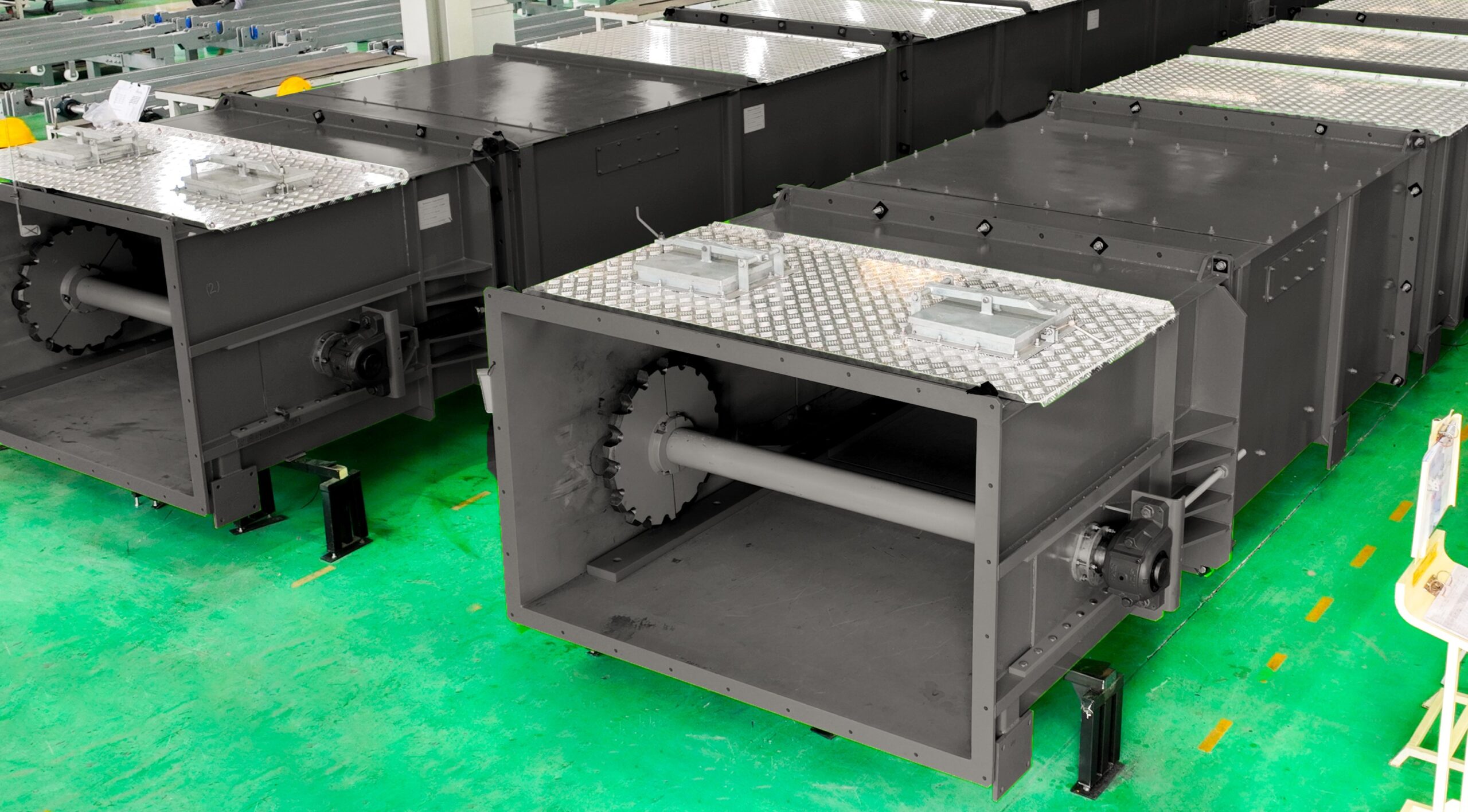
Transportation equipment covers the largest share of material handling infrastructure in most manufacturing environments. Conveyors, industrial trucks, cranes and hoists are the primary examples.
Positioning
Positioning equipment supports machining and assembly operations at individual workstations. Robots, index tables and rotary tables are representative examples.
Unit Formation
Unit formation involves consolidating or standardizing materials into load forms suitable for transport and storage to reduce handling time and equipment stress across the facility. Bins, pallets, skids and containers perform this function.
Storage
Storage efficiency directly impacts floor space utilization and order fulfillment speed. Automated Storage and Retrieval Systems (AS/RS), pallet racks and shelving systems are the most widely used configurations.
Common Material Handling Manufacturing Cost Breakdown
Understanding material handling manufacturing cost requires separating the total expenditure into its component categories. Each category behaves differently depending on order volume, customization level and equipment complexity.
Typical Material Cost
Fabrication materials form the largest direct cost input. These include carbon steel, stainless steel for food and pharmaceutical environments, aluminum sections, sheet metal and cast iron components. Material selection, pricing, and compliance with safety and hygiene standards directly influence overall cost.
Beyond raw materials, mechanical components such as bearings, gears, shafts, chains, rollers and fasteners also contribute significantly to the overall material cost, as complex machinery may require more components to assemble.
Fabrication Cost
Fabrication cost covers the process steps required to transform raw materials into finished components. Key processes cover CNC machining, laser cutting, bending and forming, welding, casting, surface finishing and painting or powder coating. The more complex the product, the more process steps are involved and the greater the impact on overall fabrication cost.
Manufacturing Overhead
Manufacturing overhead includes indirect expenses such as facility rental, equipment depreciation, factory supplies and digital systems. These costs spread across production and rise with lower utilization rates.
Customization Cost
Purpose-built equipment is tailored to specific load sizes, shapes, or ergonomic requirements to fit existing workflows and reduce bottlenecks. Automated systems such as robotics and AI-assisted controls are increasingly adopted in warehouses to improve efficiency and accuracy.
Not all equipment requires full custom development. Drive components such as electric motors, gearboxes, hydraulic cylinders, pumps, wheels and sensors are often sourced from preferred suppliers based on customer specification, keeping procurement costs under control.
Labor Cost
Labor cost can consist of operational cost (material handlers who require certification, trained skills to handle specific equipment like forklift) and workforce who engage in producing material handling equipment.
Labor cost can be considered as a part of manufacturing overhead and may sometimes be treated as a separate category, depending on the accounting model.
How to Control Manufacturing Cost Without Sacrificing Quality
Process optimization is the mechanism through which material handling costs are reduced without compromising structural integrity, compliance, or operational reliability. The following approaches apply across most procurement and production scenarios.
Control Customization Cost
The most effective strategy to control material handling manufacturing cost is standardization. Manufacturers should target 80% standardized components while limiting customization to the remaining 20%, typically the visible or interface-specific elements. This balance ensures the core machine structure remains cost-efficient and reliable, while branding elements such as covers, panels and colour finishes can still be tailored to reflect each customer’s identity.
Consult Thoroughly Before Purchasing
Early consultation is one of the most effective ways to control material handling manufacturing costs. It helps avoid over-specification and unnecessary expenses. Choose surface finishes and materials that truly match your usage environment, instead of using premium options everywhere.
Equally important is assessing compatibility between new equipment and existing systems before committing to a purchase. Integrating machinery that aligns with current line configurations allows manufacturers to utilize the full capacity of their workflow rather than introducing disruptions. For example, adding a new belt conveyor that matches the speed and height parameters of an existing roller conveyor line can maintain throughput continuity. This eliminates the bottlenecks that often arise when incompatible equipment is introduced mid-process.
For manufacturers seeking a cost-efficient sourcing model, partnering with suppliers that operate an integrated ecosystem such as those found in Vietnam’s growing industrial base eliminates inter-supplier logistics costs. When mechanical processing, surface treatment and assembly are consolidated within one production environment, the buyer benefits from streamlined lead times and a single point of accountability.
Apply a Modern Measurement Model
To better control material handling manufacturing costs, it is recommended to carefully evaluate your equipment choices. A weighted utility additive (WUTA) model can be used to evaluate and select the most suitable material handling equipment. This technique assigns value to different factors like cost, space and productivity. By applying WUTA, manufacturers can evaluate these immediate savings against long-term benefits and returns, therefore determining which is the most suitable material handling equipment for the current workflow.
For example, a facility comparing a gravity roller conveyor against a flat belt conveyor for a medium-weight assembly line might assign high weighting to maintenance cost and floor space efficiency, with moderate weighting to capital cost. A gravity system scores higher on maintenance (no motor) and space, but lower on speed control. A flat belt scores higher on speed and load consistency. In this case, if maintenance cost and space efficiency are the priority, WUTA would rank the gravity roller conveyor as the more suitable choice. This numeric ranking removes subjective bias and makes the trade-offs explicit before any purchase commitment is made.
THACO INDUSTRIES – A Comprehensive Manufacturing Ecosystem
THACO INDUSTRIES stands as one of the top manufacturers in Vietnam and one of the most trusted material handling equipment suppliers for industrial buyers seeking reasonable material handling manufacturing cost.
Significant Specialized Production Capacity
THACO INDUSTRIES operates a closed industrial ecosystem that produces every major mechanical component and precision part internally. This structure eliminates supplier variance and keeps quality consistent across the full value chain.
Every project begins with a business evaluation stage, where commercial requirements, market fit, and production feasibility are assessed before any engineering resources are committed. From there, the R&D team translates buyer specifications into validated product designs, running structural simulations, material evaluations, and prototype testing before mass production is approved.
Manufacturing follows under one integrated roof covering cutting, forming, welding, surface treatment, and assembly across dedicated production lines. Once equipment is delivered, THACO INDUSTRIES supports installation at the client’s facility, ensuring the system operates as specified from day one. Long-term reliability is maintained through structured Warranty & Repair programs keeping equipment running and reducing unplanned downtime for buyers over the full product lifecycle.
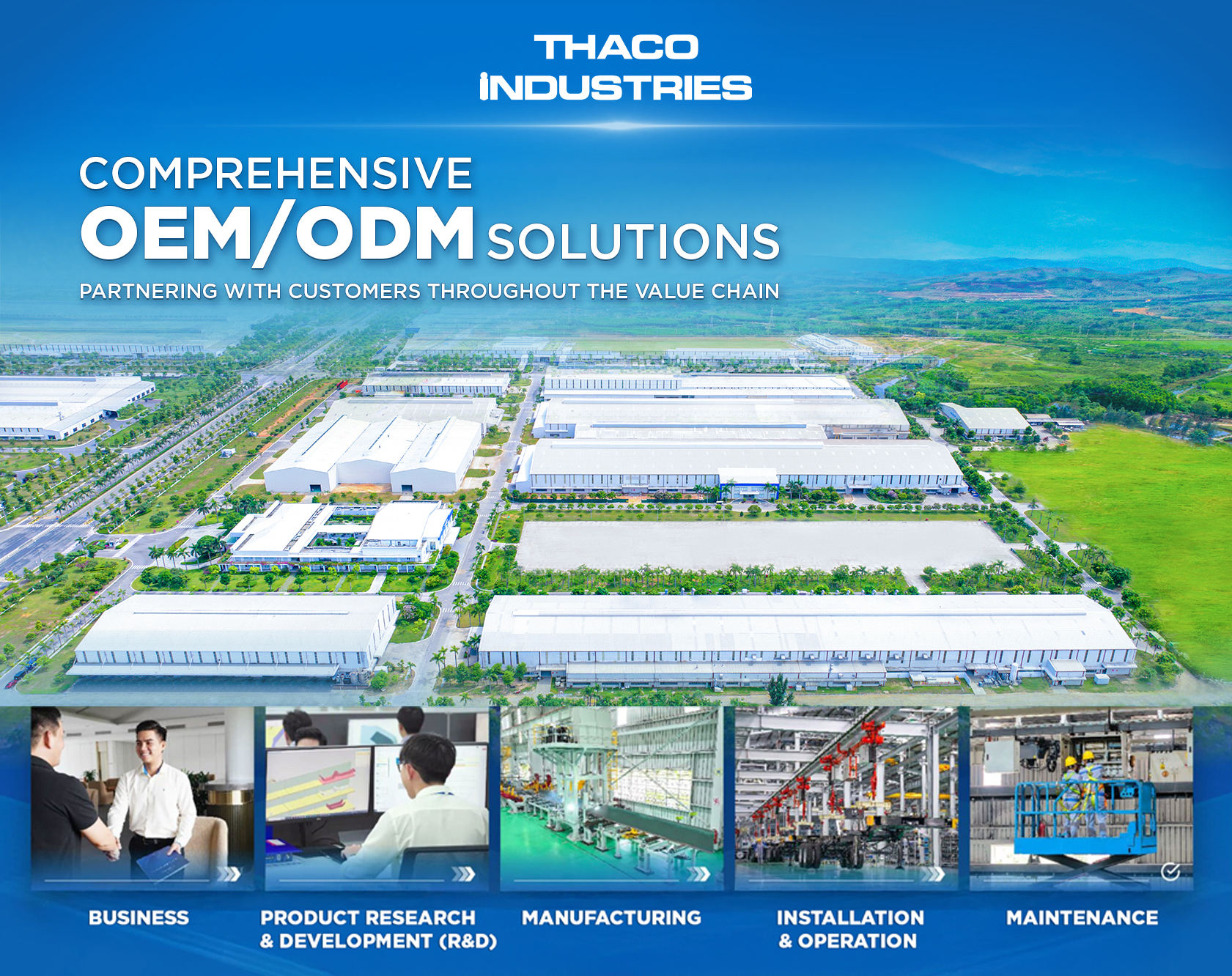
The corporation continuously invests in digital production management and advanced process technology. An experienced engineering team provides consultancy from specification through final design, ensuring the equipment configuration selected is structurally sound, application-appropriate and cost-optimized before production begins.
International Quality Certifications
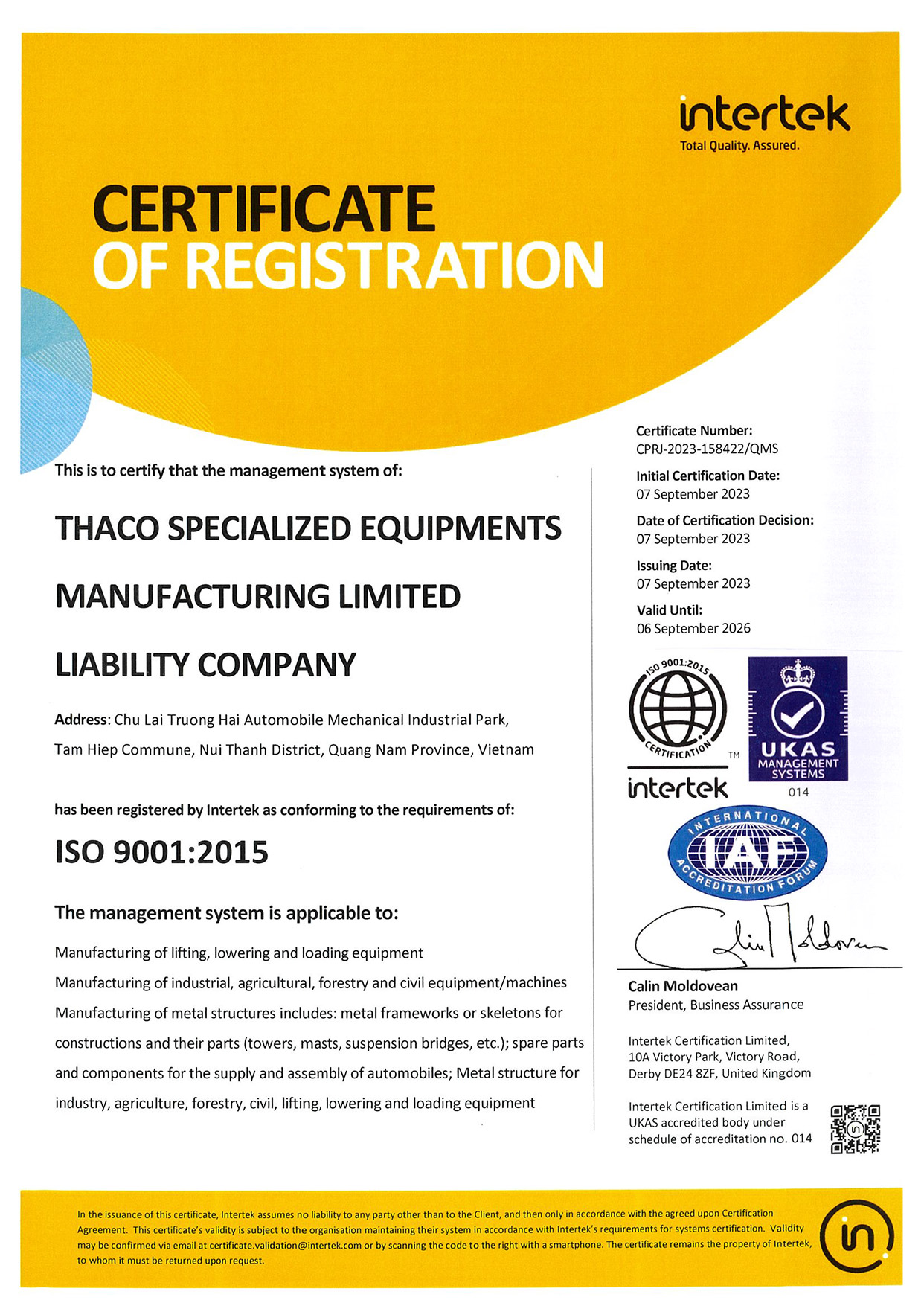
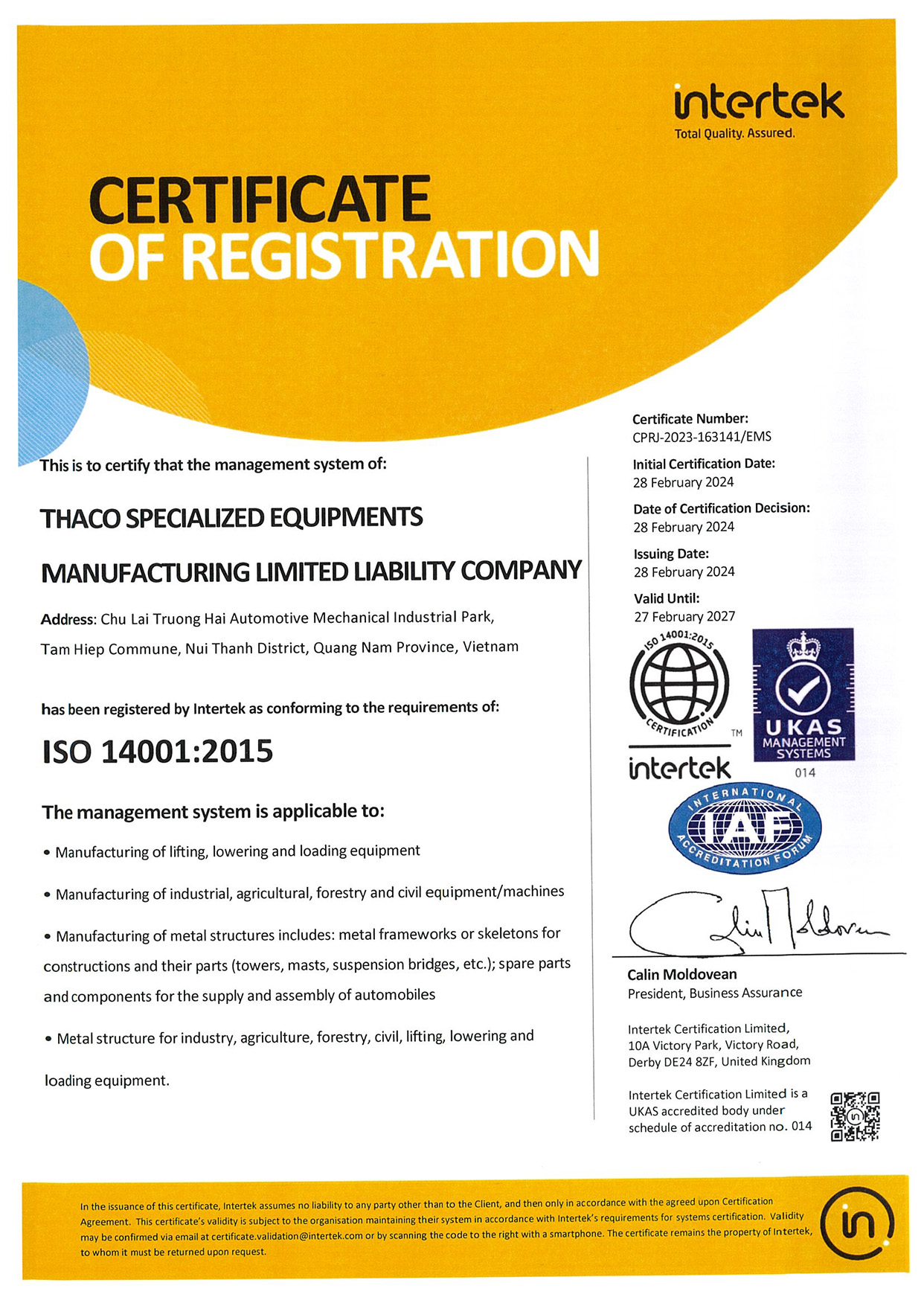
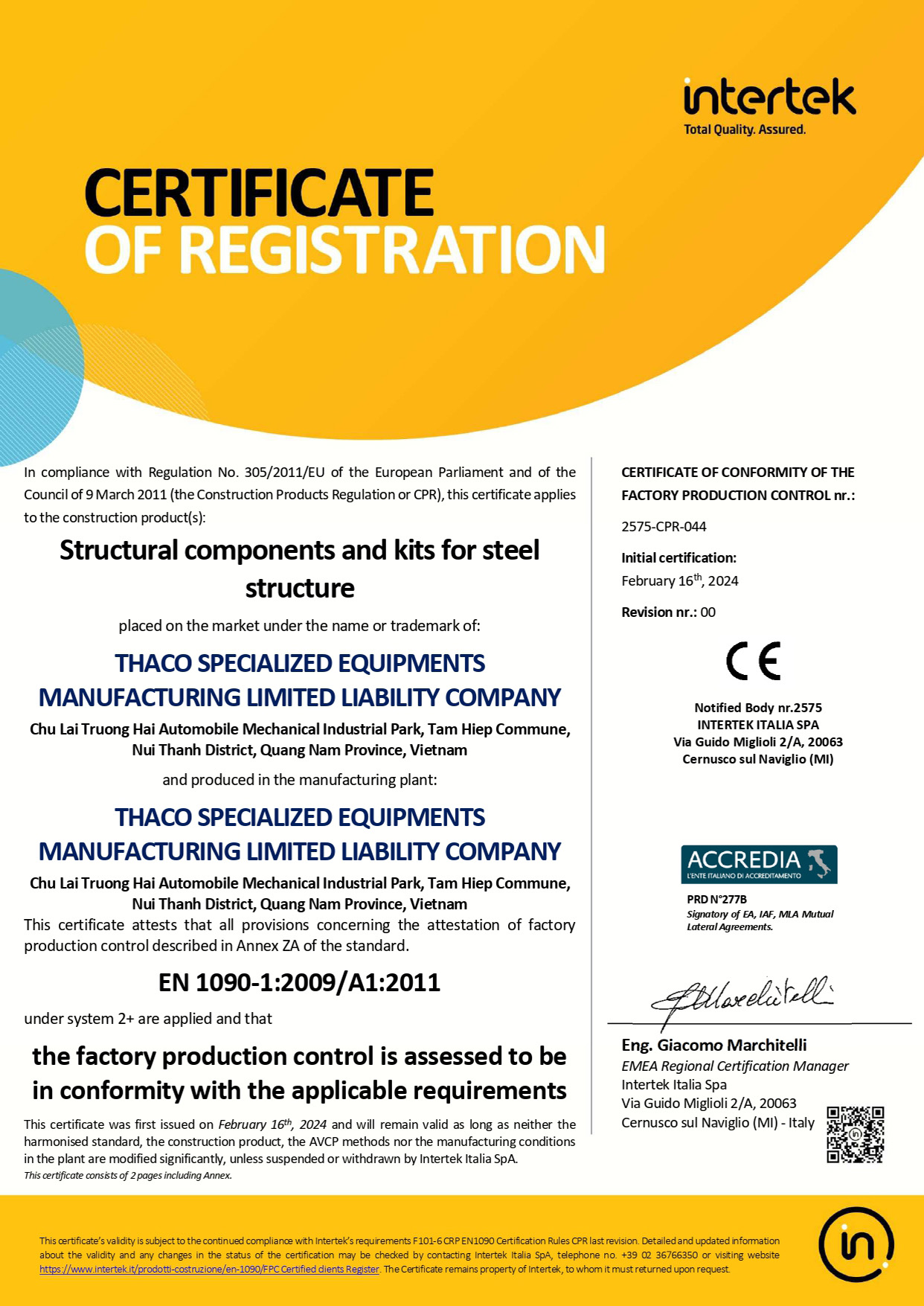
THACO INDUSTRIES operates under globally recognized management and production standards. Every component meets strict international export requirements. The Specialized Equipment Company and the Mechanical Complex maintain ISO 9001:2015 and ISO 14001:2015 certifications. Steel and aluminum structures comply with EN 1090 and ISO 3834-2 standards, ensuring structural integrity and welding quality across both European and international requirements.
 |
 |
 |
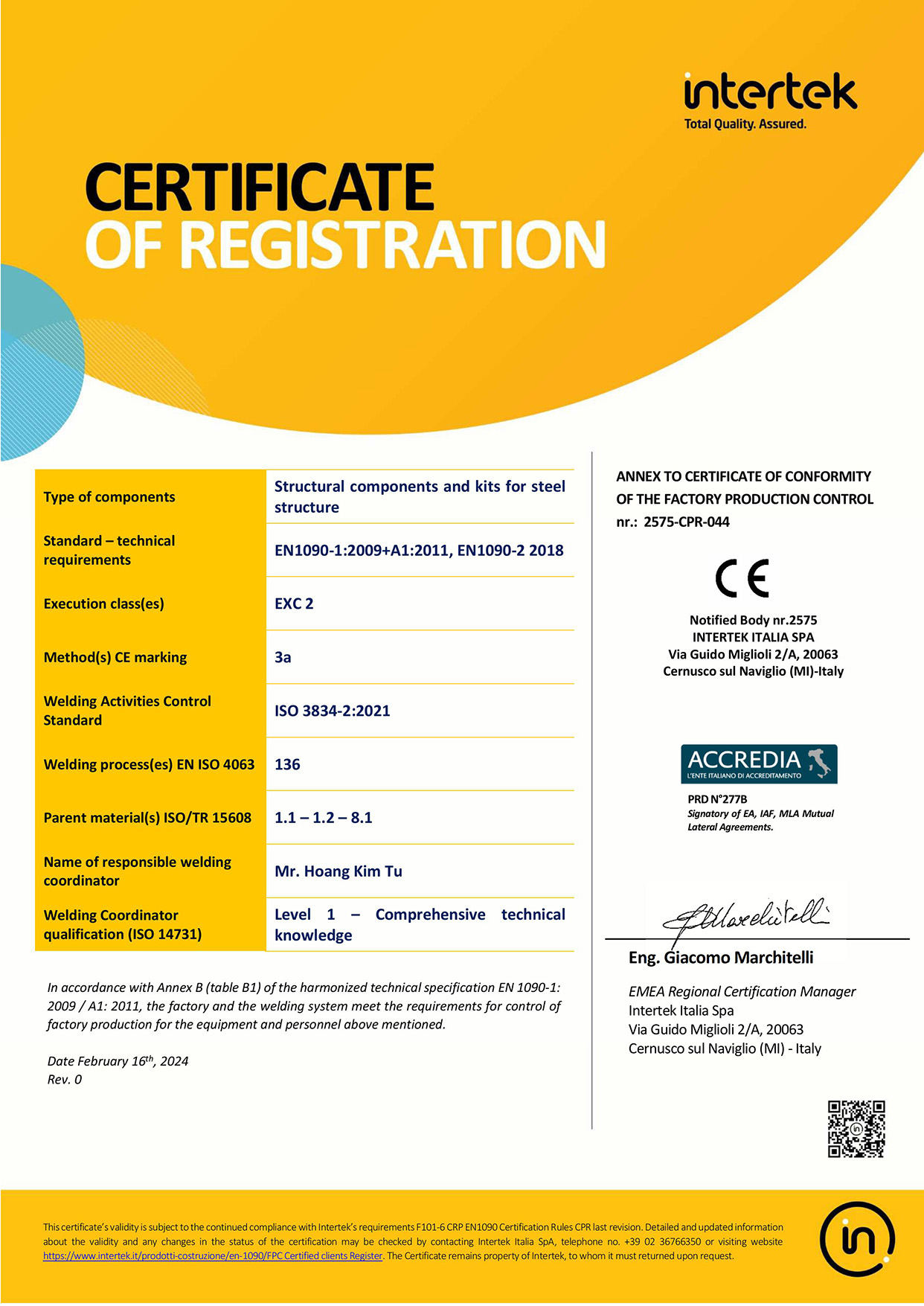 |
Environmental performance and occupational health are governed by ISO 14064-1:2018 for greenhouse gas verification and ISO 45001:2018 for workplace safety. AS/NZS 5131 defines the minimum requirements for the fabrication and erection of structural steelwork in Australia and New Zealand. These certifications demonstrate THACO INDUSTRIES’ capacity to meet the compliance expectations of demanding international markets.
Proven Capability in High-Volume and Precision Production
THACO INDUSTRIES actively develops automation solutions across multiple industrial segments, reducing manual labour dependency, shortening production cycle times and lowering per-unit manufacturing costs. Research and development programs cover automotive and motorcycle assembly lines, product packaging systems, painting and drying lines, surface treatment lines and transportation solutions for commercial and industrial environments.
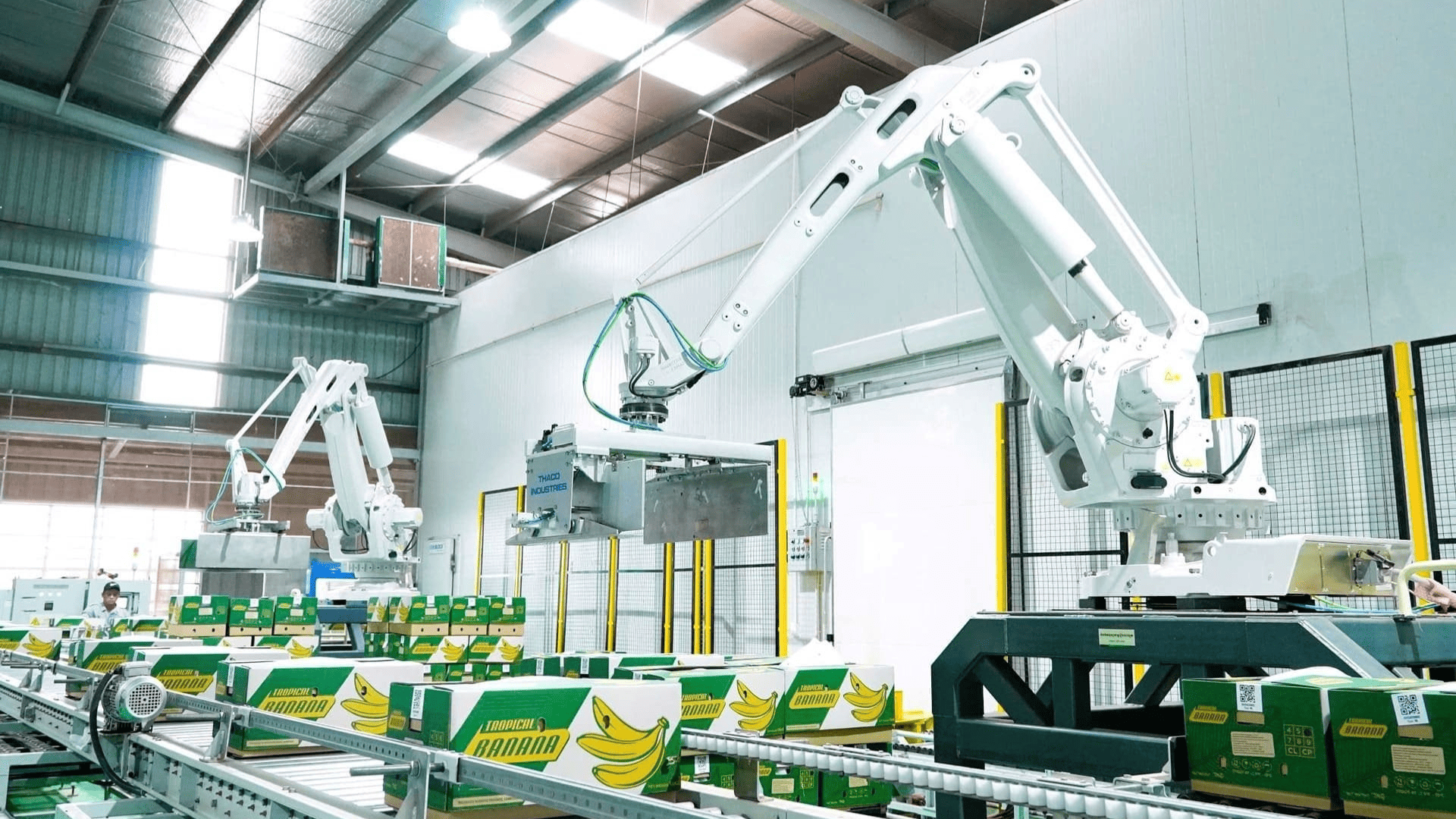
The corporation also integrates AMR (Autonomous Mobile Robot) and AGV (Automated Guided Vehicle) systems into facility logistics. Smoother material flow between production zones reduces handling delays, which in turn drives greater efficiency across the overall manufacturing process. Advanced capabilities in laser cutting, CNC machining, robotic welding and precision forming support both high-volume runs and custom projects with tight tolerances. This combination enables competitive material handling manufacturing cost while delivering durable, high-quality equipment.
Looking for a reliable partner to optimize your material handling manufacturing cost? Contact THACO INDUSTRIES today: partsales@thaco.com.vn or (+84) 389 067 557 (Ms. Linh).


